 Pin it
 I still remember the first time I assembled an Asian noodle board at home—it was for a dinner party where I wanted to impress without being stuck in the kitchen all evening. I'd been inspired by those gorgeous shared platters I'd seen at trendy restaurants, where every ingredient was a jewel arranged on a canvas. That night, watching my guests build their own bowls, mixing and matching proteins and vegetables with their favorite sauces, I realized this wasn't just food—it was an experience, a conversation starter, a moment where everyone became the chef of their own meal.
The moment that changed my mind about entertaining was when my sister's picky eater, who normally picks at everything, went back for thirds at that first noodle board dinner. He built his own bowl with shrimp and peanuts, drowned it in the sweet chili sauce, and asked if we could make it again next month. That's when I understood—this dish gives people permission to play with their food in the best way possible.
Ingredients
- Rice noodles or soba noodles (300 g): These are the foundation that holds everything together without being heavy—I learned that rinsing them thoroughly prevents that gluey texture, and tossing with sesame oil keeps them from clumping even hours later
- Sesame oil (1 tbsp): Just enough to coat the noodles and add that warm, nutty whisper that makes people ask what smells so good
- Cooked chicken breast, thinly sliced (200 g): Poaching or steaming keeps it tender—avoid overcooking this protein since it'll be served cold and you want it to stay silky
- Cooked shrimp, peeled and deveined (150 g): Cook these just until they curve slightly, then chill them so they stay plump and sweet
- Boiled eggs, halved (2): The yolk should still have a touch of softness inside—cook for about 6 minutes for that perfect jammy center
- Julienned carrots (1 cup): Their natural sweetness brightens every bite, and julienning them (rather than shredding) gives the board a more refined, intentional look
- Cucumber, thinly sliced (1 cup): The cooling element that balances richer sauces—slice them just before serving to keep them crisp
- Red bell pepper, julienned (1 cup): Raw and crunchy, these add color and a subtle sweetness that plays beautifully with spicy sauces
- Red cabbage, thinly sliced (1 cup): More substantial than regular cabbage, it holds its crunch and adds visual drama with its deep burgundy hue
- Cooked and shelled edamame (1 cup): These little pops of green are nutritious little treasures that add protein and a satisfying bite
- Radishes, thinly sliced (4): Their sharp, peppery bite cuts through rich sauces beautifully—mandoline them thin so they curl slightly
- Scallions, sliced (2): The green parts stay bright and fresh tasting, especially if you add them at the very last moment
- Fresh cilantro leaves (1/4 cup): These are the final flourish—their herbaceous brightness makes everything taste fresher
- Fresh mint leaves (1/4 cup): A secret that most people don't expect—mint brings a cooling, sophisticated note
- Roasted peanuts, chopped (1/4 cup): Buy them already roasted and salted, then chop them yourself to control the size and preserve their crunch
- Toasted sesame seeds (2 tbsp): Toast them yourself if you have time—the difference between store-bought and fresh-toasted is night and day
- Lime wedges: The secret weapon that brightens everything and lets guests add acidity to taste
- Soy sauce (1/3 cup): The umami anchor that makes everything taste richer and more intentional
- Spicy peanut sauce (1/3 cup): Whether homemade or store-bought, this is the crowd-pleaser that coats noodles in creamy comfort
- Hoisin sauce (1/3 cup): Sweet, thick, and velvety—a sauce that makes even simple noodles taste special
- Sweet chili sauce (1/3 cup): The balance between heat and honey that makes people come back for more
Tired of Takeout? 🥡
Get 10 meals you can make faster than delivery arrives. Seriously.
One email. No spam. Unsubscribe anytime.
Instructions
- Cook and chill your noodles:
- Bring a pot of water to a rolling boil and cook your noodles exactly according to the package—not a minute more, because they'll soften further as they cool. Drain them in a colander and run cold water over them while gently tossing with your fingers until they're completely cooled. This stops them cooking and prevents that sticky, clumpy situation. Toss them with the sesame oil until each strand is lightly coated and glossy. You can do this several hours ahead—they'll taste even better as the oil penetrates.
- Prepare your vegetables with intention:
- Set up a little assembly line: one cutting board for julienning, another for slicing. As you cut each vegetable, place it in its own small bowl if you're doing this ahead, or arrange it directly on the board if you're working close to serving time. The thinner you slice things, the more elegant the final presentation—and it actually makes eating easier too, since every bite comes with all the flavors at once.
- Cook your proteins and keep them cool:
- If you're poaching chicken, simmer it gently in salted water for about 12 minutes, then let it cool completely before slicing thin against the grain. For shrimp, cook them in simmering salted water for just 2 to 3 minutes until they pink up and curve into little crescents—overcooking makes them rubbery. Boil your eggs for 6 minutes so the yolk stays soft and jammy inside. Let everything chill in the refrigerator while you arrange the board.
- Build your visual masterpiece:
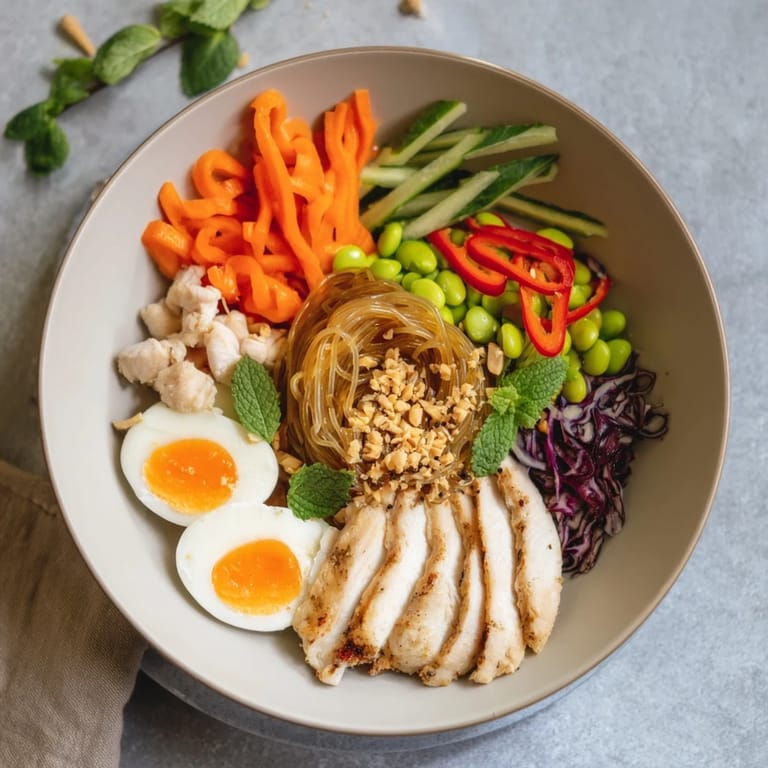
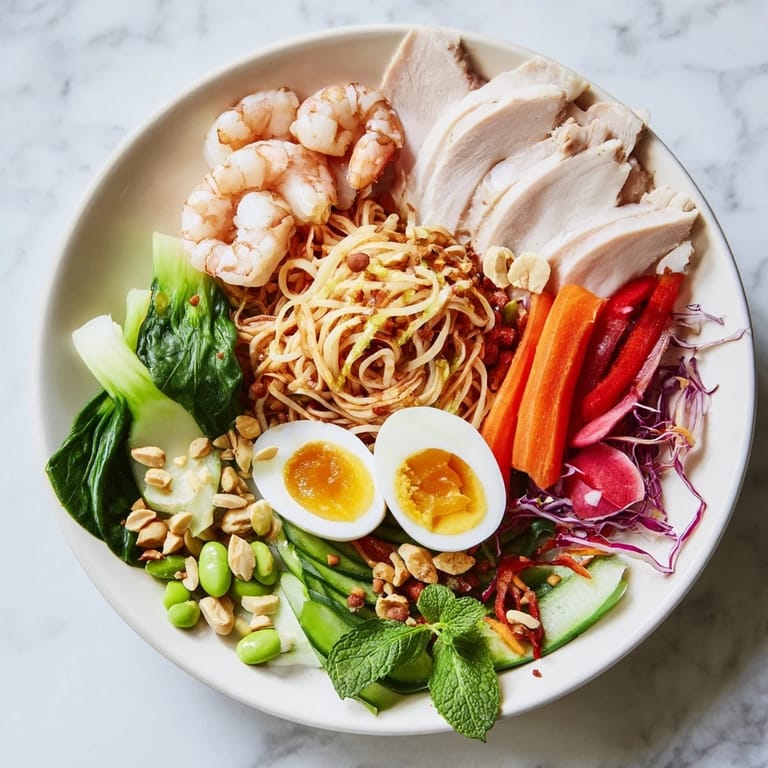
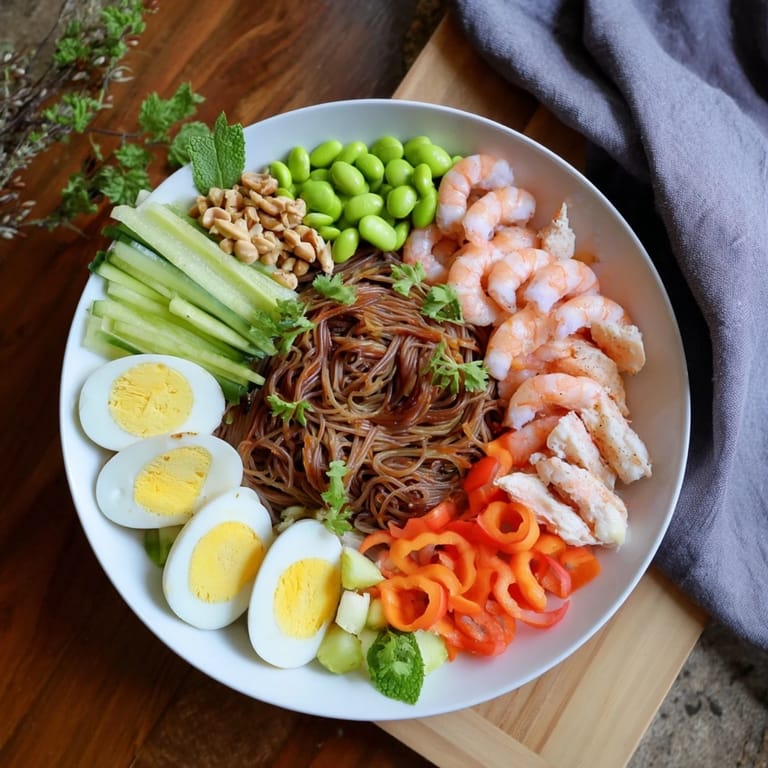
- Find your largest serving board or platter—this is your canvas. Start by placing a divided bowl or four small bowls in the center. Pour each sauce into its own section: soy sauce, spicy peanut sauce, hoisin, and sweet chili. Now, working outward from the center, create neat sections and rows. Arrange the noodles in one mounded section, then create neat stacks or fans with each vegetable: carrots in one arc, cucumber slices overlapping like scales, bell pepper in another line. Keep everything organized and colorful—think about alternating colors so nothing looks monochromatic. This is where the magic happens, and it doesn't need to be perfect, just intentional.
- Add your proteins with ceremony:
- Create separate sections for the chicken slices, shrimp, and egg halves. These are the anchors that make this a complete meal, so give them their own real estate on the board. They look beautiful arranged in neat lines or arranged in loose piles—whatever feels right to you.
- Crown it with final touches:
- Scatter the cilantro and mint leaves across the board, then sprinkle the chopped peanuts and sesame seeds over the noodle section. Place lime wedges in the corners. Step back and look at it—you've just created something restaurant-worthy in your own kitchen.
- Serve with purpose:
- Bring the board to the table and let everyone build their own bowl. Suggest they start with noodles as the base, add their favorite proteins and vegetables, choose a sauce or combine two, then finish with herbs and a squeeze of lime. This is their moment to create something personal.
 Pin it
 There's a particular joy I discovered in watching people eat from a shared board—it breaks down the formality of a regular meal and creates this beautiful, communal moment where everyone's leaning in, making their own discoveries, trying combinations that the person next to them invented. My neighbor once mixed all four sauces together and found his new favorite condiment. I would never have thought to do that, but that's the gift this dish gives—permission to experiment.
The Art of Assembly
The secret to a board that looks like it belongs in a magazine is actually quite simple: consistency in cutting. When all your vegetables are the same thickness and roughly the same size, the whole thing looks intentional and refined. A mandoline slicer is your friend here—it does the heavy lifting and keeps your knuckles safe. But honestly, even with a sharp knife and a little patience, you can create something beautiful. The other secret is negative space: don't feel like you need to fill every inch of the board. A little breathing room between sections actually makes the whole thing look more elegant, not less.
Sauce Strategy and Flavor Building
Each sauce tells a different story and brings out different notes in the noodles and vegetables. The soy sauce is straightforward umami, the spicy peanut sauce is creamy comfort, the hoisin is sweet and thick, and the sweet chili is your heat-and-honey balance. The real wisdom I've learned is that these sauces work differently when you combine them—a little soy with a little peanut becomes something entirely new. Let your guests discover this themselves. Also, if any of your guests have sauce preferences (or allergies), you can always make your own versions or substitute: tamari for soy sauce if you're going gluten-free, tahini-based sauce instead of peanut if there are nut allergies, or just extra hoisin and sweet chili for those who want to skip the soy entirely.
Storage and Make-Ahead Magic
This is the ultimate make-ahead dish, which is probably why it's become my go-to for entertaining. You can prep virtually everything the morning of, keeping it separate in labeled containers in the refrigerator. The noodles can sit for hours tossed in sesame oil and won't dry out. The proteins are already cooked and just need to stay cold. The vegetables stay crisp in sealed containers with a damp towel. What you don't want to do ahead is assemble the board itself—that final arrangement is best done within an hour of serving so everything looks fresh and the noodles haven't had time to absorb moisture from the vegetables. It's a quick 10-minute assembly from a bunch of prepared components, which means you look like a magician without any of the stress.
- Keep proteins in separate containers so flavors don't transfer and you have flexibility
- Store cut vegetables in airtight containers with a paper towel to absorb excess moisture
- Mix your noodles with sesame oil just before serving for the best texture and appearance
 Pin it
 This noodle board has become the dish I make when I want to feel like I've done something impressive without the kitchen chaos. It's generous, it's flexible, and it lets everyone at the table be part of the experience.
Recipe FAQs
- → What types of noodles work best for this dish?
Rice noodles or soba noodles are ideal, as they absorb flavors well and provide a tender texture while complementing the fresh vegetables and proteins.
- → How can I make the platter vegetarian-friendly?
Substitute chicken and shrimp with firm tofu, and ensure all sauces are free of animal products to maintain a vegetarian balance.
- → What dipping sauces accompany the noodle board?
A selection including soy sauce, spicy peanut sauce, hoisin sauce, and sweet chili sauce adds a range of sweet, spicy, and savory notes enhancing each bite.
- → How should the ingredients be arranged on the platter?
Arrange noodles, vegetables, and proteins in neat stacked rows or fans across the board, placing the dipping sauces centrally divided for aesthetic appeal and ease of access.
- → Are there common allergens to consider with this dish?
Yes, this dish contains soy, peanuts, eggs, and shellfish. Adjust ingredients and sauces to accommodate allergies as needed.
- → Can this dish be prepared gluten-free?
Use tamari instead of soy sauce and confirm that all sauces are gluten-free to keep the dish suitable for gluten-sensitive diets.