 Pin it
 My kitchen filled with the sharp aroma of garlic hitting hot oil on a Tuesday evening when I realized arrabbiata didn't have to stay confined to a pasta bowl. I'd been standing over a pot of simmering sauce, watching the heat build in that familiar way, when it struck me—what if I layered it all together and let the oven do the work? That first baked version came together almost by accident, a moment of tired creativity that turned into something I've made dozens of times since.
I made this for friends on a Friday night when I was too tired to think of anything fancy, and someone actually asked for the recipe before dessert. That's when I knew it had crossed over from weeknight solution to something worth repeating, worth perfecting.
Ingredients
- Penne pasta (350 g): Use good quality pasta if you can—it holds the sauce better and stays firmer when baked rather than turning into mush.
- Olive oil (2 tbsp): This is your foundation, so don't skimp on it; extra virgin makes a real difference here.
- Garlic (4 cloves, finely chopped): The finer you chop, the more it distributes through the oil and becomes almost creamy rather than chunky.
- Crushed red pepper flakes (1–2 tsp): Start with less if you're unsure—you can always add more heat, but you can't take it back.
- Canned crushed tomatoes (800 g): San Marzano if your budget allows; they're sweeter and less acidic, which makes the whole dish taste rounder.
- Sugar (1 tsp): This isn't about sweetness—it balances the acidity of the tomatoes and helps the sauce feel richer.
- Dried oregano (1 tsp): Dried works better here than fresh because it stands up to the baking heat.
- Salt and black pepper (½ tsp and ¼ tsp): Taste as you go; baking concentrates flavors, so you might want less salt than you think.
- Fresh basil (1 small bunch, chopped): Reserve some for the end—that fresh basil finish against the hot cheese is what makes people notice.
- Parmesan cheese (80 g): Grate it yourself if you have time; pre-grated has anticaking agents that make it less creamy when melted.
- Mozzarella cheese (150 g): Shred it yourself too, or buy it in blocks and shred at home—the texture is so much better than pre-shredded.
Tired of Takeout? 🥡
Get 10 meals you can make faster than delivery arrives. Seriously.
One email. No spam. Unsubscribe anytime.
Instructions
- Heat your oven and prepare the stage:
- Preheat to 200°C (400°F) and grease your baking dish while the oven warms—you want everything ready to move fast once the sauce is done.
- Get the pasta cooking:
- Boil salted water in a large pot, then add penne and cook until just shy of al dente, about 2 minutes under the package time. The baking will finish it, so you want it still with a slight bite.
- Build the sauce foundation:
- While pasta cooks, warm olive oil in a large skillet over medium heat. Add your finely chopped garlic and red pepper flakes, then let them sizzle for 1–2 minutes until the kitchen smells incredible but before the garlic turns brown and bitter.
- Simmer the tomatoes to richness:
- Stir in the crushed tomatoes, sugar, oregano, salt, and pepper. Let it bubble gently for 10–12 minutes, stirring now and then, until it thickens slightly and darkens just a shade—this is when the flavors really marry.
- Wake it up with basil:
- Pull the skillet off heat and stir in your chopped basil, saving a pinch for the very end.
- Marry pasta and sauce:
- Pour your drained penne into the sauce and toss until every strand is coated, making sure you scrape the bottom where the best flavor lives.
- Layer for balance:
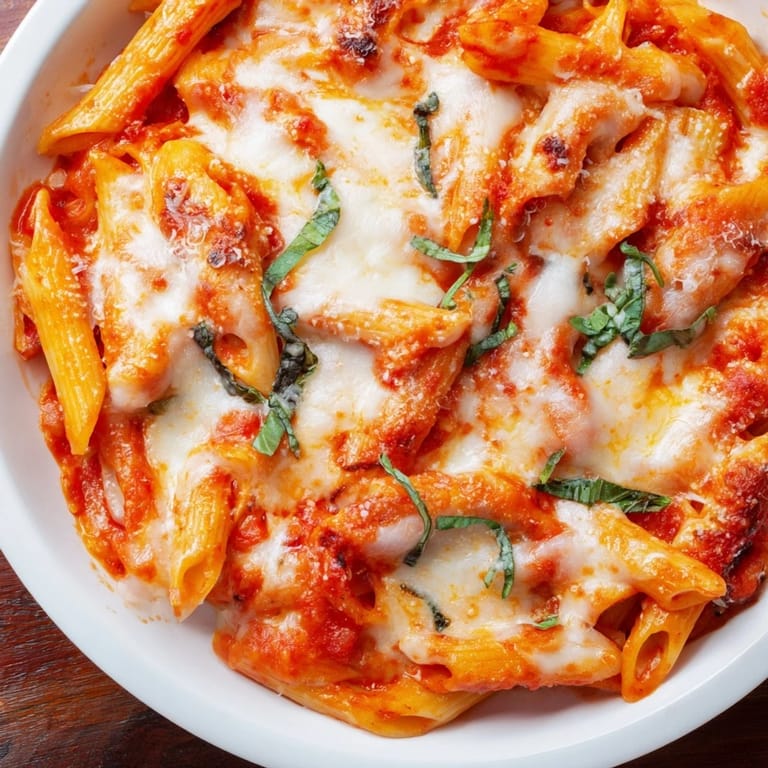
- Spread half the sauced pasta into your baking dish, scatter half the Parmesan and mozzarella on top, then layer the rest of the pasta and finish with the remaining cheese so you get a golden top.
- Bake until the cheese is singing:
- Slide into the oven for 18–20 minutes—you're watching for the cheese to melt and turn golden, and the sauce to start bubbling up the sides.
- Rest and finish:
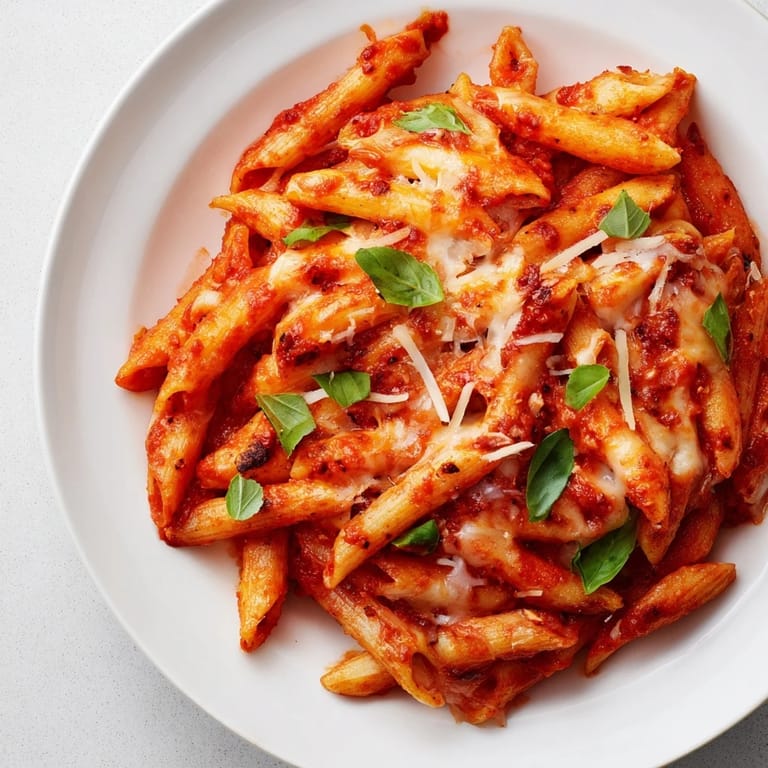
- Let it sit for 5 minutes so the cheese sets just slightly and the dish becomes easier to serve. Top with reserved basil and bring to the table while it's still hot.
 Pin it
 I remember watching my daughter take the first bite, expecting her to like it because it was cheesy and warm, but instead she got quiet for a moment—that kind of quiet that means something unexpected just happened on her tongue. The spice, the sauce, the cheese melting together created this thing that was more interesting than she'd anticipated from a pasta bake, and suddenly it became a request at every family dinner.
The Heat Question
Arrabbiata means 'angry' in Italian, and the anger comes from the red pepper flakes—but 'angry' doesn't mean unbearable. If you like gentler heat, start with just 1 teaspoon and taste the sauce before you bake it. If you're the type who reaches for hot sauce, go ahead and use the full 2 teaspoons and maybe add a pinch more. The beauty here is that you have complete control, and unlike some dishes where the heat sneaks up, you can taste and adjust this sauce while it's still on the stove.
Cheese: The Non-Negotiable Layer
This dish lives or dies on cheese quality because you're tasting it in every bite. Mozzarella brings the stretch and mild sweetness, while Parmesan adds that sharp, salty depth. I tried this once with pre-shredded cheese from a bag, thinking it wouldn't matter, and the texture was grainy and the melt wasn't smooth—it taught me that shredding your own takes maybe two extra minutes but makes a difference you'll actually taste. If you can't find good mozzarella, provolone or fontina both work beautifully and bring their own character to the dish.
Simple Changes That Matter
The base recipe is perfect on its own, but it's also a canvas for small adjustments that make it feel like yours. Some nights I'll sauté thin slices of bell pepper or mushroom in the oil before adding garlic, which adds body and softness to the sauce. Fresh spinach wilted into the sauce at the end brings earthiness and makes it feel a little more balanced. A handful of capers stirred in just before baking adds a sharp, briny note that punches through the richness.
- Try adding capers, olives, or sun-dried tomatoes to the sauce for a more complex flavor profile.
- Spinach, zucchini, or roasted bell peppers transform this from simple into garden-fresh.
- A pinch of dried chili powder instead of or alongside the red pepper flakes shifts the heat in an interesting direction.
 Pin it
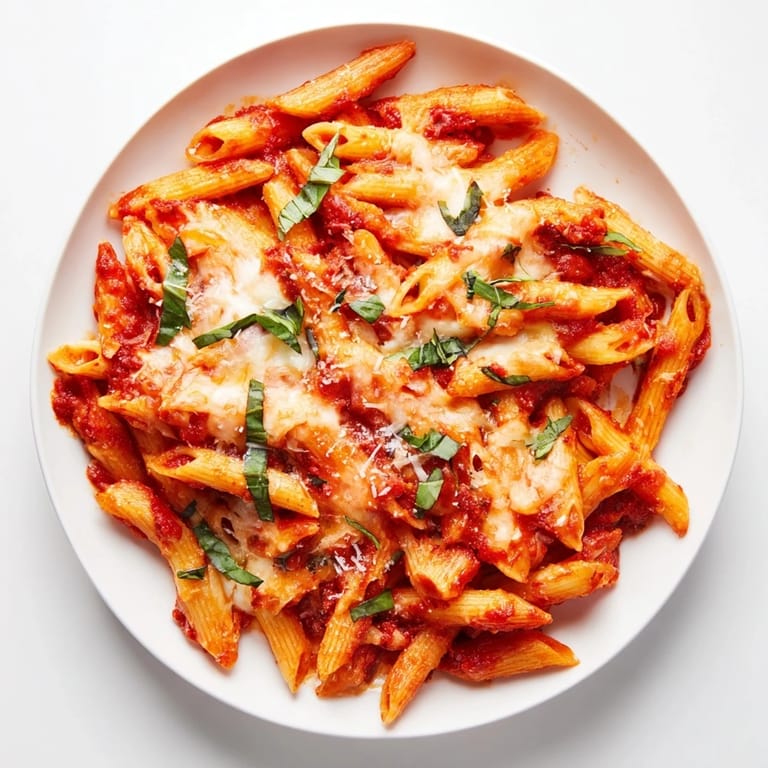
 There's something grounding about a dish that comes together on one plate, feeds a table full of people, and leaves everyone satisfied. This is that dish for me.
Recipe FAQs
- → What gives this dish its spicy flavor?
The heat comes from crushed red pepper flakes added to the tomato sauce, which can be adjusted for desired spiciness.
- → Can I use other cheeses besides Parmesan and mozzarella?
Yes, provolone or fontina can be substituted to vary the flavor profile while keeping the creamy texture.
- → How can I add vegetables to this dish?
Sautéed vegetables such as bell peppers or mushrooms can be mixed into the sauce before baking for extra flavor and nutrition.
- → What’s the best way to cook the pasta before baking?
Cook the penne until just al dente, about 2 minutes less than package instructions, to prevent overcooking during baking.
- → How should I serve this baked dish?
It pairs beautifully with a crisp green salad and a glass of Chianti or your favorite Italian wine.