 Pin it
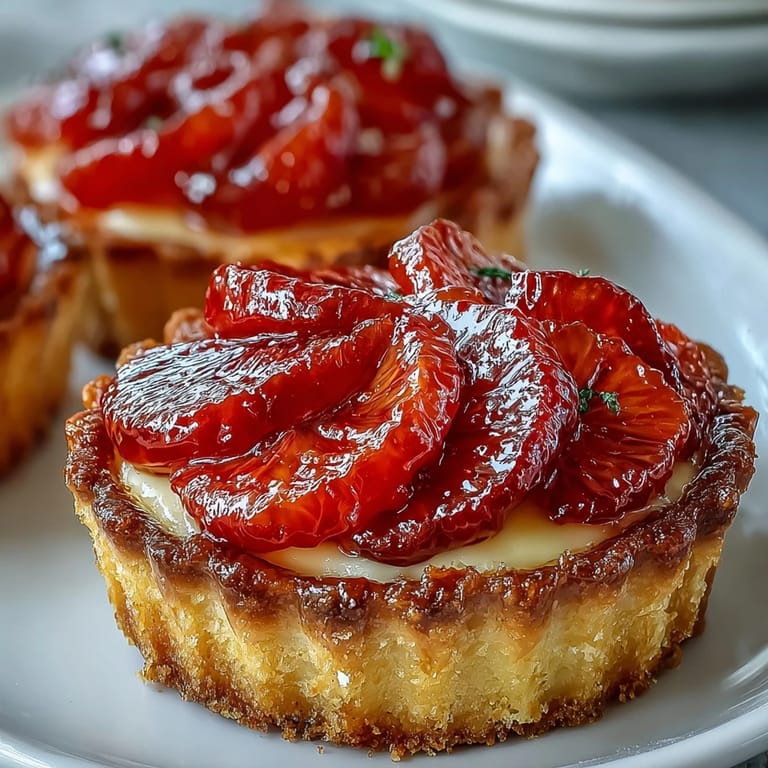
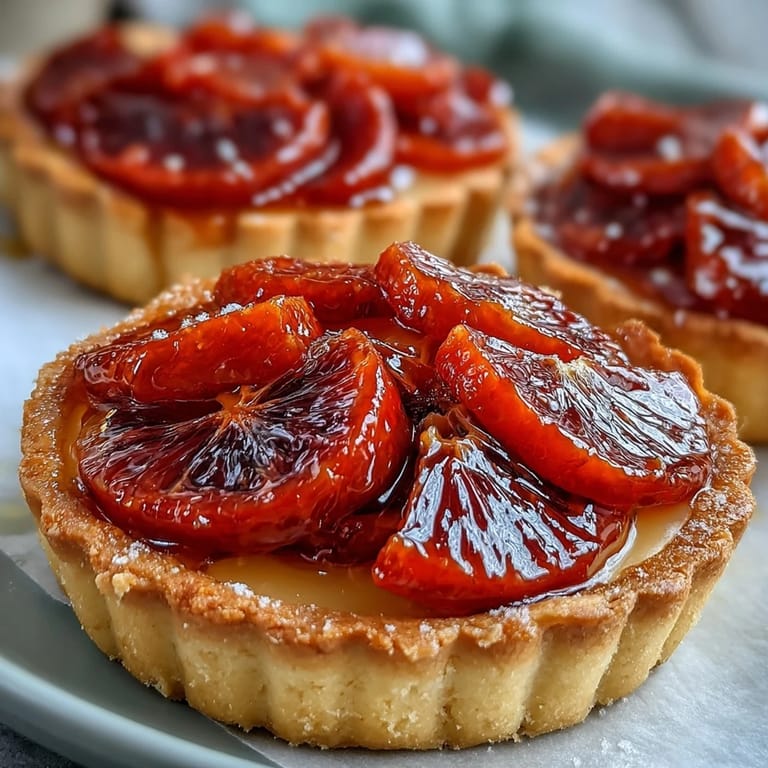
 My neighbor knocked on the door holding a bag of blood oranges she didn't know what to do with, and I promised her something beautiful by the weekend. I'd been wanting to try individual tarts for weeks but kept putting it off. That unexpected delivery turned into six glossy, jewel-toned desserts that made her actually gasp when I brought them over. The crimson segments against pale custard looked almost too pretty to eat, but we did anyway, standing in her kitchen with forks and no plates.
I made these for a winter dinner party when everything outside was gray and cold, and the sight of those ruby-red oranges on the counter lifted the whole mood in the kitchen. My friend Anna helped me arrange the slices, and we got competitive about whose tart had the most symmetrical pattern. We ended up eating one slightly lopsided reject with spoons straight from the pan, laughing at how seriously we were taking it. The guests never knew we'd already taste-tested the batch, but they did ask for the recipe twice before leaving.
Ingredients
- All-purpose flour: The base of your tart shell, and using cold butter with it creates those delicate, crumbly layers that shatter perfectly under a fork.
- Powdered sugar: Sweetens the dough without making it grainy, and helps the crust stay tender instead of tough.
- Unsalted butter (cold and cubed): Cold is key here because it keeps the dough flaky, and I always cube it ahead so it stays firm while I work.
- Egg yolk: Binds the dough and adds richness without making it too wet or sticky.
- Ice water: Use only as much as you need, a tablespoon at a time, because too much turns the dough tough and hard to handle.
- Whole milk: The backbone of the custard, and whole milk gives it that creamy, luxurious texture you can't fake with lower fat versions.
- Granulated sugar: Just enough to sweeten the custard without overpowering the brightness of the blood oranges.
- Egg yolks: These thicken the custard into something smooth and spoonable, and whisking them well before adding hot milk prevents scrambling.
- Cornstarch: A little insurance for silky custard that holds its shape in the tart without turning rubbery.
- Pure vanilla extract: Adds warmth and depth, and I always use the real stuff because imitation just tastes flat next to fresh citrus.
- Blood oranges: The star of the show, with their deep red flesh and slightly tart, berry-like flavor that regular oranges just can't match.
- Honey (optional): Warmed with a bit of water, it makes a glossy glaze that catches the light and makes the tarts look bakery-perfect.
Tired of Takeout? 🥡
Get 10 meals you can make faster than delivery arrives. Seriously.
One email. No spam. Unsubscribe anytime.
Instructions
- Make the tart dough:
- Pulse the flour, powdered sugar, and salt in a food processor, then add cold butter and pulse until it looks like wet sand. Add the egg yolk and a tablespoon of ice water at a time, pulsing just until the dough clumps together without becoming a sticky ball.
- Chill the dough:
- Pat it into a flat disk, wrap it tightly in plastic, and let it rest in the fridge for at least an hour. This step is non-negotiable because warm dough shrinks and tears when you try to work with it.
- Roll and fit the shells:
- On a floured surface, roll the dough to about 1/8-inch thick, then cut circles to fit your tart pans and press gently into each one, trimming any overhang. Pop them back in the fridge for 20 minutes so they hold their shape in the oven.
- Blind bake the shells:
- Line each shell with parchment and fill with pie weights or dried beans, then bake at 350°F for 15 minutes. Remove the weights and parchment, bake another 5 minutes until golden, and let them cool completely before filling.
- Cook the custard:
- Heat the milk in a saucepan until it's steaming, then whisk together egg yolks, sugar, and cornstarch in a bowl until smooth and pale. Slowly pour the hot milk into the yolk mixture while whisking constantly, then return everything to the pan and cook over medium heat, stirring without stopping, until it thickens and bubbles.
- Finish and chill the custard:
- Remove from heat, stir in vanilla and butter until smooth, then transfer to a bowl and press plastic wrap directly onto the surface to prevent a skin. Let it cool to room temperature, then chill for at least an hour until it's thick and cold.
- Assemble the tarts:
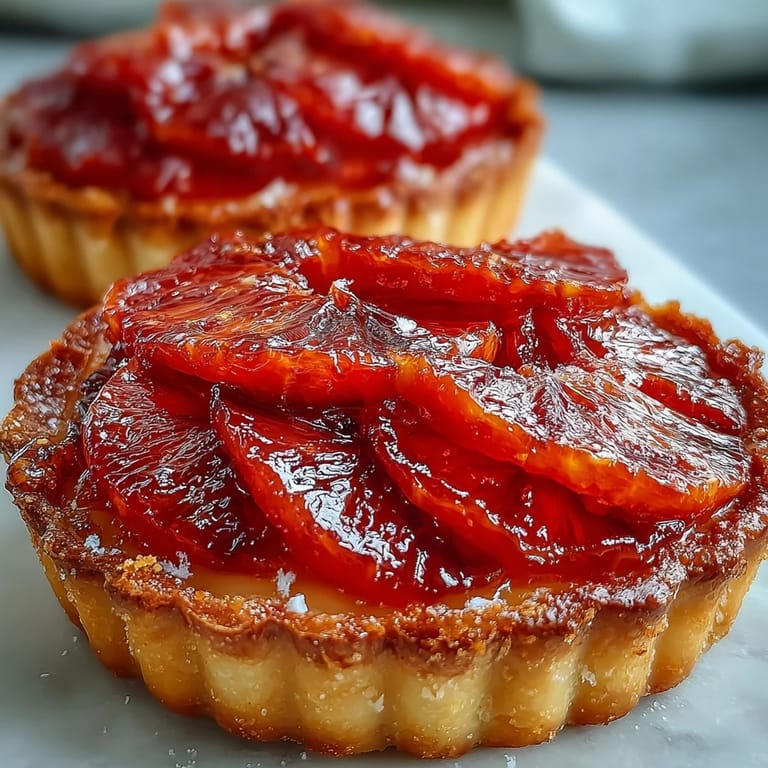
- Spoon the chilled custard into each cooled tart shell, smoothing the top gently. Arrange thin slices of blood orange on top in overlapping circles or any pattern that makes you happy.
- Glaze and serve:
- If you want that glossy finish, warm honey with a teaspoon of water and brush it lightly over the oranges. Chill the finished tarts until you're ready to serve, and watch people's faces light up when you bring them out.
 Pin it
 The first time I served these, my cousin took a bite and just closed her eyes for a second, and I knew I'd made something that mattered. It wasn't just dessert anymore, it was the end of a long week, a reason to sit down and actually taste something instead of rushing. She asked if I'd make them for her birthday, and now it's become a tradition I look forward to every year.
Choosing Your Blood Oranges
Look for blood oranges that feel heavy for their size and have smooth, firm skin without soft spots or wrinkling. The deeper the red color on the outside, the more vibrant the flesh tends to be inside, though sometimes the plainest-looking ones surprise you. I like to slice one open at the store if they let me, just to see what I'm working with. If blood oranges aren't available, regular navel or Cara Cara oranges work beautifully, they just won't have that dramatic ruby hue.
Make-Ahead Magic
You can bake the tart shells up to two days ahead and store them in an airtight container at room temperature, and the custard keeps in the fridge for up to three days if covered well. I usually make both components the night before, then assemble the tarts the morning of serving so the shells stay crisp and the oranges look fresh. If you need to assemble earlier, brush the glaze on right before serving to keep everything looking glossy and intentional. The worst thing you can do is assemble them too far in advance, because the custard will soften the shells and they lose that perfect shatter.
Serving and Storing
These tarts are best served cold, straight from the fridge, and they pair incredibly well with a glass of sparkling rosé or a late-harvest dessert wine. If you have leftovers, cover them loosely with plastic wrap and keep them chilled, though the shells will soften a bit by the second day. I've also served these with a tiny dollop of lightly sweetened whipped cream on the side, and it turns them into something even more indulgent.
- Let the tarts sit at room temperature for 5 minutes before serving so the custard softens just slightly.
- Use a sharp knife to slice through the crust cleanly without crushing the filling.
- Garnish with a few fresh mint leaves or a light dusting of powdered sugar if you want extra flair.
 Pin it
 Every time I make these, I'm reminded that the best desserts aren't always the most complicated, they're the ones that make people pause and savor. Keep a bag of blood oranges on hand during their short season, and you'll always have an excuse to make something this stunning.
Recipe FAQs
- → Can I make these tarts ahead of time?
Yes, you can prepare the tart shells and custard a day in advance. Store them separately in the refrigerator and assemble with fresh blood orange slices just before serving for the best texture and presentation.
- → What can I substitute for blood oranges?
Regular navel oranges, Cara Cara oranges, or even grapefruit work well as substitutes. While you'll lose the distinctive deep red color of blood oranges, the tarts will still be delicious and visually appealing.
- → How do I prevent the tart shells from shrinking?
Chilling the dough twice—once after making it and again after pressing it into the pans—helps minimize shrinkage. Also, avoid stretching the dough when fitting it into the tart pans, and use pie weights during blind baking.
- → Can I make the custard without cornstarch?
You can use flour instead of cornstarch, but you'll need about 3 tablespoons to achieve the same thickness. Cornstarch creates a smoother, more delicate custard texture that's ideal for these tarts.
- → How should I store leftover tarts?
Cover the assembled tarts loosely with plastic wrap and refrigerate for up to 2 days. Note that the pastry may soften slightly over time due to moisture from the custard and fruit.
- → What size tart pans should I use?
This yields 6 individual 4-inch tart pans. You can also use one 9-inch tart pan for a single large tart, adjusting the baking time to 20-25 minutes for the shell.