 Pin it
 There's something about the sound of fish hitting hot oil that still takes me back to a rainy Friday night in a cramped London pub, watching the kitchen team work with the practiced ease of people who'd made this dish a thousand times. I'd ordered fish and chips on a whim, and when the basket arrived—newspaper lining and all—I understood why this simple combination had endured for centuries. Years later, I'd finally cracked the technique at home, and now my kitchen fills with that same golden-brown promise every time someone asks what I'm making for dinner.
I remember my friend Marcus sitting at my kitchen counter, skeptical about whether homemade fish and chips could ever match what we'd get from the chippy down the street. Twenty minutes later, he was dipping pieces into malt vinegar with his eyes closed, and I watched something shift—he'd realized that food made with intention, even in a modest kitchen, tastes different. He asked for the recipe that night and still texts me photos of his attempts.
Ingredients
- White fish fillets (cod or haddock): These firm, mild-flavored fish hold up beautifully to the batter and high heat—haddock has a slightly sweeter edge if you can find good quality, which makes all the difference.
- All-purpose flour and cornstarch: The combination matters more than you'd think; the cornstarch adds lightness and crispness that flour alone can't achieve, creating that delicate, shattering crust.
- Cold sparkling water: The carbonation is doing real work here—it creates tiny bubbles in the batter that fry up into pockets of air, which is why your batter turns light and airy instead of dense.
- Russet or Maris Piper potatoes: Maris Piper is the traditional choice in Britain for a reason; they're starchy enough to get crispy on the outside while staying creamy within, and they don't fall apart during the double fry.
- Sunflower or vegetable oil: You need an oil with a high smoke point that won't impart flavor—avoid olive oil unless you enjoy scorched, metallic notes in your chips.
Tired of Takeout? 🥡
Get 10 meals you can make faster than delivery arrives. Seriously.
One email. No spam. Unsubscribe anytime.
Instructions
- Soak your chips:
- Cut your potatoes into thick batons and soak them in cold water for at least fifteen minutes—this removes excess starch and is why your finished chips won't stick together in a sad clump. Pat them completely dry before they hit the oil, or you'll get sputtering and uneven cooking.
- First fry at low temperature:
- Heat your oil to 150°C (300°F) and fry the potatoes in batches for four to five minutes until they're tender but still pale. This step cooks them through without browning, and it's the reason the double-fry method works—you're essentially steaming them first.
- Make your batter:
- Whisk dry ingredients together, then gradually add cold sparkling water while whisking, aiming for a consistency thick enough to coat the back of a spoon but thin enough to flow smoothly. If it's too thick, your batter clings; too thin, and you lose the crispy texture that makes this dish worth making.
- Second fry your chips:
- Crank the heat up to 190°C (375°F) and fry your pre-cooked chips again in batches for two to three minutes until they're golden and crispy all over. This is where the magic happens—the exterior shatters and the inside steams to fluffy perfection.
- Fry your fish:
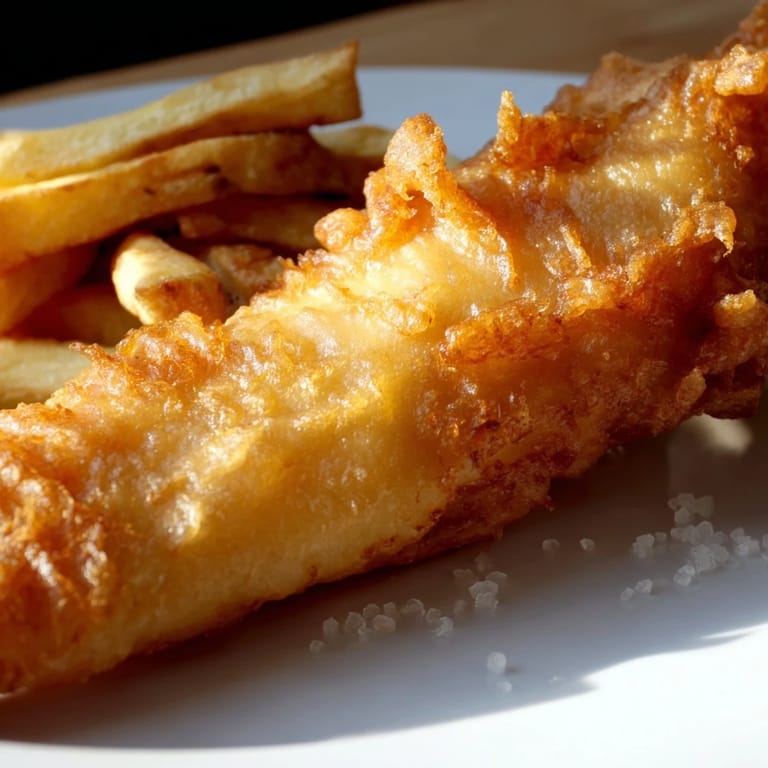
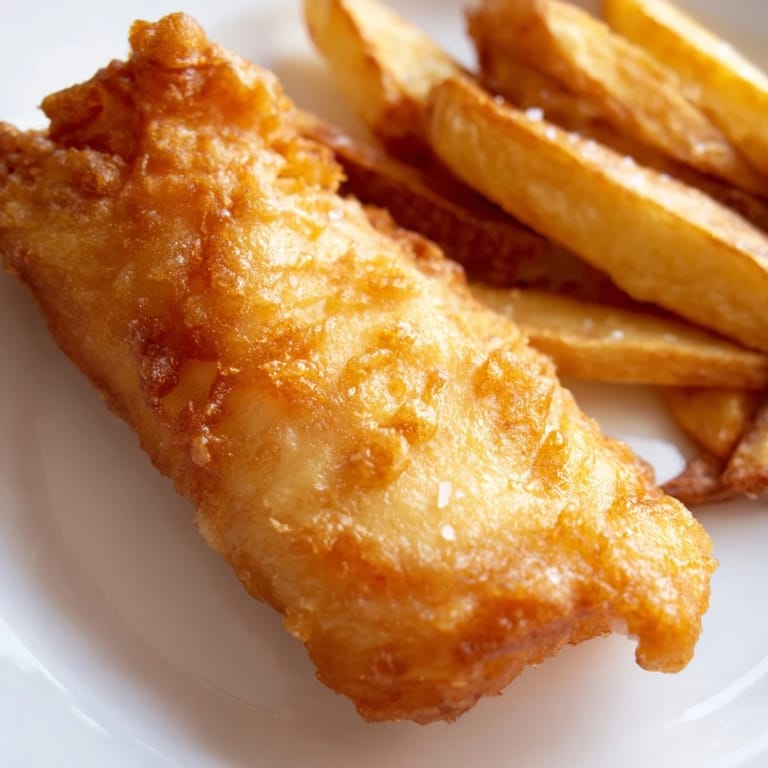
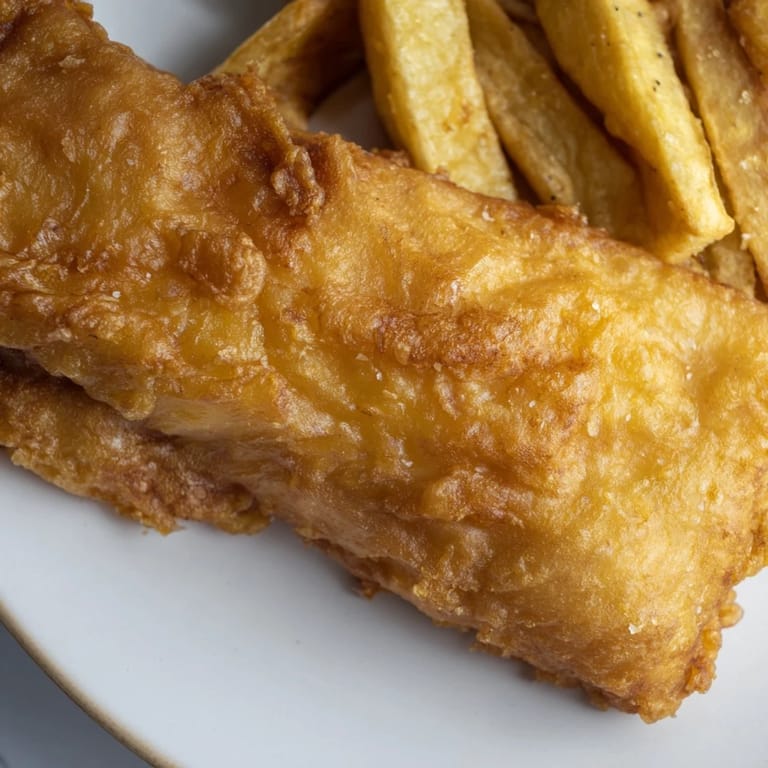
- Pat your fillets dry, dust lightly with flour to help the batter cling, then dip into batter and lower carefully into the hot oil. Fry for five to seven minutes, turning once, until the batter is deep golden brown and sounds crispy when you tap it with a spoon.
- Drain and serve immediately:
- Lift your fish and chips onto a wire rack or paper towels, sprinkle with sea salt while everything's still hot, and serve right away with malt vinegar and lemon wedges. Every minute you wait is a minute the crispy exterior surrenders to steam.
 Pin it
 One winter evening, I'd made this for my sister's family, and her youngest daughter—usually a picky eater who wrinkled her nose at most seafood—took one bite of the crispy fish and looked up with genuine surprise. She asked for another piece, then another, and I watched her discover that food doesn't have to be complicated to be delicious. That night became an annual tradition, and now they visit specifically on nights when I'm planning to make fish and chips.
The Secret to Crispy Batter
The difference between batter that shatters and batter that's merely crunchy comes down to two details most people overlook: keeping everything ice cold and trusting the carbonation. The moment your batter warms up, those tiny bubbles collapse and you're left with dense coating instead of delicate crispness. I learned this by accident one evening when I let my batter sit while I prepped the fish, and the result was underwhelming enough to teach me a lesson I never forgot.
Why the Soak Matters
Soaking potatoes isn't just culinary busywork—it's where the texture actually happens. The cold water pulls starch from the surface, which means less starch means less likelihood of sticking together and more surface area to crisp. I've made these without soaking out of impatience before, and the resulting chips were pasty and clumped together like they'd been through a crisis. It's a small step that changes everything.
Making It Your Own
Once you've mastered the basic technique, this dish becomes a canvas for your own preferences and experiments. Some people swear beer creates a superior batter with deeper flavor, while others prefer the clean crispness of sparkling water. The fish itself can shift depending on what looks good at the market—halibut, pollock, or even thick-cut salmon fillets all work beautifully with this method.
- If you want to experiment with beer, use a pale ale or lager for clean flavor rather than anything dark or hoppy.
- Serve with mushy peas on the side for the full traditional experience, or keep it simple with just lemon and vinegar.
- Leftovers reheat surprisingly well in a hot oven if you're willing to give them five minutes at 180°C to restore the crisp.
 Pin it
 This dish has a way of bringing people together in the most unpretentious way—no fancy plating, no complicated techniques, just honest food that tastes like comfort feels. Make it for people you like, serve it hot, and watch what happens.
Recipe FAQs
- → What type of fish is best for this dish?
Cod and haddock are preferred for their firm texture and mild flavor, which hold well during frying.
- → Why soak the potatoes before frying?
Soaking removes excess starch, preventing the fries from sticking and helping achieve a crispier texture.
- → How does double-frying improve the chips?
The first fry cooks the potatoes through at a lower temperature, while the second fry crisps the exterior for perfect crunchiness.
- → Can sparkling water be substituted?
Yes, beer can be used to create a sharper, richer batter with a different flavor profile.
- → What oil is recommended for frying?
Sunflower or vegetable oil is ideal due to their high smoke points and neutral flavor.
- → How to keep the fish batter crispy?
Maintain hot oil temperature and avoid overcrowding the fryer to ensure even cooking and crispness.