 Pin it
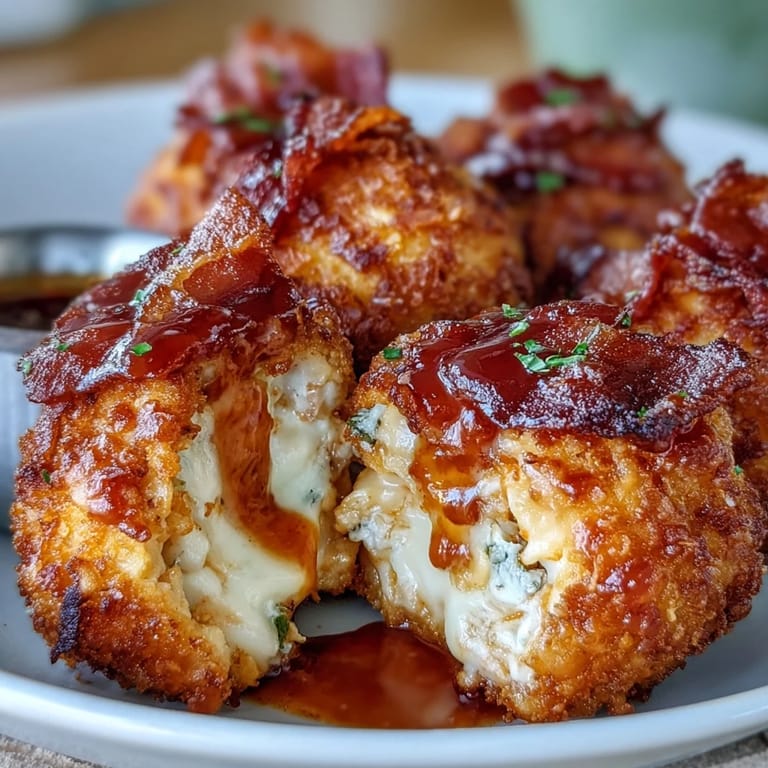
 The skillet was still hissing when I pulled the first batch out, golden and crackling. I had been craving something bold all week, something with heat and texture that didn't need a fork. My friend had mentioned stuffing chicken with cheese once, and I thought, why not go all in? The smell of buffalo sauce hitting hot oil filled the kitchen, sharp and tangy, and I knew instantly this was going to be one of those recipes I'd make again and again.
I made these for a small gathering last spring, and they vanished before I could even plate the second tray. Someone asked if I'd ordered them from a restaurant. The panko gave them that commercial-grade crunch, but the buffalo drizzle at the end was what really sealed it. I remember standing by the stove, tossing them in sauce while everyone hovered nearby with napkins ready.
Ingredients
- Mozzarella cheese (225 grams, cubed): The star of the molten center, it melts beautifully and stays stretchy even after cooling slightly.
- Cooked bacon (100 grams, crumbled): Adds a smoky, salty layer that balances the heat of the buffalo sauce.
- Ground chicken (450 grams): Lean and mild, it takes on seasoning well and forms neat, tender shells around the filling.
- Buffalo sauce (120 millilitres, divided): Half goes into the meat for flavor, the other half coats the bombs at the end for that classic tangy kick.
- Garlic powder, onion powder, paprika (1 teaspoon each): These build a warm, aromatic base that keeps the chicken from tasting flat.
- Salt and black pepper: Season to your taste, but don't skip them or the chicken will be bland.
- Plain flour (100 grams): The first step in the breading, it helps the egg stick and creates a dry surface.
- Eggs (2 large, beaten): The glue that holds the breadcrumbs in place during frying or baking.
- Breadcrumbs (100 grams, preferably panko): Panko gives you that light, crispy shell that stays crunchy longer than regular crumbs.
- Vegetable or canola oil: For frying, you need enough to submerge the bombs halfway and maintain a steady 175 degrees Celsius.
Tired of Takeout? 🥡
Get 10 meals you can make faster than delivery arrives. Seriously.
One email. No spam. Unsubscribe anytime.
Instructions
- Prep the Fillings:
- Cut the mozzarella into bite-sized cubes, then wrap each one with a pinch of crumbled bacon. Set them aside on a plate so they're ready to tuck inside the chicken.
- Season the Chicken:
- In a large bowl, mix the ground chicken with 60 millilitres of buffalo sauce, garlic powder, onion powder, paprika, salt, and pepper until everything is evenly distributed. The mixture should be moist but still hold its shape.
- Form the Bombs:
- Scoop a heaping tablespoon of chicken mixture and flatten it in your palm. Place a bacon-wrapped mozzarella cube in the center, then fold the chicken around it, pinching the seams closed to form a smooth ball.
- Coat Each Bomb:
- Roll each ball in flour, dip it into the beaten eggs, then press it into the breadcrumbs until fully coated. Make sure there are no gaps or the cheese will leak out.
- Fry or Bake:
- For frying, heat oil to 175 degrees Celsius and fry in batches for 5 to 6 minutes, turning gently, until golden and cooked through. For baking, arrange them on a greased tray and bake at 200 degrees Celsius for 18 to 20 minutes.
- Finish with Sauce:
- While the bombs are still hot, drizzle or toss them with the remaining 60 millilitres of buffalo sauce. Garnish with extra bacon if you like, and serve immediately.
 Pin it
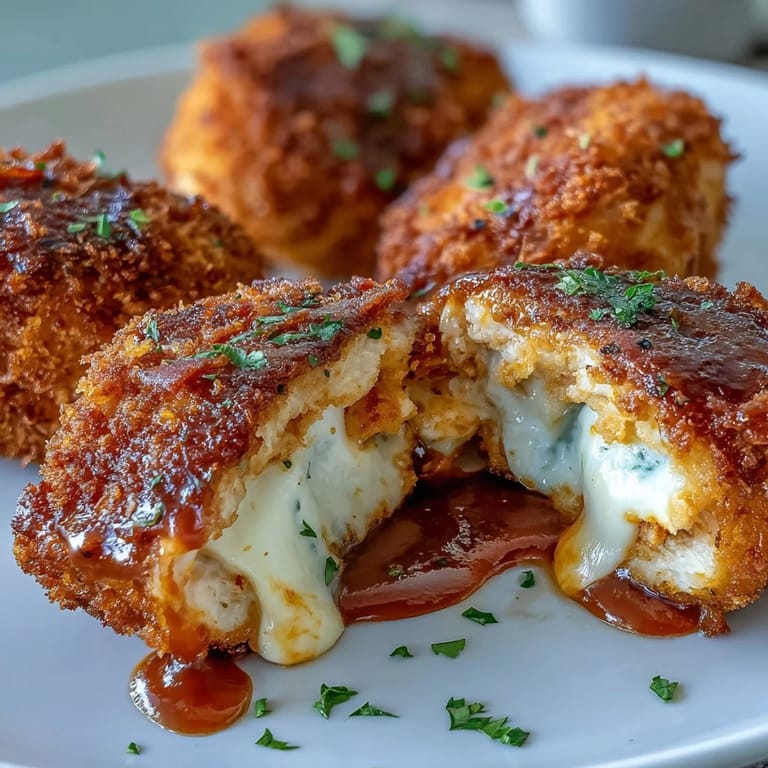
 The first time I served these, my cousin grabbed one straight off the cooling rack and yelped because the cheese was still molten. After that, I started warning people to wait at least a minute. But honestly, the impatience is a compliment. These bombs have a way of making people forget to be polite.
Baking vs Frying
I've done both, and frying gives you a deeper color and crispier shell, but baking is cleaner and still delivers great texture. If you bake, brush the bombs lightly with oil before they go in the oven. That helps the breadcrumbs brown and crisp up without drying out the chicken.
Serving Suggestions
I always put out ranch or blue cheese dip alongside these, and celery sticks if I'm feeling traditional. They're rich enough to stand alone, but the cool, creamy dip cuts through the heat. If you're serving a crowd, double the batch because twelve disappears faster than you'd think.
Storage and Reheating
Leftovers keep in the fridge for up to two days, though they rarely last that long. Reheat them in the oven at 180 degrees Celsius for about 10 minutes to bring back the crunch. Microwaving works in a pinch, but the coating softens and loses its bite.
- Freeze unbaked bombs on a tray, then transfer to a freezer bag once solid.
- Bake from frozen, adding 5 extra minutes to the cooking time.
- Don't freeze already fried bombs, the texture suffers when reheated.
 Pin it
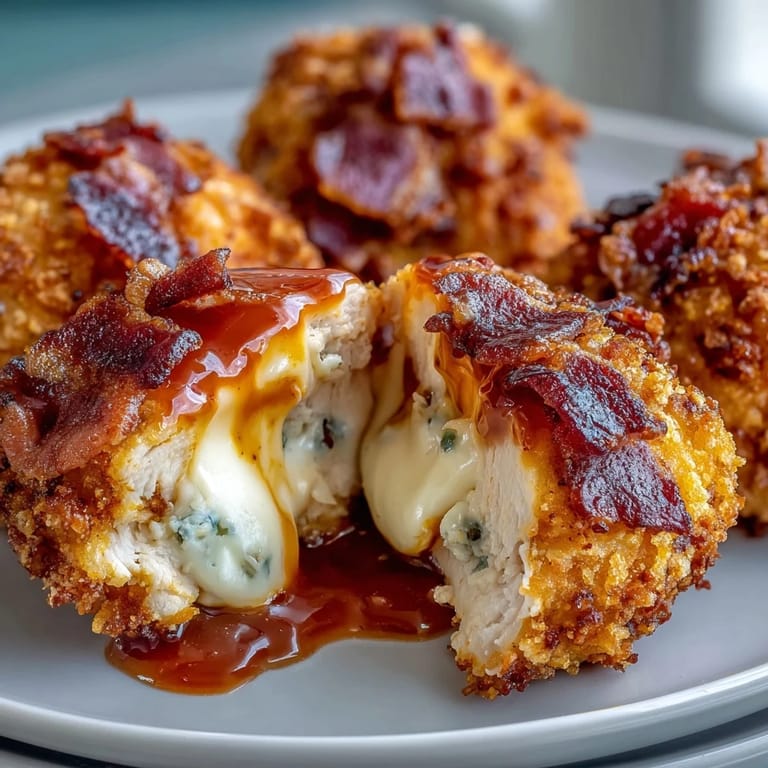
 These bombs have become my go-to whenever I need something that feels indulgent but comes together in under an hour. They're messy, bold, and exactly what comfort food should be.
Recipe FAQs
- → Can I make these ahead of time?
Yes, assemble the bombs and refrigerate for up to 24 hours before cooking. Fry or bake fresh when ready to serve for the crispiest texture.
- → What's the best way to prevent cheese from leaking?
Ensure the chicken mixture completely seals the cheese cube with no gaps. Double-check seams before coating, and chill assembled bombs for 15 minutes before cooking to help set the shape.
- → Can I freeze these buffalo chicken bombs?
Freeze uncooked bombs on a baking sheet until firm, then transfer to a freezer bag for up to 3 months. Thaw overnight in refrigerator before cooking.
- → What dipping sauces pair well?
Cool ranch dressing or creamy blue cheese dip balances the heat perfectly. Extra buffalo sauce on the side lets guests adjust spice levels to their preference.
- → Can I use ground turkey instead of chicken?
Ground turkey works beautifully as a lighter alternative. Season it the same way, though you may want to add slightly more buffalo sauce since turkey has a milder flavor profile.
- → How do I know when they're fully cooked?
The coating should be golden brown and internal temperature should reach 74°C (165°F). If baking, the outside becomes crisp and the cheese should be visibly melted around the edges.