 Pin it
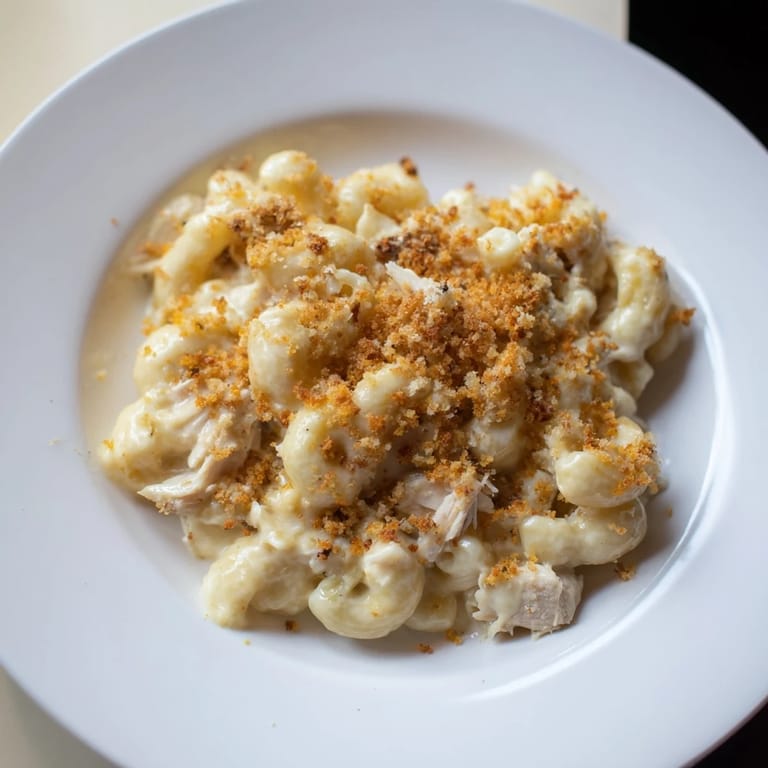
 There's something about opening a pantry on a rough day and finding exactly what you need staring back at you. A can of chicken, a box of macaroni, butter, flour, milk—the kind of staples that have saved me more dinners than I can count. This dish emerged not from ambition but from necessity, a quiet realization that some of the most satisfying meals come together without fanfare, in about thirty minutes, and cost almost nothing. It's become my go-to when the week has been long and the budget has been longer.
I made this for my roommate during a particularly brutal exam week, and I watched her face soften the moment she took a bite. She'd been living on instant ramen and coffee for days, and somehow this simple bowl of cheesy pasta made everything feel a little less impossible. That's when I understood that comfort food isn't about complexity or special ingredients—it's about someone caring enough to heat up a pan.
Ingredients
- 8 oz elbow macaroni: The small, curved shape holds sauce in every crevice, which matters more than you'd think.
- 1 can chicken breast (12.5 oz), drained and flaked: Canned chicken is a quiet hero here—already cooked, already seasoned, ready to go.
- 2 tbsp unsalted butter: The foundation of your sauce, so use real butter and don't skip it.
- 2 tbsp all-purpose flour: This creates the roux that thickens everything into silky sauce.
- 2 cups milk: Whole milk works best, but if you've got 2% on hand, that's fine too.
- 1 cup shredded cheddar cheese: Sharp or mild, whatever you prefer—this is where the flavor lives.
- 1/2 tsp salt and 1/4 tsp black pepper: Taste as you go; you might want a little more.
- 1/4 tsp garlic powder (optional): A small addition that whispers depth into an otherwise simple sauce.
- Breadcrumb topping (optional): A quarter cup breadcrumbs tossed with 1 tbsp melted butter turns this into something that feels like you actually baked it.
Tired of Takeout? 🥡
Get 10 meals you can make faster than delivery arrives. Seriously.
One email. No spam. Unsubscribe anytime.
Instructions
- Get the pasta going:
- Fill a large pot with salted water and bring it to a rolling boil. Add macaroni and cook until just tender—the package will tell you how long, usually around eight minutes. You want it to still have a whisper of resistance when you bite it, because it'll soften more when mixed with the sauce.
- Make your roux:
- While the pasta cooks, melt butter in a saucepan over medium heat. Once it's foaming, sprinkle in flour and whisk constantly for a full minute. This step matters—you're cooking out the raw flour taste and creating the base that will hold your sauce together.
- Coax the milk into sauce:
- Pour in milk slowly while whisking, working out any lumps as you go. Keep stirring constantly and let it cook for three to four minutes until it thickens visibly—it should coat the back of a spoon. The heat should be medium, not high, or you'll end up with broken, grainy sauce.
- Melt in the cheese:
- Remove the pan from heat, then add your shredded cheddar along with salt, pepper, and garlic powder if you're using it. Stir until every bit of cheese is melted and the sauce is smooth and glossy. Taste it now—this is your moment to adjust seasoning.
- Fold in the chicken:
- Add your drained canned chicken to the sauce, breaking up any pieces that feel too large. Stir everything together until the chicken is warmed through and evenly distributed. This happens quickly, usually within a minute.
- Combine everything:
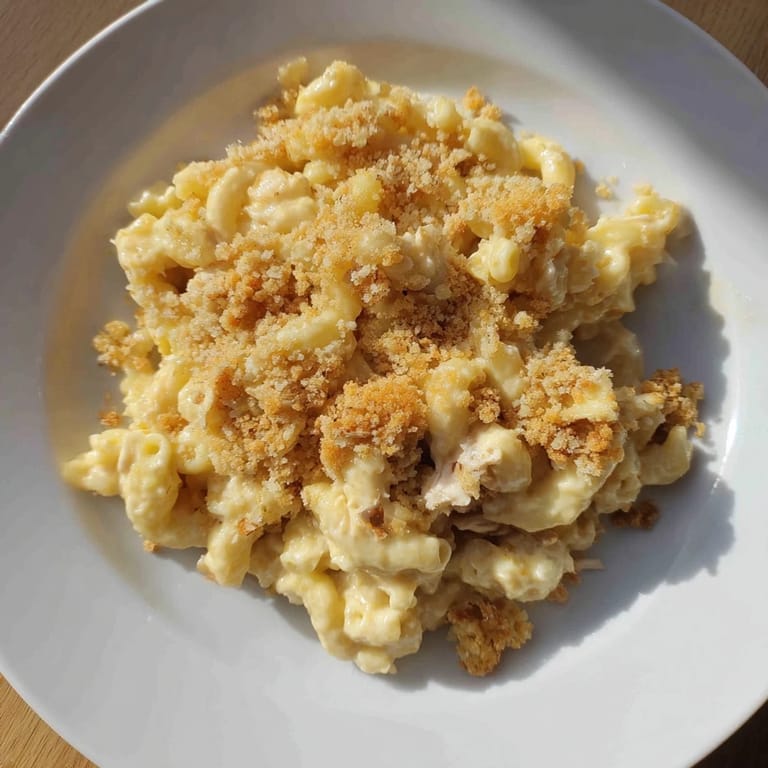
- Drain your cooked macaroni and add it to the pot with the sauce, or pour the sauce over the pasta in a bowl. Fold it all together gently until every noodle is coated in creamy, golden sauce.
- Bake it (optional but recommended):
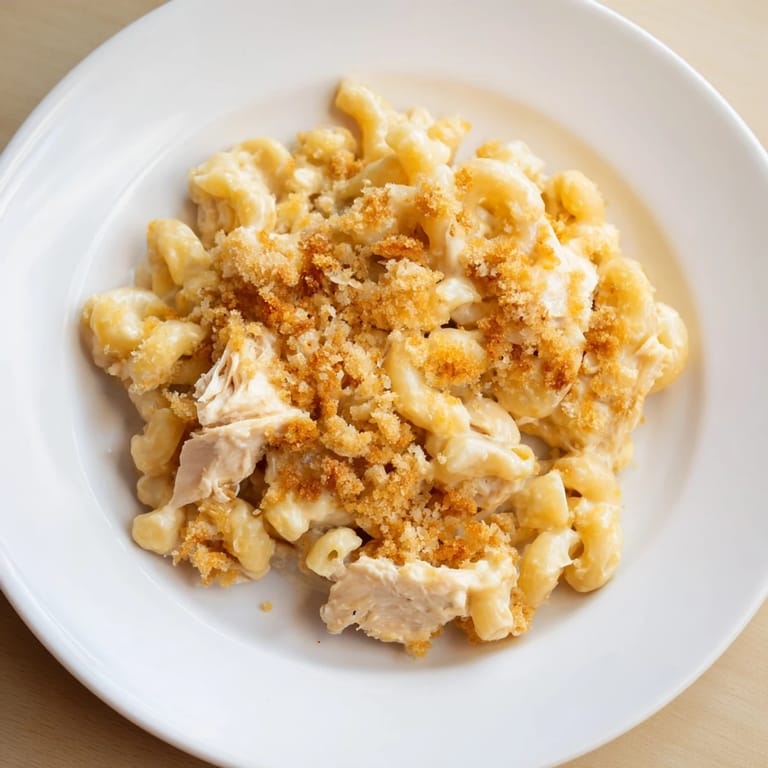
- Preheat your oven to 400°F. Pour everything into a greased eight by eight inch baking dish. Toss your breadcrumbs with melted butter and sprinkle across the top, then bake for ten to twelve minutes until the topping turns golden and the edges bubble gently. This step isn't necessary, but it transforms the whole thing into something that feels more intentional.
- Serve hot and grateful:
- Spoon it into bowls while steam is still rising. It's best eaten immediately, though leftovers are honest and delicious reheated the next day.
 Pin it
 One winter evening, I made this dish for my neighbor who'd just come home from the hospital, and she cried a little bit while eating it. Not because it was fancy, but because it was warm and it was there. That taught me that food doesn't need to be complicated to matter.
Why This Meal Works When Nothing Else Does
There's a reason this kind of dish exists in every culture and every household—it asks nothing of you except a few minutes and a little attention, and it delivers comfort that feels disproportionate to the effort. It's the opposite of pretentious. It's honest and direct and utterly unashamed to be exactly what it is. When your energy is low and your bank account is lower, this is the meal that reminds you that you can still take care of yourself, and that matters.
Variations That Actually Work
Once you've made this a few times and it's muscle memory, you can start playing. I've swapped the cheddar for sharp white cheddar and gotten something more assertive, or melted in some Monterey Jack for something softer. Some versions have had a handful of frozen peas stirred in at the end, adding a small brightness to all that richness. A friend once added a teaspoon of smoked paprika, and it completely changed the mood of the dish into something with more complexity and depth. The beauty is that this is a template, and it's strong enough to support your improvisation.
Storage, Leftovers, and Making It Again
Leftovers keep in the fridge for three days, and they're honestly almost better the next day when the flavors have had time to get to know each other. Reheat gently in a pot over low heat, adding a splash of milk if it's tightened up. You can also portion it into containers and freeze it for a month, which is exactly what I do when I know the weeks ahead are going to be hard.
- Cold leftovers straight from the fridge are oddly satisfying if you're eating alone at midnight.
- Reheating in the oven at 350°F with a little foil cover keeps everything creamy instead of drying out.
- Make a double batch because you'll be grateful for it when you're tired and hungry.
 Pin it
 This is the kind of recipe I come back to again and again, not because it's the best thing I've ever made, but because it's there when I need it. It asks nothing and gives everything.
Recipe FAQs
- → Can I use fresh chicken instead of canned?
Yes, cooked shredded chicken can be substituted. Adjust cooking times accordingly to ensure it's fully heated.
- → What can I substitute for elbow macaroni?
Other small pasta shapes like penne, shells, or rotini work well and hold the sauce nicely.
- → Is it necessary to bake the dish?
Baking is optional but adds a crispy, golden breadcrumb topping that enhances texture and flavor.
- → Can I add vegetables to this dish?
Yes, adding peas, chopped cooked vegetables, or spinach boosts nutrition and adds freshness.
- → How can I make the cheese sauce thicker?
Ensure the roux (butter and flour mixture) cooks properly before adding milk and simmer until the sauce thickens to your liking.
- → What cheeses work besides cheddar?
Melting cheeses like Monterey Jack, Colby, or mozzarella blend well and offer different flavor profiles.