 Pin it
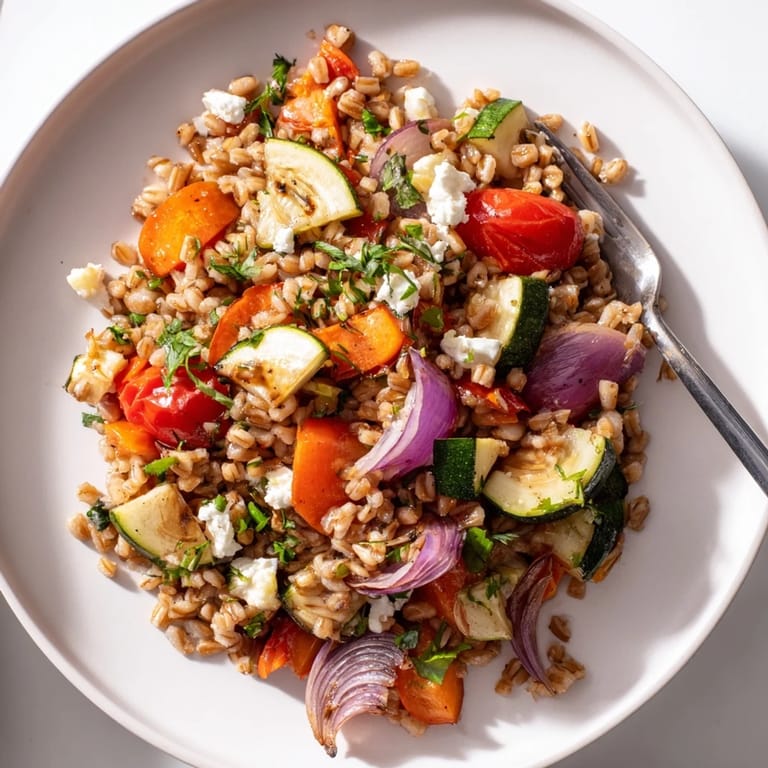
 The first time I made farro, I accidentally cooked it for too long and ended up with something closer to a porridge than a grain salad. My husband still ate it, but he did keep asking what happened to the chewy texture he loved at that Italian restaurant downtown. After a few more tries and some research, I finally figured out that farro needs that perfect al dente moment, just like pasta, to really shine. Now this roasted vegetable version is the dish that made me fall in love with ancient grains all over again.
Last autumn, my sister came over for what was supposed to be a quick dinner after work. She took one bite of this farro and stopped talking mid-sentence, just sat there chewing slowly with this look on her face. She asked for the recipe before she even finished her plate, and now its her go-to for potlucks because people always assume it took hours to make.
Ingredients
- 1 cup farro (uncooked): I used pearled farro for quicker cooking, but if you find whole farro, just adjust the cooking time and plan for a longer simmer
- 3 cups vegetable broth or water: Using broth instead of plain water adds such a foundational layer of flavor that you will really taste in the final dish
- 1 red bell pepper, diced: Red peppers get beautifully sweet when roasted, creating these gorgeous jammy pockets throughout the salad
- 1 zucchini, diced: Try to cut your pieces roughly the same size so everything roasts evenly and finishes at the same time
- 1 red onion, cut into wedges: Wedges hold their shape better than diced onion during roasting, plus they develop these crispy edges that taste incredible
- 1 medium carrot, sliced: Carrots add a subtle sweetness that balances the earthy farro and tangy balsamic perfectly
- 1 cup cherry tomatoes, halved: They burst and release their juices while roasting, creating almost a built-in sauce for the grains
- 2 tablespoons olive oil: This helps the vegetables caramelize rather than steam, giving you those restaurant-quality roasted edges
- 1 teaspoon dried thyme: Woodsy herbs pair so naturally with both the grains and roasted vegetables
- 1 teaspoon dried oregano: This gives the dish that Mediterranean vibe that makes it feel lighter and brighter
- 1/2 teaspoon salt: You will season the farro with the salted broth, so this amount is just right for the vegetables
- 1/4 teaspoon freshly ground black pepper: Freshly cracked pepper adds a subtle warmth that pre-ground just cannot match
- 2 tablespoons extra-virgin olive oil: Save your best olive oil for the finish, where its flavor really shines through
- 1 tablespoon balsamic vinegar: The acidity cuts through the hearty grains and brings everything together
- 1/4 cup chopped fresh parsley: Fresh herbs at the end make the dish taste vibrant and look gorgeous on the table
- 2 tablespoons crumbled feta cheese (optional): Even if you do not eat dairy regularly, a little feta adds a salty creaminess that takes this over the top
Tired of Takeout? 🥡
Get 10 meals you can make faster than delivery arrives. Seriously.
One email. No spam. Unsubscribe anytime.
Instructions
- Get your oven ready:
- Preheat to 425°F and line a baking sheet with parchment paper for easy cleanup later
- Prep the vegetables for roasting:
- In a large bowl, toss all the vegetables with olive oil, thyme, oregano, salt, and pepper until everything is evenly coated
- Roast until caramelized:
- Spread the vegetables on your prepared baking sheet and roast for 25 to 30 minutes, stirring halfway through, until you see golden brown edges and the tomatoes start to collapse
- Cook the farro:
- While vegetables roast, rinse the farro and simmer it in the broth for 25 to 30 minutes until tender but still pleasantly chewy
- Bring it all together:
- Combine the cooked farro with the roasted vegetables, then drizzle with the extra olive oil and balsamic vinegar
- Finish and serve:
- Gently fold in the fresh parsley and crumble feta on top, then serve warm or let it come to room temperature
 Pin it
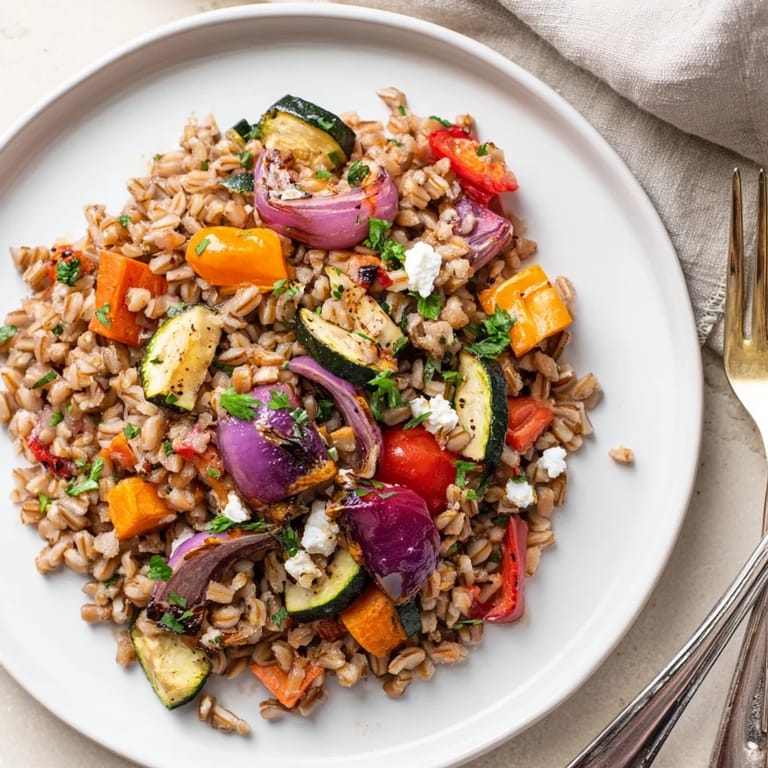
 My neighbor texted me at midnight after I dropped off a container of this for her family dinner, asking if there was any more. Her kids had apparently argued over who got the last serving, which felt like a huge win since getting children excited about grain salads is no small feat.
Make It Your Own
Sometimes I add diced eggplant in the summer or butternut squash cubes in the fall, whatever looks best at the market that week. The technique stays the same, but the flavors shift with the seasons in this really satisfying way.
Serving Suggestions
This works as a light main dish on its own, or serve it alongside grilled chicken or fish for a more substantial dinner. I have also brought it to countless potlucks where it is always one of the first dishes to disappear.
Storage Tips
The farro actually tastes even better the next day after the grains have soaked up all the vinaigrette. Store it in an airtight container in the refrigerator for up to five days, and bring it to room temperature before serving.
- Add fresh herbs right before serving so they stay bright and vibrant
- If the salad seems dry after refrigerating, drizzle with a little more olive oil and lemon juice
- This freezes well without the feta, just add the cheese after thawing
 Pin it
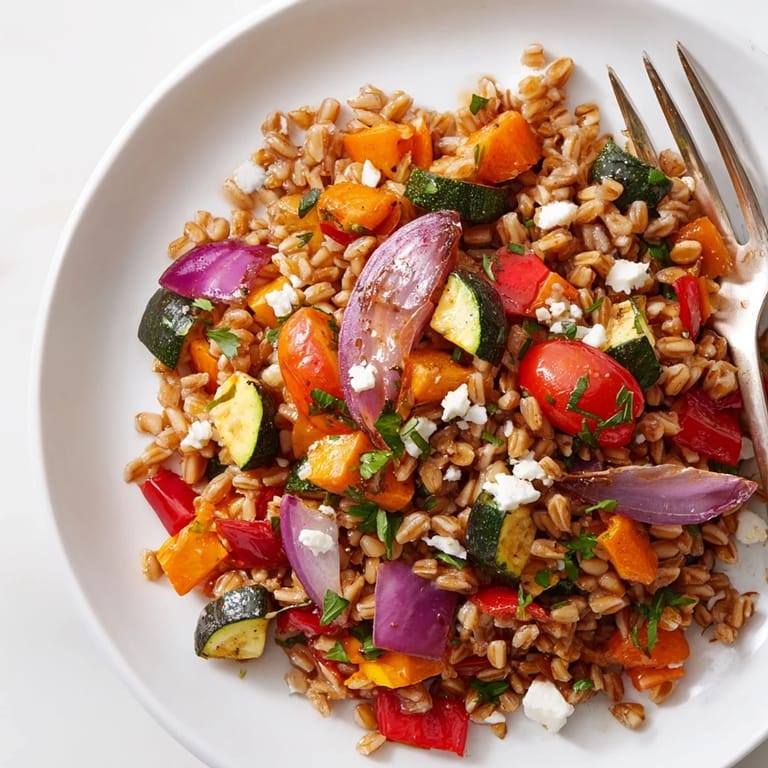
 There is something so satisfying about a dish that is this nourishing while still feeling special enough for company. I hope this becomes one of those recipes you turn to again and again.
Recipe FAQs
- → Is farro gluten-free?
No, farro contains gluten as it's a wheat-based grain. Those with gluten sensitivity or celiac disease should substitute with quinoa, brown rice, or millet.
- → Can I make this ahead?
Absolutely. This dish stores beautifully for 4-5 days in the refrigerator. The flavors actually improve after sitting, making it ideal for meal prep. Serve warm or cold.
- → What vegetables work best?
Root vegetables like sweet potatoes, beets, or parsnips roast wonderfully. Eggplant, mushrooms, butternut squash, and Brussels sprouts also complement farro's nutty flavor.
- → Do I need to soak farro?
Soaking isn't necessary but can reduce cooking time by 10-15 minutes. Rinse thoroughly before cooking to remove any debris or dust.
- → How do I store leftovers?
Keep in an airtight container in the refrigerator for up to 5 days. Reheat gently with a splash of water or broth, or enjoy cold as a salad.