 Pin it
 I still remember the first time I assembled a proper French cheese board at home. I'd just returned from a weekend in Paris, where I'd spent an afternoon in a tiny bistro near the Seine, watching the owner arrange a platter with such deliberate care that it seemed more like an art form than lunch. The way she positioned each slice of Brie, how she let the negative space breathe, the precision of those diagonal bread cuts—it struck me that this wasn't just food; it was a conversation starter. Now, whenever I gather friends around my table with one of these boards, I'm transported right back to that moment, and somehow, it always becomes the highlight of the gathering.
I hosted my sister's engagement dinner last spring, and I'll never forget how quiet the room went when I brought out this board. Everyone paused mid-conversation, and for a moment, it was like the platter itself demanded reverence. Someone actually said, 'This looks like it belongs in a magazine.' That's when I realized the true power of arrangement—of choosing quality ingredients and giving them space to shine.
Ingredients
- Fresh French baguettes (2 long): Choose a bakery baguette with a crispy crust and tender crumb; the diagonal slices are your foundation, so they need to be sharp and even. A serrated knife makes this easier than you'd think.
- Brie cheese (150 g, sliced and fanned): The creamy heart of any French board—let it sit at room temperature for 30 minutes before serving so it's spreadable but still holds its shape. The pale gold color against dark bread is pure visual poetry.
- Comté cheese (150 g, sliced and fanned): This aged beauty brings nuttiness and subtle sweetness; it's the cheese that makes people ask, 'What is this? I've never tasted anything like it.' Slice it thin and let it fan slightly for maximum elegance.
- Chèvre or goat cheese (100 g, sliced): The tangy note that brings everything into focus; think of it as the punctuation mark on your cheese story. Its bright white against the creams and golds creates visual contrast.
- Fresh figs or grapes (12): Figs are the dream, offering sweetness and a jewel-like appearance; grapes are the reliable friend when figs aren't in season. Either way, they're the color pops that make the platter sing.
- Unsalted butter (50 g, softened): Quality butter is revelatory—this isn't the time for grocery store standard. Softened, it becomes an invitation to spread richly on warm bread.
- High-quality honey (2 tbsp): Drizzle it next to the Brie, and watch people discover why honey and cheese are soulmates. I learned this from a Parisian neighbor who treated honey like liquid gold.
- Whole grain Dijon mustard (1 tbsp): The sophisticated edge; those little seeds bring texture and a gentle sharpness that cuts through the richness beautifully.
- Flaky sea salt and freshly ground black pepper: Don't skimp here. The sparkle of fleur de sel on soft cheese, the gentle heat of fresh pepper—these details are what separates 'nice' from 'memorable.'
Tired of Takeout? 🥡
Get 10 meals you can make faster than delivery arrives. Seriously.
One email. No spam. Unsubscribe anytime.
Instructions
- Prepare your canvas:
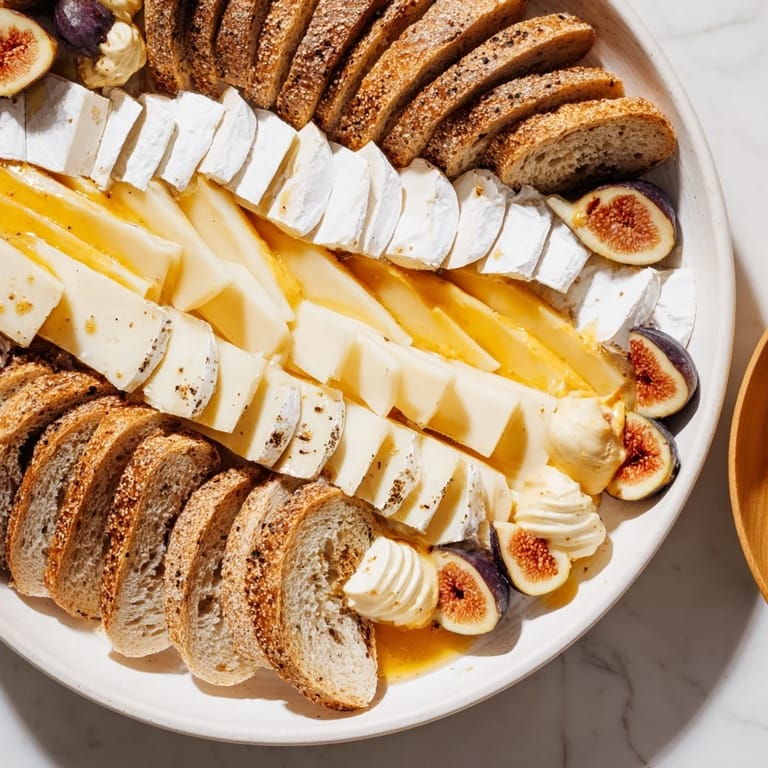
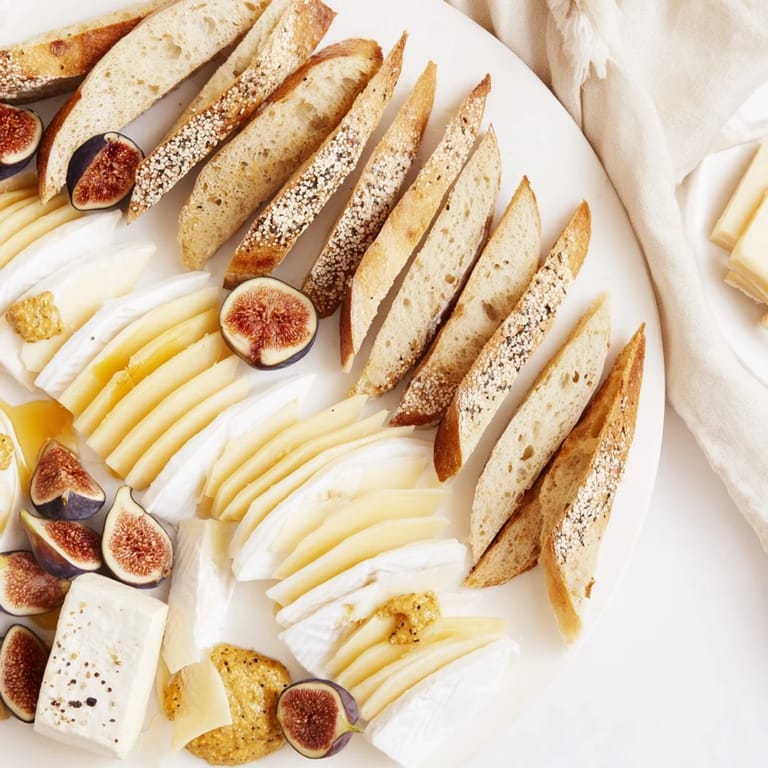
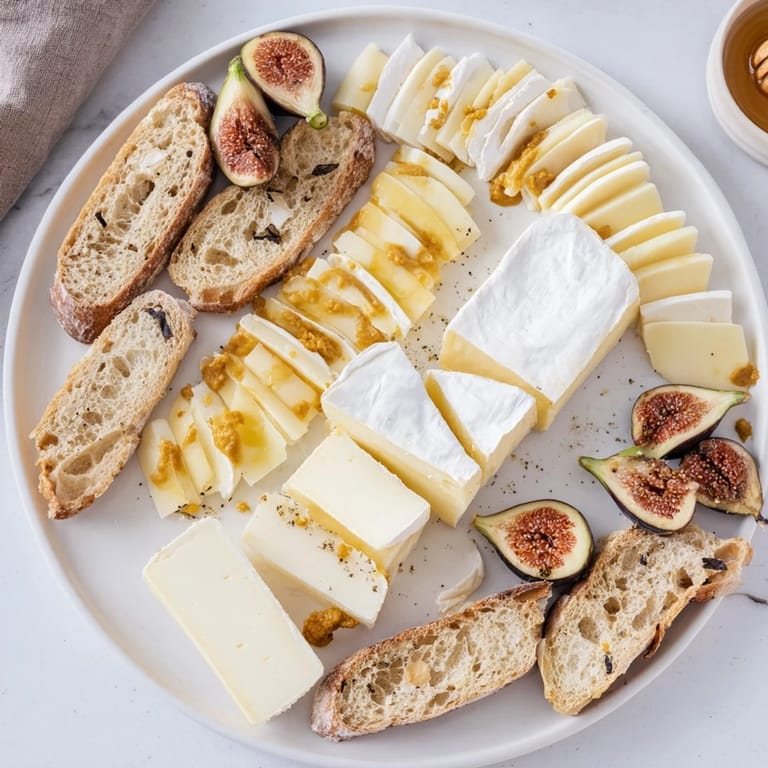
- Slice your baguette on the bias—about a quarter-inch thick—and arrange the pieces in a gentle arc around the edge of your platter. Let them lean slightly, and leave breathing room between slices. This isn't a puzzle where everything fits; it's a composition where space is as important as substance.
- Fan the cheeses with intention:
- Start with the Brie, overlapping each slice slightly so they create that beautiful wave pattern. Then move to the Comté—same technique, different corner. The Chèvre can be stacked slightly or arranged in a small pile. Step back and look at it. Are the colors balanced? Does your eye travel naturally around the board? Adjust if needed.
- Scatter your jewels:
- Place figs or grapes in small clusters, nestled in the open spaces like they've been positioned by nature rather than your hands. Leave room for mystery and discovery.
- Add the finishing touches:
- Place tiny bowls or artful dollops of butter, honey, and mustard on the board. I like to use small white ramekins—they feel elegant and make it easy for guests to help themselves without double-dipping. If you're feeling confident, you can create small quenelles or just let them be rustic and real.
- Season with restraint:
- A whisper of flaky sea salt across the cheeses, a few turns of the pepper mill. Remember, less is more. You're not seasoning food; you're adding finishing touches to a work of art.
- Serve with grace:
- Bring it to the table while everything is still cool, and let your guests build their own bites. There's something special about giving people permission to create their own experience. A slice of Brie with honey and a mustard dot on warm bread? That's theirs to discover.
 Pin it
 My grandfather once told me that in France, a meal without cheese is like a day without sunshine. He was being poetic, of course, but sitting around a table, watching strangers become friends over something as simple as bread, cheese, and honey, I finally understood what he meant. This board isn't just appetizer; it's an invitation to slow down.
The Art of Arrangement
What I've learned through trial and error is that a beautiful platter is really about negative space and intention. When I started making these boards, I crammed everything in, thinking more was more. But then I watched how people actually eat—they want to find their own path, discover small surprises. Now I arrange each element like I'm creating moments of discovery. The eye should rest, then move, then rest again. A generous platter that looks generous is always more impressive than one that looks crowded, even if they contain similar amounts.
Wine Pairing and Timing
This board is meant to be served with something cold and elegant—Sancerre brings out the goat cheese beautifully, Champagne makes everything feel special, or even a crisp Chablis works wonderfully. The cool wine, the rich cheese, the slight sweetness of honey against sharp mustard—it's a conversation that plays out on the palate. Timing-wise, assemble this no more than an hour before serving; the bread stays crisp, the cheeses stay perfect, and your guests get the full sensory experience.
Simple Variations and Why They Matter
This is where your personal style comes in. Pears and apples are beautiful substitutes for figs—I add them in autumn when I'm craving something crisp. Fresh thyme or rosemary sprigs scattered across add an herbaceous whisper without overwhelming anything. Sometimes I add a small cluster of olives, sometimes walnuts. The magic is in building on a foundation and making it your own. The moment you stop thinking of this as a recipe and start thinking of it as a template is when your own cheese boards become legendary.
- Keep substitutions within the same flavor family—if you add nuts, make them toasted and unsalted
- Herbs are optional but they create a finished look; just a few sprigs scattered artfully, not a full garden
- Quality trumps quantity every single time—better to have one extraordinary cheese than three mediocre ones
 Pin it
 Make this board for yourself first, even if you're alone. That's when you'll truly understand the beauty of it—not as performance, but as permission to enjoy something simple and elegant without apology. Then share it with people you love.
Recipe FAQs
- → What cheeses complement the French baguette best?
Soft, creamy cheeses like Brie and chèvre pair beautifully with the crisp crust of French baguettes. Comté adds a nutty depth and firm texture for contrast.
- → Can I substitute fresh figs with other fruits?
Yes, sliced pears or apples offer a similar sweet, crisp element that balances the richness of cheese and bread.
- → How should the baguettes be sliced for serving?
Slice the baguettes diagonally into thin, even pieces to maximize surface area and create an elegant presentation.
- → What is a good way to arrange the platter visually?
Fan cheese slices in overlapping rows and space baguette pieces along the platter edge, leaving negative space for a minimalist and refined look.
- → Are there garnish suggestions to elevate the platter?
Sprigs of fresh thyme or rosemary add aromatic depth and a touch of greenery to enhance the elegant theme.
- → What accompaniments enhance the flavor profile?
Honey, unsalted butter, and whole grain Dijon mustard offer sweetness, creaminess, and tang, creating layers of taste alongside the cheeses and bread.