 Pin it
 There's something almost magical about the moment when you realize you can make a bowl of genuine chicken noodle soup in under thirty minutes without standing over a stove. A friend once texted me at 5 PM asking if I could somehow feed her family that night, and instead of the usual panic, I calmly walked to my Instant Pot. Twenty minutes later, I was ladling out steaming bowls while she watched in disbelief. That night, this soup became my secret weapon.
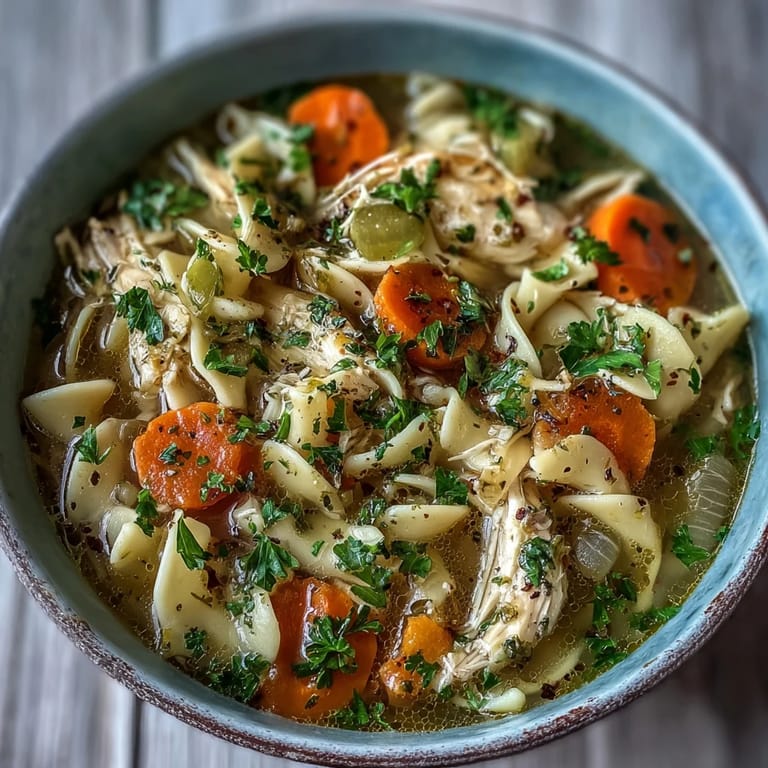
I made this on a Tuesday afternoon when my daughter came home with a sore throat, and watching her face light up as she took that first spoonful reminded me why simple food matters. The warmth radiating from the bowl, the way the noodles caught the light, the chicken so tender it barely needed chewing—these tiny details turned a sick day into something almost cozy. That's when I knew this recipe needed to stay in heavy rotation.
Ingredients
- Boneless, skinless chicken breasts or thighs (1 lb): Thighs stay juicier if you can grab them, though breasts work beautifully too and cook at the same speed under pressure.
- Medium onion, diced (1): The foundation of everything good in this pot, sweet and almost melted by the time you eat it.
- Medium carrots, peeled and sliced (3): They soften just enough to be tender but keep their shape, adding natural sweetness and that signature soup color.
- Celery stalks, sliced (3): The quiet hero that nobody mentions but everyone misses if it's gone.
- Garlic cloves, minced (3): Thirty seconds in the hot pot transforms these from sharp to deeply aromatic and mellow.
- Low-sodium chicken broth (8 cups): Use the good stuff if you can because it becomes the entire soul of this soup.
- Dried thyme (1 tsp): A whisper of earth and herb that makes people ask what your secret ingredient is.
- Dried parsley (1 tsp): Adds brightness without any fussiness.
- Bay leaf (1): Don't skip it and definitely don't forget to fish it out before serving.
- Black pepper (1/2 tsp): Freshly cracked if you have it, though pre-ground won't ruin anything.
- Salt (1 tsp): Adjust to your taste since broth varies in sodium.
- Egg noodles (6 oz): The vehicle that carries flavor, soft but still with a hint of structure.
- Fresh parsley, chopped (2 tbsp): Optional but gives the finished bowl a pop of green that matters more than you'd think.
- Olive oil (1 tbsp): For that initial sauté that builds flavor layers.
Tired of Takeout? 🥡
Get 10 meals you can make faster than delivery arrives. Seriously.
One email. No spam. Unsubscribe anytime.
Instructions
- Wake up the pot with a sauté:
- Hit that sauté button and let the oil shimmer before adding your onion, carrot, and celery. Give them a few minutes to soften and release their sweetness into the pot—you'll smell the difference this makes.
- Build the flavor base:
- Toss in minced garlic and let it hang out for just thirty seconds until your kitchen smells like someone who knows what they're doing. Don't let it brown or it'll turn bitter.
- Lay down the chicken:
- Place your chicken breasts or thighs directly on top of the vegetables like they're settling into bed. This matters more than you'd think for even cooking.
- Pour in the broth and seasonings:
- Add your chicken broth and all the herbs and spices in one go, then give everything a gentle stir. The liquid should come up to about an inch below the fill line.
- Lock it down and let pressure do the work:
- Secure that lid, flip the valve to sealing, and set it to high pressure for ten minutes. Walk away and trust the machine.
- Release the pressure patiently:
- Let it sit untouched for five minutes, then carefully move the valve to quick-release. This brief natural release keeps the chicken tender instead of stringy.
- Shred the chicken:
- Fish the cooked chicken onto a plate and pull it apart with two forks—it should practically fall to pieces. Return those tender shreds to the pot.
- Add the noodles and simmer:
- Switch back to sauté mode, stir in your egg noodles, and let them cook for five to six minutes until they're tender. Taste and adjust salt and pepper because this is your moment.
- Finish and serve:
- Fish out that bay leaf, ladle into bowls, and scatter fresh parsley on top if you're feeling fancy. The steam rising from the bowl is part of the whole experience.
 Pin it
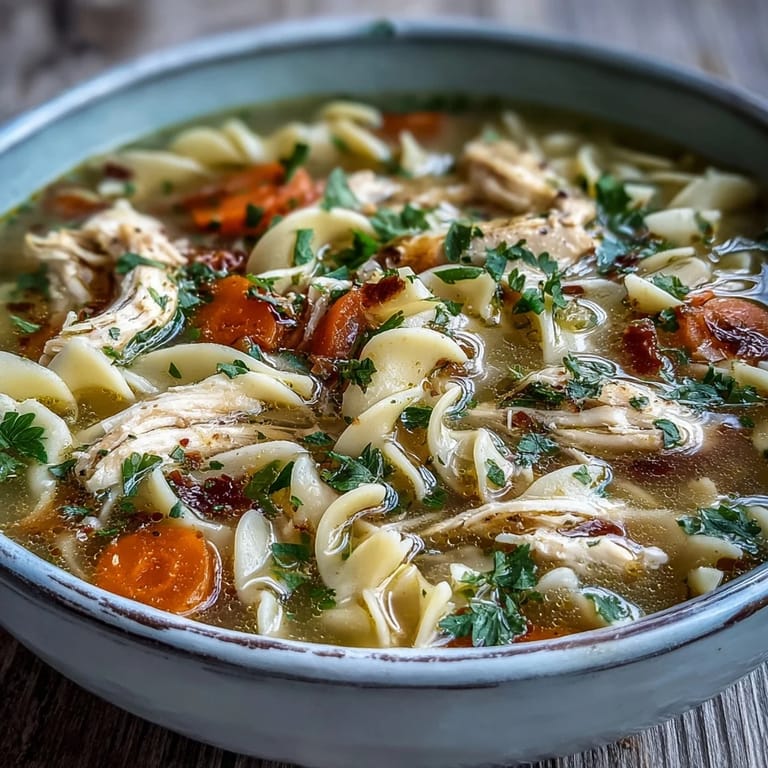
 There's a ritual to spooning this soup into a mug and carrying it to the couch on a quiet evening, the kind of moment that has nothing to do with recipes and everything to do with taking care of yourself. That's when soup stops being dinner and becomes a small act of kindness toward the person holding the spoon.
Why the Instant Pot Changes Everything
Before I owned one of these machines, I'd spend forty-five minutes hovering over a pot, watching broth bubble, adjusting heat, waiting for carrots to finally surrender. The Instant Pot doesn't just save time—it completely changes how you think about weeknight cooking. Pressure cooking breaks down chicken and vegetables faster than any traditional method, which means you get that homemade depth of flavor without the commitment. I've learned that the sealed environment keeps flavors concentrated and vibrant instead of evaporating into thin air like they do on a stovetop.
Timing and Temperature Matter More Than You Think
The ten minutes at high pressure is exact for a reason—too long and your chicken becomes mushy, too short and it's still slightly underdone. I learned this the hard way on my third attempt when I got impatient and cut the time to eight minutes, then spent half an hour picking out undercooked bits. Natural pressure release is equally important because it's gentle on the chicken, keeping it moist and tender instead of turning it into something that tastes dried out. Quick-release works for the rest of the steam, but those first five minutes of letting it depressurize slowly make a noticeable difference in texture.
The Small Touches That Transform Everything
What separates a good chicken noodle soup from one people actually want to eat is the attention to those moments nobody writes about in recipes. The smell of garlic hitting hot oil, the exact moment the broth turns golden from the vegetables, the way fresh parsley scattered on top catches the light—these details cost you nothing but change how the soup feels when it hits the table. I've also discovered that a squeeze of fresh lemon juice right before serving brings everything into focus, especially if you made it a few days ago and reheated it.
- Taste before serving because broth sodium levels vary wildly between brands and you're the expert on your own salt preference.
- If you're making this for someone sick or recovering, let it cool to the point where it's genuinely comforting to swallow instead of piping hot.
- This soup actually improves the next day as flavors meld, so never underestimate leftovers.
 Pin it
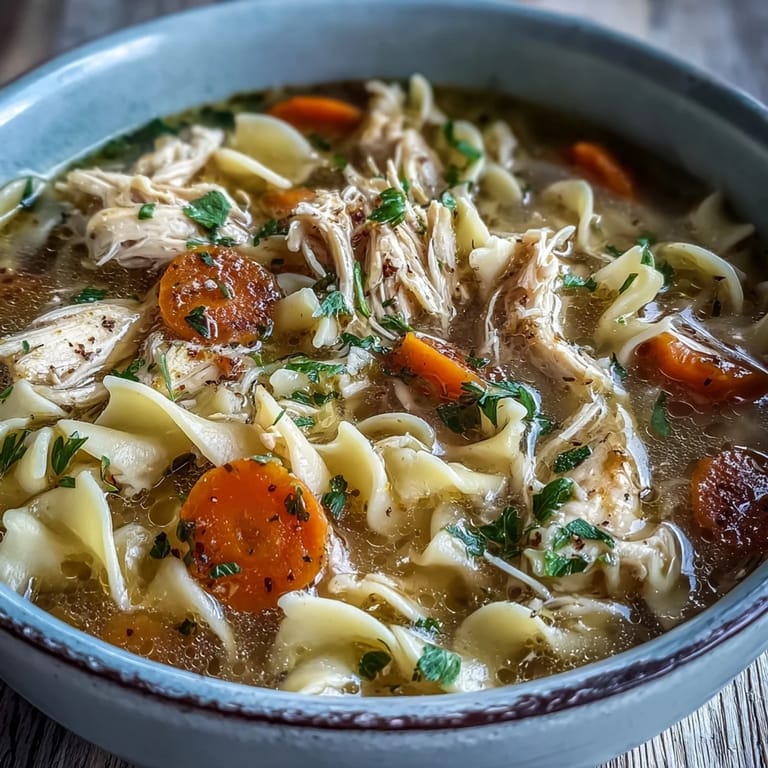
 This soup has saved so many evenings and mornings for me, and I think that's the whole point of knowing how to make something this simple and genuine. Every bowl is a small reminder that the best comfort often comes from the least complicated places.
Recipe FAQs
- → Can I use frozen chicken for this soup?
Yes, frozen chicken breasts or thighs work perfectly. Simply add them directly to the pot and increase the pressure cooking time to 12-15 minutes depending on thickness.
- → How do I store leftovers?
Cool completely and refrigerate in airtight containers for up to 4 days. The noodles will absorb some liquid, so add a splash of broth when reheating. Freeze for up to 3 months without noodles for best texture.
- → What's the difference between natural release and quick release?
Natural release lets pressure drop naturally (about 5 minutes here), keeping ingredients tender. Quick release manually releases steam immediately. This recipe uses both—natural for the chicken, then quick before adding noodles.
- → Can I make this on the stovetop instead?
Absolutely. Sauté vegetables in a large Dutch oven, add broth, chicken, and seasonings, then simmer covered for 20-25 minutes until chicken is cooked through. Shred, return to pot, add noodles, and cook until tender.
- → Why cook noodles separately instead of with everything?
Adding noodles after pressure cooking prevents them from becoming mushy. The intense pressure can overcook pasta, so simmering them separately ensures perfect texture in every bowl.
- → Can I use other pasta shapes?
Yes, shells, rotini, or even broken spaghetti work well. Adjust cooking time based on package directions—small shapes cook faster, while larger ones may need an extra minute or two.