 Pin it
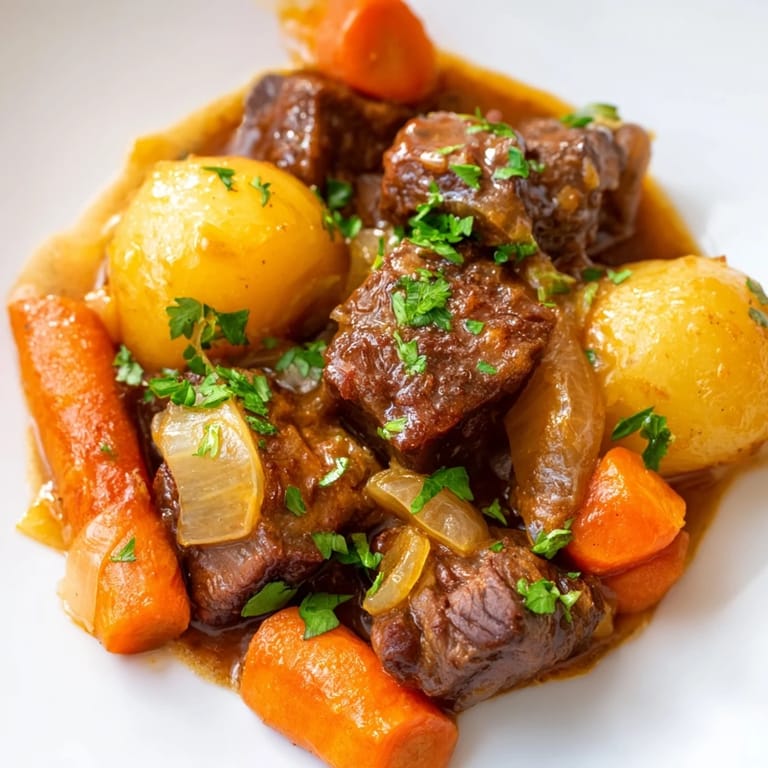
 There's something about the smell of beef browning in a hot pot that makes you forget whatever brought you into the kitchen in the first place. Years ago, a friend from Dublin made this stew on a gray November afternoon, and I watched the way she didn't rush anything, how she let the onions go golden without thinking twice about it. That meal taught me that Irish beef stew isn't about fancy techniques or shortcuts—it's about giving yourself permission to let time do the work.
I made this stew for my sister the winter she moved back home, and somehow the simplicity of it—just good ingredients simmering together—felt like exactly what we both needed. We sat at the kitchen table with bowls that were still steaming, hardly talking, just eating. That's when I realized this dish works because it doesn't try to be anything other than what it is.
Ingredients
- Beef chuck (1.5 kg, cut into 2-inch cubes): Chuck is forgiving and gets impossibly tender when you give it time—avoid lean cuts that can turn tough.
- Potatoes (4 large, cut into chunks): Cut them slightly larger than you think you need; they soften more than you'd expect.
- Carrots (4 large, sliced): Carrots add natural sweetness that balances the savory depth of the broth.
- Onions (2 large, chopped): These dissolve into the stew and thicken the broth as they cook down.
- Celery (2 stalks, sliced): Celery is the quiet backbone that adds a subtle earthiness most people won't identify but will notice is missing if you skip it.
- Garlic (3 cloves, minced): Add this after the onions soften, or it can turn bitter and hollow-tasting.
- Beef stock (1.2 liters): Use stock you actually like to taste on its own—it's the foundation of everything.
- Guinness (330 ml, optional): The beer adds richness and a subtle edge; if you skip it, add another splash of stock and a teaspoon of balsamic vinegar instead.
- Tomato paste (2 tbsp): A small amount deepens the flavor without making it tomatoey.
- Worcestershire sauce (2 tbsp): This brings umami that makes you want another spoonful before you even know why.
- Bay leaves, thyme, and rosemary: Bay leaves should be removed before serving—learning this the hard way is a rite of passage for any home cook.
- Vegetable oil (3 tbsp): Use oil with a high smoke point so you can get a proper sear on the meat.
- Fresh parsley (2 tbsp, chopped): A handful of green at the end reminds you this came from the earth.
Tired of Takeout? 🥡
Get 10 meals you can make faster than delivery arrives. Seriously.
One email. No spam. Unsubscribe anytime.
Instructions
- Prepare and dry the beef:
- Pat each cube thoroughly with paper towels—this matters more than people think. When the beef is dry, salt and pepper it generously, letting the seasoning sit while you get the pot ready. You're not being wasteful with seasoning; you're building a crust.
- Sear the beef in batches:
- Heat oil in a Dutch oven until it shimmers, then add beef in a single layer without crowding. Let each batch sit for a minute or two before stirring; that's when the magic crust forms. Transfer to a plate and repeat until all the beef is done.
- Soften the aromatics:
- Pour off most of the oil, leaving a thin layer, then add onions and celery. Stir occasionally until they're soft and the onions turn translucent at the edges. This takes about five minutes and smells like the beginning of something good.
- Add garlic and tomato paste:
- Stir in minced garlic and let it bloom for just a minute, then add tomato paste and stir constantly for another minute until it caramelizes slightly. This step deepens the entire flavor of the stew without tasting like tomato.
- Deglaze with Guinness:
- Pour in the beer, scraping the bottom of the pot with a wooden spoon to lift up all those browned bits stuck to the pan. Let it bubble for two minutes so the alcohol cooks off and the bitterness mellows.
- Build the stew:
- Return the beef to the pot, then add carrots, potatoes, bay leaves, thyme, rosemary, stock, and Worcestershire sauce. Stir everything together so the flavors can start getting acquainted while you bring it to a gentle boil.
- Let it simmer low and slow:
- Once it boils, reduce the heat so it bubbles gently, cover with a lid, and let it go for two to two and a half hours, stirring every thirty minutes or so. You'll know it's done when the beef breaks apart with almost no resistance and the vegetables are completely tender.
- Finish and serve:
- Remove the bay leaves, taste the broth, and add more salt and pepper if it needs it. Ladle into bowls, scatter fresh parsley over the top, and serve with crusty bread while everything's still steaming hot.
 Pin it
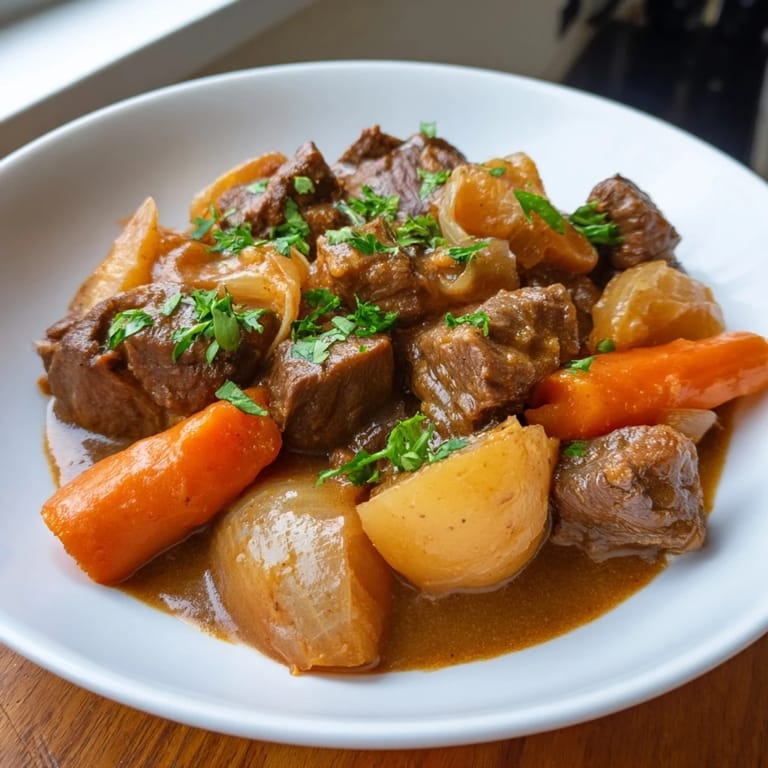
 Once, I made this stew on a day when I was stressed about everything, and by the time it was ready, something in me had settled. The slow cooking, the simple ingredients, the way a whole house smells like home—there's medicine in that.
The Irish Way
This stew has fed people through hard winters and celebrated quiet moments for generations. The Irish didn't complicate it because the ingredients didn't need complicating—beef, potatoes, onions, and time are all you need to make something people remember. Traditional Irish cooks would often add a splash of whiskey instead of beer, and some used lamb instead of beef depending on what they had on hand. The beauty is that this stew is forgiving enough to flex with whatever your kitchen offers.
The Texture Evolution
If you like a thicker stew, toward the end of cooking, mash a few potato chunks against the side of the pot with the back of your spoon, then stir them back in—they'll dissolve into the broth and thicken it naturally. You don't need a roux or any cornstarch tricks. The potatoes do the work for you, which is the Irish way of solving problems: use what you've got.
Serving and Pairing Ideas
Serve this stew hot with thick slices of crusty bread for soaking up the broth, or spoon it over creamy mashed potatoes for something more substantial. A simple green salad on the side cuts through the richness without competing for attention. For a gluten-free version, verify that your stock, Worcestershire sauce, and beer are all certified gluten-free—this stew is naturally flexible enough to meet different dietary needs without sacrificing flavor.
- Leftover stew tastes even better the next day when the flavors have had time to get more familiar with each other.
- Freeze it in portions if you want comfort food ready to go on an evening when you need it most.
- If you have any left, thin it with stock and turn it into a soup that's equally satisfying.
 Pin it
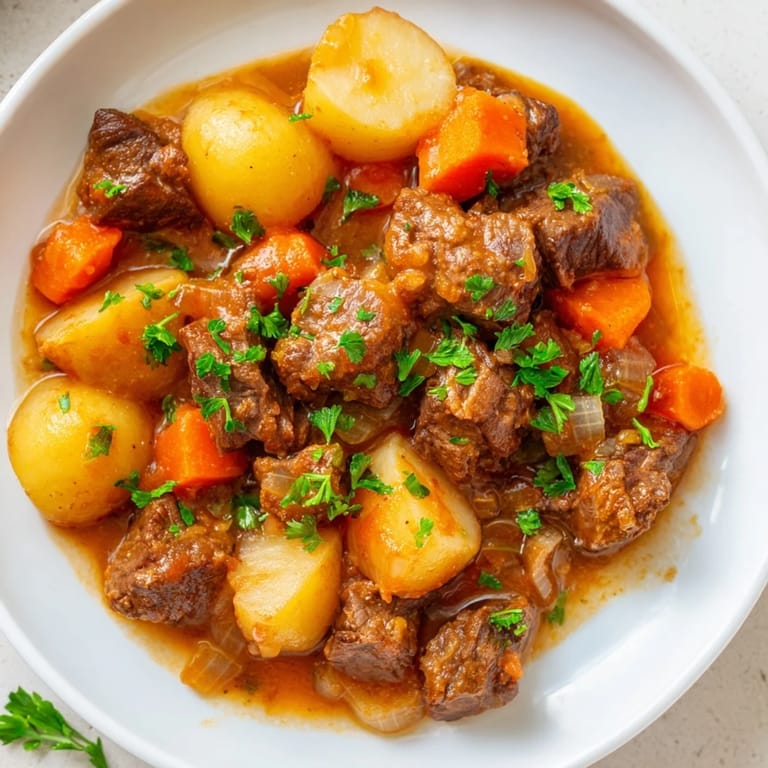
 Make this stew when you want food that tastes like someone cares, because that's exactly what it is. It's the kind of dish that turns an ordinary evening into something people talk about later.
Recipe FAQs
- → What cut of beef works best for this stew?
Beef chuck is ideal due to its marbling and tenderness after slow cooking, ensuring rich flavor and a tender texture.
- → Can I omit the Guinness stout and still achieve great taste?
Yes, omitting the stout is fine. You can replace it with additional beef stock for a similar depth without gluten.
- → How long should the stew simmer for optimal tenderness?
Simmering for 2 to 2.5 hours allows the beef to become fork-tender while vegetables soak up the flavors beautifully.
- → Can vegetables be adjusted in this dish?
Absolutely. Traditional root vegetables like potatoes, carrots, onions, and celery work well, but feel free to add others that suit your taste.
- → What's the best way to enhance the broth's flavor?
Searing beef cubes first and deglazing with tomato paste and stout adds richness, along with herbs like bay leaves and thyme for aroma.
- → Is this dish suitable for gluten-free diets?
Yes, by omitting the Guinness stout and using gluten-free stock and Worcestershire sauce, the dish can be gluten-free.