 Pin it
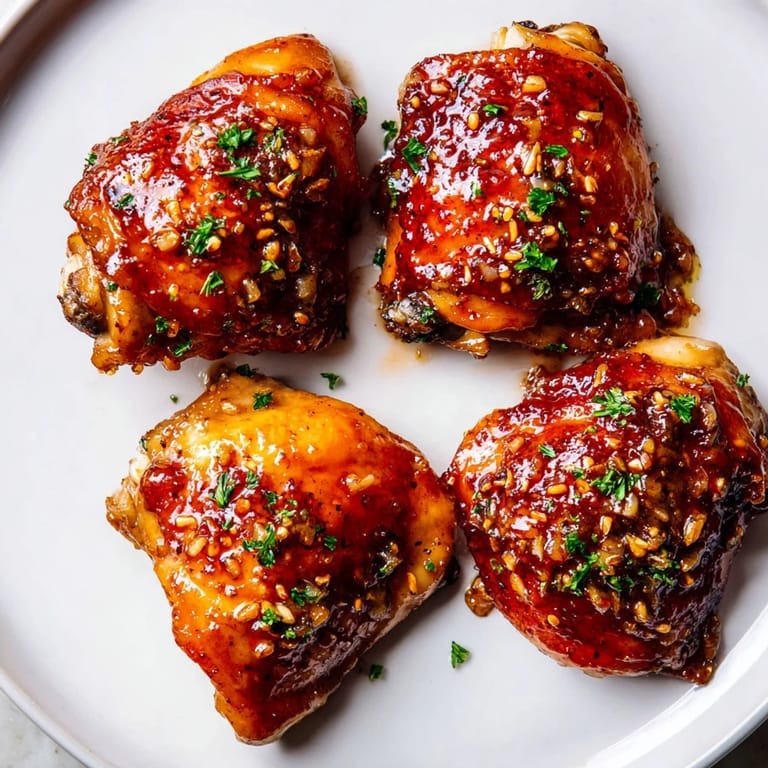
 Last winter, my sister brought a jar of apricot jam to a dinner I was hosting, and halfway through the meal I realized it was still sitting unopened on the counter. I hate waste, so I started playing around with it in the kitchen the next evening, mixing it with leftover coffee and mustard just to see what would happen. When I brushed that glossy, complex glaze onto chicken thighs and let them roast until caramelized, something clicked—the sweet jam didn't compete with the savory spices, it actually sang alongside them.
I made this for my partner on a random Tuesday when he'd had a rough day, and watching his face light up when he tasted that first bite—that moment of surprise at how good something so simple could be—that's when I knew this glaze was something special. He asked for it again the very next week, which basically never happens in our house.
Ingredients
- Bone-in, skin-on chicken thighs (4): The skin gets crispy and golden under the glaze, while the bones keep everything tender and juicy, so don't skip them or substitute breasts.
- Olive oil (1 tablespoon): Just enough to help the seasoning cling and encourage that beautiful browning.
- Salt and black pepper (½ teaspoon each): A gentle baseline before the glaze takes over.
- Apricot jam (3 tablespoons to ¼ cup): Use whatever's sitting in your jam jar—the last bit is perfect because it's often more concentrated.
- Strong brewed coffee (2 tablespoons, cooled): Sounds odd, but it deepens the glaze without making it taste like coffee; use espresso if you're feeling bold.
- Balsamic vinegar (1 tablespoon): Brings a subtle tang that keeps the sweetness from becoming cloying.
- Dijon mustard (1 tablespoon): The secret backbone that ties everything together with a creamy, complex note.
- Brown sugar (1 tablespoon): Helps the glaze caramelize and deepen in color.
- Garlic clove, minced (1): Just one, so it stays in the background where it belongs.
- Smoked paprika (½ teaspoon): Adds a whisper of smokiness that makes the whole thing feel more sophisticated.
- Fresh parsley (2 tablespoons, chopped, optional): A bright finish if you have it on hand.
Tired of Takeout? 🥡
Get 10 meals you can make faster than delivery arrives. Seriously.
One email. No spam. Unsubscribe anytime.
Instructions
- Get your oven ready:
- Heat it to 400°F (200°C) while you prep the chicken so everything moves smoothly once you start.
- Dry and season the thighs:
- Pat the chicken completely dry with paper towels—this is what lets the skin get crispy and golden. Rub lightly with olive oil, then sprinkle both sides with salt and pepper.
- Build the glaze:
- In a small bowl, whisk the apricot jam, cooled coffee, balsamic vinegar, mustard, brown sugar, minced garlic, and smoked paprika together until smooth and glossy. It should look like a thick, pourable sauce.
- First roast:
- Arrange the chicken thighs skin-side up in a baking dish or ovenproof skillet, then brush half of that glaze all over them. Slide into the oven for 25 minutes.
- Finish with the second glaze:
- Pull the pan out, brush the remaining glaze over each thigh, and return to the oven for 15 more minutes until the internal temperature hits 165°F (74°C) and the glaze looks deeply caramelized and sticky.
- Rest and serve:
- Let the chicken rest for 5 minutes out of the oven so the juices redistribute. Scatter fresh parsley over the top if you like, then serve warm.
 Pin it
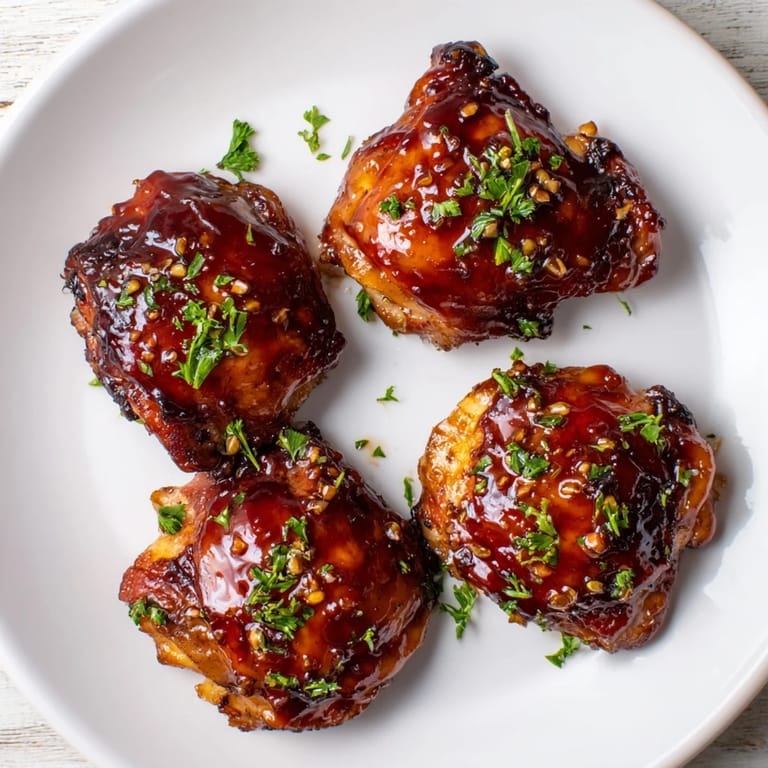
 There's something almost meditative about watching a glaze transform in the oven—the way it goes from glossy and loose to thick and clinging, how it catches the heat and deepens into this mahogany color. That's when you know the magic is happening.
Why This Glaze Works
The beauty of this combination is that each ingredient has a job and none of them overshadow the others. The jam brings sweetness and body, the coffee adds depth without flavor, the vinegar cuts through richness with brightness, and the mustard anchors everything with its creamy, tangy presence. Smoked paprika doesn't shout—it just whispers that you knew what you were doing. When they all cook together, they become something that tastes way more complex than the five minutes it takes to mix them.
How to Serve It
The glaze is rich and slightly glossy, so it pairs beautifully with something that cuts through it—roasted potatoes, green beans, or even a simple arugula salad with lemon. I've also served it over rice to catch all those caramelized drippings, and honestly, that might be my favorite way. The chicken itself is juicy and tender, so you don't need much else, but side dishes give you somewhere to rest your fork between bites.
Variations and Swaps
The beauty of this recipe is that it's forgiving if your pantry doesn't match exactly. Peach or plum jam works just as well as apricot, and you might actually prefer the flavor—taste yours before committing. If you like heat, add a pinch of chili flakes to the glaze or sprinkle them over the finished chicken. For a deeper coffee presence, use espresso instead of brewed coffee, though I'd reduce it to 1 tablespoon so it doesn't overpower everything else.
- Substitute peach or plum jam if that's what you have, tasting as you go to adjust sweetness.
- Add a small pinch of chili flakes if you want warmth without complexity.
- Use espresso instead of regular coffee for a bolder, more pronounced depth.
 Pin it
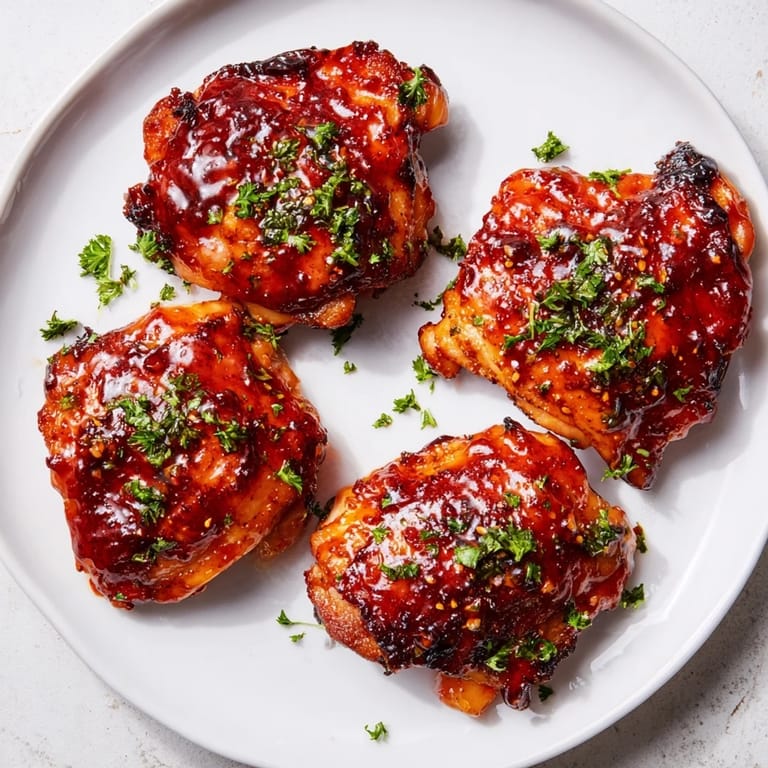
 This is the kind of dinner that feels like a small victory, the kind you'll find yourself coming back to whenever you want something that tastes special without the stress. It's become a regular in my house, and I hope it becomes one in yours too.
Recipe FAQs
- → What type of chicken cuts work best for this dish?
Bone-in, skin-on chicken thighs are recommended as they stay juicy and develop a crispy skin during baking.
- → Can I substitute the apricot jam with another fruit preserve?
Yes, peach or plum jam can be used as alternatives if apricot jam is unavailable, maintaining the sweet and tangy flavor profile.
- → How does the coffee influence the flavor?
The brewed coffee adds a subtle smoky and slightly bitter depth that balances the sweetness of the jam and sugar in the glaze.
- → Is it necessary to use smoked paprika in the glaze?
Smoked paprika contributes a mild smoky warmth; if unavailable, regular paprika can be used, though it will slightly alter the flavor.
- → What side dishes complement this glazed chicken?
This chicken pairs well with roasted potatoes, steamed green beans, or a light salad to balance its rich glazing.