 Pin it
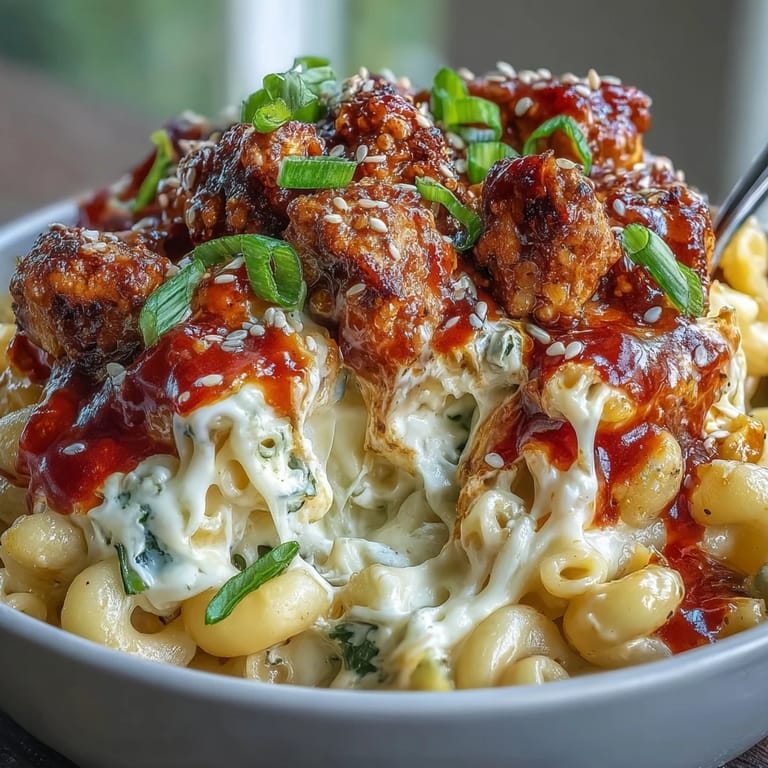
 My friend texted me a photo of Korean gochujang paste one evening, asking if I could make it work in comfort food. I stared at that fiery red container and thought: mac and cheese. The creamy, buttery kind that hugs you on cold nights, but with a spicy-sweet turkey topping that makes your taste buds wake up. That experiment became dinner the next week, and everyone at the table went quiet in that good way, forks moving faster than conversation.
I made this for my neighbor who'd just moved in, and she brought it back the next day with a thank-you note. Turns out she'd been homesick for bold flavors after growing up eating her grandmother's Korean food, and this reminded her of home in an unexpected way. That's when I realized fusion cooking isn't about choosing sides, it's about creating moments where different things belong together.
Ingredients
- Elbow macaroni (300 g): Al dente pasta holds sauce better than overcooked, so keep tasting from the pot in the last minute or two.
- Unsalted butter and all-purpose flour: These form your roux, the thickening base that makes the cheese sauce luxurious instead of watery or grainy.
- Whole milk (500 ml): Full-fat milk creates the richest sauce, though 2% works if that's what you have on hand.
- Sharp cheddar (150 g) and mozzarella (60 g): The cheddar brings tanginess and sharpness, while mozzarella adds stretch and creaminess, they're a better team than either alone.
- Dijon mustard: Just a teaspoon cuts through the richness and brings brightness that ties everything together.
- Ground turkey (400 g): Leaner than beef but more forgiving than chicken, it takes on the Korean flavors without drying out if you don't overthink it.
- Gochujang (2 tbsp): This fermented chili paste is the soul of the topping, salty and umami-rich with gentle heat that builds rather than burns.
- Garlic, ginger, soy sauce, rice vinegar, and sesame oil: These create depth and balance, making the turkey topping taste complex and intentional.
- Scallions and sesame seeds: Fresh garnish brightens everything and adds texture, a small detail that changes how the whole dish feels on your tongue.
Tired of Takeout? 🥡
Get 10 meals you can make faster than delivery arrives. Seriously.
One email. No spam. Unsubscribe anytime.
Instructions
- Boil the pasta:
- Bring salted water to a rolling boil and cook the elbow macaroni until it's just tender but still has a slight firmness when you bite it. Drain it but don't rinse, the starch helps the sauce cling.
- Brown the turkey:
- Heat oil in a skillet and add the ground turkey, breaking it into small crumbles as it cooks. You're looking for no pink inside, which takes about 5 minutes over medium-high heat.
- Build the Korean flavor:
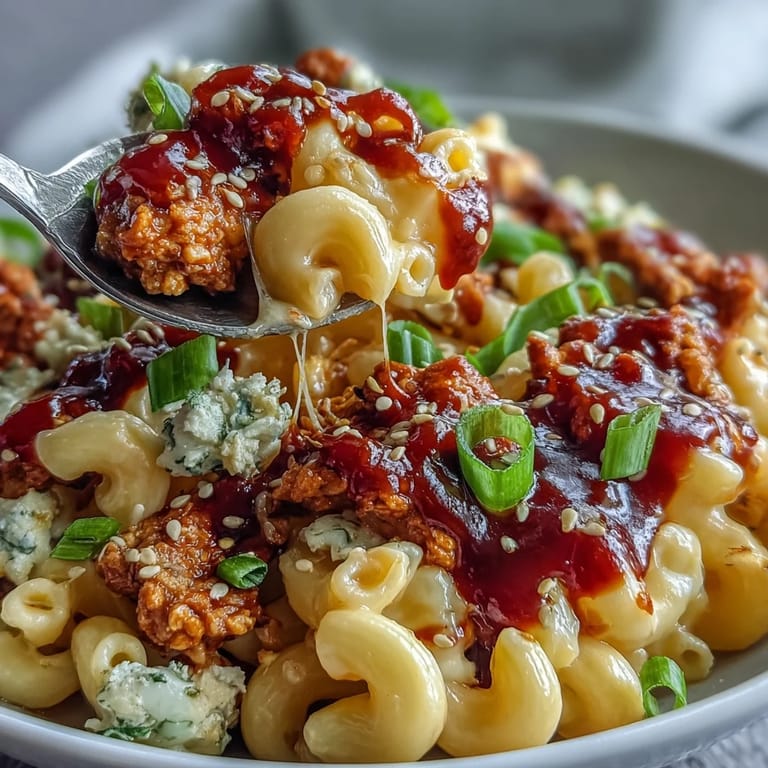
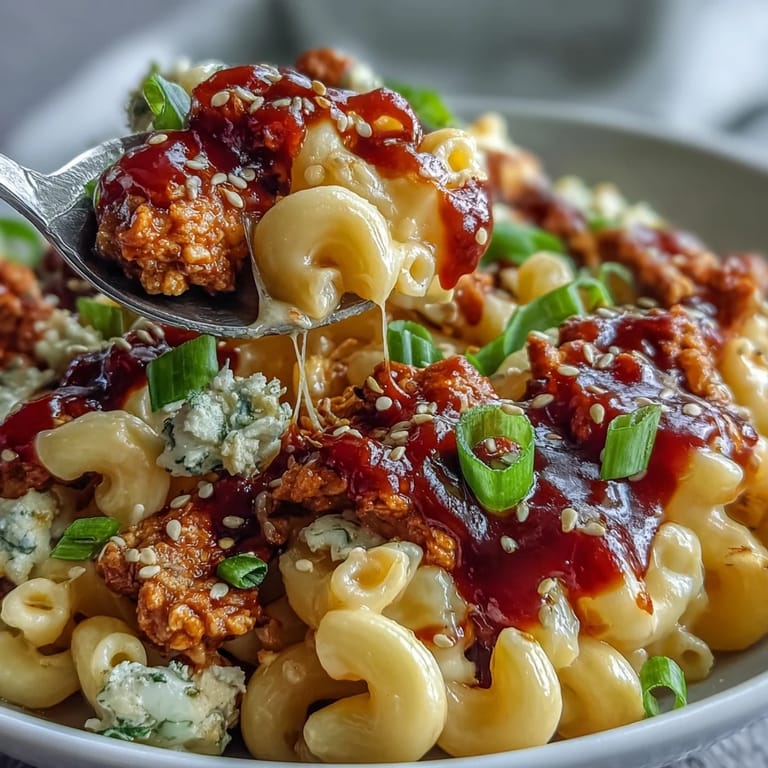
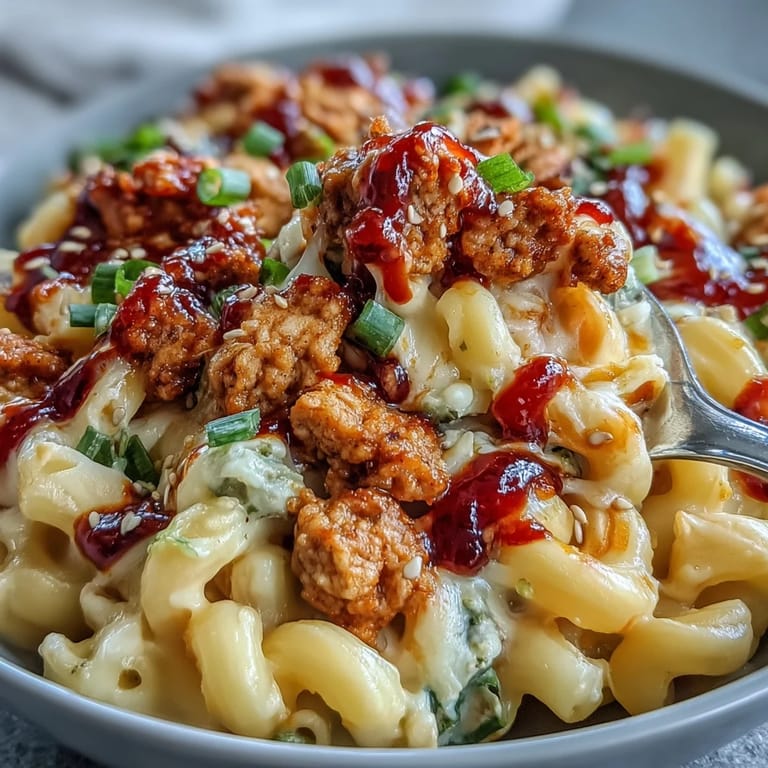
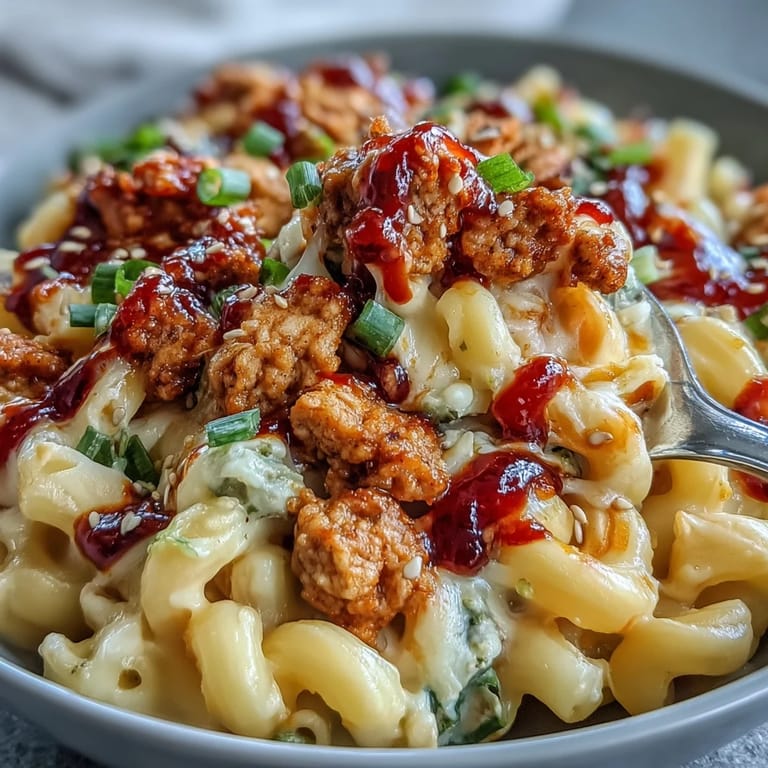
- Once the turkey is done, add your minced garlic and grated ginger, stirring constantly for about a minute until the kitchen smells incredible. Then add gochujang, soy sauce, honey, rice vinegar, and sesame oil, letting it simmer and thicken until glossy and jammy.
- Make the roux:
- In a separate saucepan, melt butter over medium heat and whisk in flour, cooking that mixture for a minute to cook out any raw flour taste. This is your foundation for the cheese sauce.
- Create the cheese sauce:
- Slowly whisk in milk, stirring constantly to avoid lumps, until the mixture thickens into something that coats the back of a spoon. Remove from heat and stir in both cheeses, mustard, salt, and pepper until smooth.
- Combine everything:
- Toss the drained pasta with the cheese sauce, making sure every piece gets coated. The heat from the pasta will help the sauce settle in and marry together.
- Plate and top:
- Divide the creamy mac and cheese among bowls and crown each portion with a generous spoonful of the Korean turkey crumbles. Finish with fresh scallions and sesame seeds if you have them.
 Pin it
  Pin it
 My sister asked me to make this for her book club potluck, which I thought was odd until she admitted she was tired of bringing the same salad no one really wanted to eat. This dish got people talking, trading bites, asking for the recipe. That's when I understood that good food is partly about flavors, but also about giving people permission to be surprised by what they're eating.
The Magic of Fusion
Fusion cooking scared me at first because I thought it meant disrespecting traditions or just throwing things together randomly. But this dish taught me that fusion works when you respect both sides of what you're making—the creamy American comfort and the bold Korean spice. Each element has to be good on its own before you combine them, otherwise you're just hiding problems under a blanket of cheese.
Timing and Temperature
The key to this working smoothly is having your pasta ready and your turkey topping warm when you plate. If one finishes early, you can keep the pasta in a warm bowl covered loosely with foil, or reheat the turkey gently while the sauce gets made. Temperature matters because cold pasta or lukewarm turkey topping changes the whole experience.
Make It Your Own
This recipe is forgiving enough to bend to what you have or what you're craving. I've made it with ground beef when turkey wasn't available, and I've added gochugaru (Korean chili flakes) on top when someone at the table wanted extra heat without changing the base. The foundation is solid, so don't be afraid to adjust the spice level, the cheese ratio, or even the protein.
- If you want it spicier, stir a pinch of gochugaru into the turkey topping or sprinkle it on top of each bowl.
- Gluten-free versions work perfectly with gluten-free pasta, flour, and tamari instead of regular soy sauce.
- Leftover turkey keeps separately from the mac and cheese, so you can reheat and reuse it for tacos, rice bowls, or sandwiches if there's any left.
 Pin it
  Pin it
 This dish lives in the space between two kitchens and two traditions, and somehow it feels right there. Every time I make it, I think about that text from my friend and how the best recipes are the ones that spark a conversation before anyone even takes a bite.
Recipe FAQs
- → What makes this Korean-style?
The turkey is seasoned with gochujang (Korean chili paste), soy sauce, rice vinegar, honey, garlic, ginger, and sesame oil—classic Korean flavors that create a sweet-spicy-savory profile.
- → Can I make it gluten-free?
Yes. Use gluten-free macaroni, substitute all-purpose flour with a 1:1 gluten-free flour blend, and use tamari instead of soy sauce to make this entirely gluten-free.
- → Can I use other meats?
Absolutely. Ground chicken or beef work beautifully as substitutes for the turkey while maintaining the dish's character.
- → How do I store leftovers?
Store components separately in airtight containers for up to 3 days. Reheat the mac and cheese gently with a splash of milk, and warm the turkey in a skillet.