 Pin it
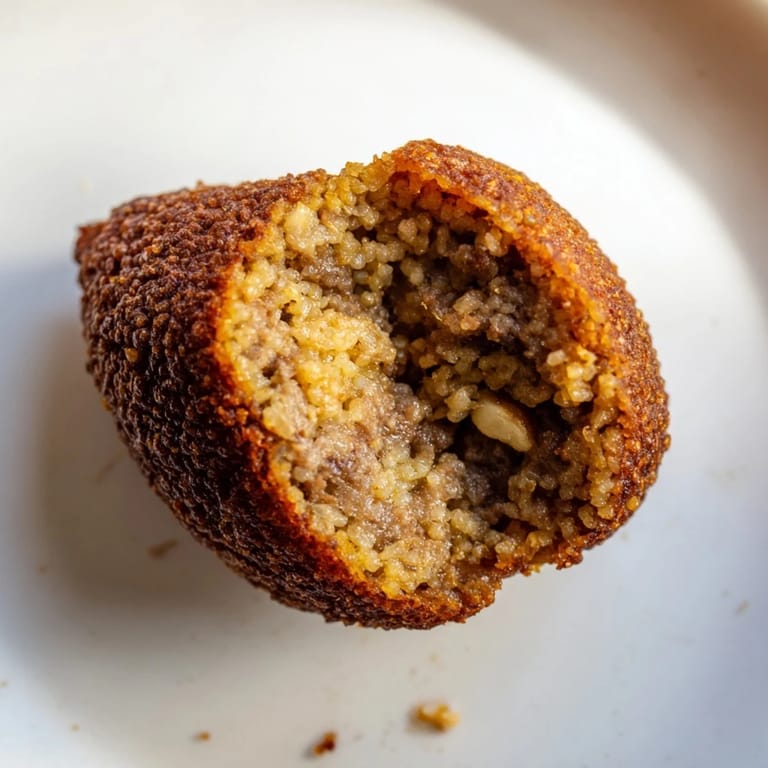
 The first time I tasted kibbeh was at my neighbor's kitchen table on a Friday afternoon, steam still rising from the golden croquettes she'd just pulled from the oil. She handed me one with a knowing smile, and I bit through that crispy exterior to find the warm, spiced meat and pine nuts inside—a texture and flavor combination that instantly made sense. Years later, I finally asked for her technique, and what she shared was simpler than I'd imagined but required a certain touch that only comes from practice. Now when I make kibbeh, I'm transported back to that moment, and I understand why she guarded the recipe so carefully.
I remember bringing a batch to a potluck where no one knew what kibbeh was, and watching their confusion turn to delight after the first bite. Someone asked if I'd bought them from a restaurant, which felt like the highest compliment. That moment taught me that unfamiliar doesn't mean intimidating—it just means an opportunity to share something worth discovering.
Ingredients
- Fine bulgur wheat (1 cup): The foundation that gives kibbeh its distinctive texture; rinsing and soaking it properly is what separates good kibbeh from dense, heavy ones.
- Ground beef or lamb (500 g for dough, 250 g for filling): Lamb gives a more authentic and deeper flavor, but beef works beautifully too—choose whichever you can source fresh.
- Onion (2 small, finely chopped): One goes into the dough for sweetness, the other into the filling for texture and depth.
- Pine nuts (1/2 cup): These are non-negotiable; they toast as they cook and add a nutty richness that's irreplaceable.
- Allspice and cinnamon (1.5 tsp combined): These warm spices are what make kibbeh taste like itself—don't skip or substitute them lightly.
- Olive oil (1 tbsp) and vegetable oil (2 cups for frying): Olive oil flavors the filling; the vegetable oil gets hot enough for proper frying without burning.
Tired of Takeout? 🥡
Get 10 meals you can make faster than delivery arrives. Seriously.
One email. No spam. Unsubscribe anytime.
Instructions
- Prepare the bulgur:
- Rinse it under cold water until the water runs clear, then let it sit for 10 minutes—it'll absorb the water and soften. This step is crucial because dry bulgur will make your dough crumbly and impossible to work with.
- Mix the dough:
- Combine the softened bulgur with ground meat, chopped onion, salt, allspice, cinnamon, and pepper in a large bowl. Knead it like bread, adding a little cold water at a time until it becomes smooth and holds together. The texture should feel similar to Play-Doh—soft enough to mold but not sticky.
- Toast the filling:
- Heat olive oil in a skillet and soften the onion, then add ground meat and break it into small pieces as it cooks. Once browned, stir in pine nuts, spices, salt, and pepper, cooking just until the pine nuts turn golden—this whole step takes about 6 minutes total.
- Shape and fill:
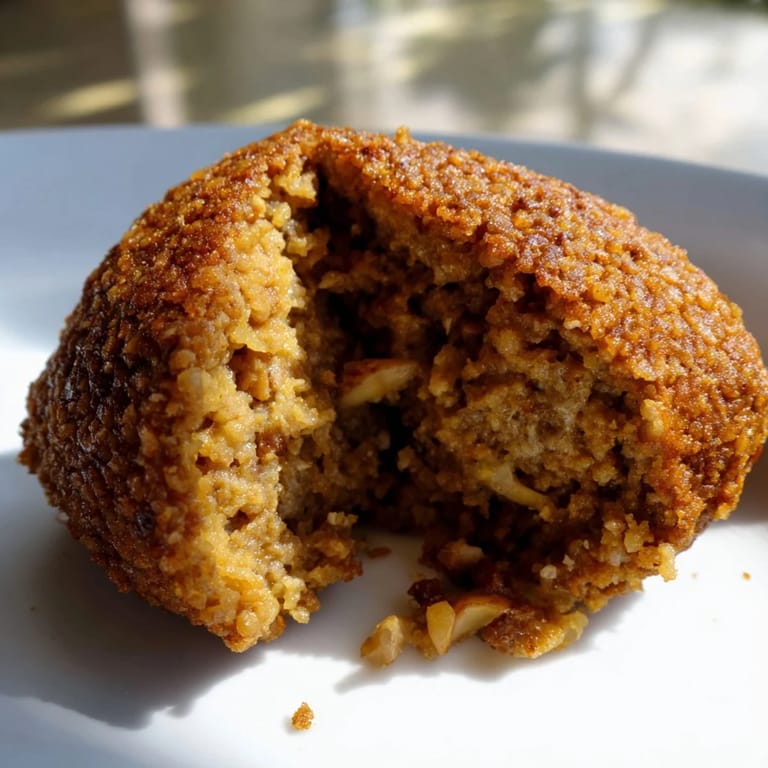
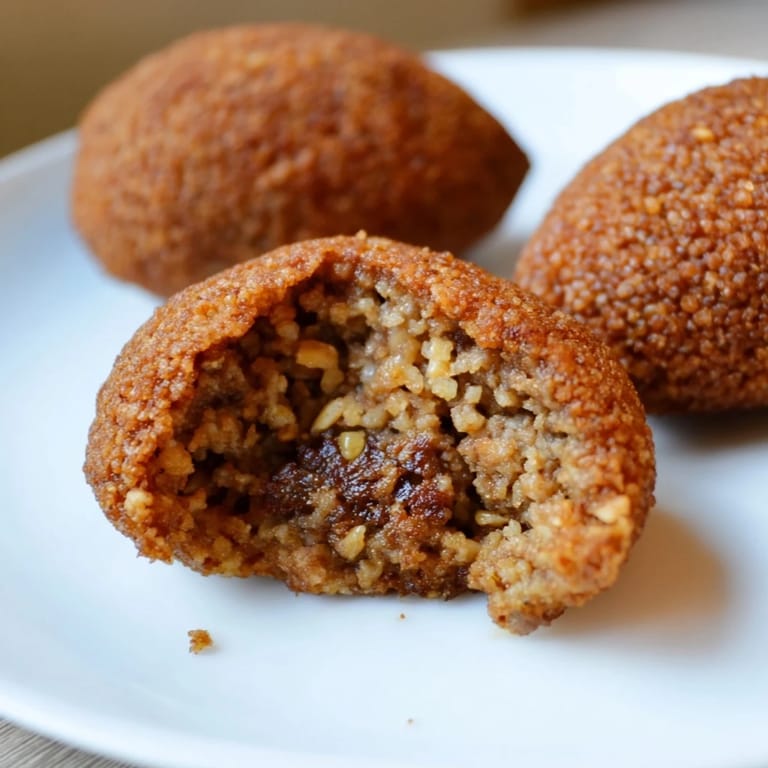
- Wet your hands so the dough doesn't stick, take a golf ball–sized portion, and flatten it into a thin oval shell in your palm. Place a teaspoon or two of filling in the center, then pinch the edges to seal and shape it into a torpedo or football shape.
- Fry or bake:
- For frying, heat vegetable oil to 180°C (350°F) and cook kibbeh in batches for 4 to 5 minutes until deep golden brown, draining on paper towels after. For baking, brush kibbeh with olive oil, place on a parchment-lined sheet, and bake at 200°C (390°F) for 25 to 30 minutes, turning halfway through.
 Pin it
 There's a moment when you hold a perfectly sealed kibbeh in your hand—still warm from shaping—and you realize you've made something with your own hands that tastes like culture and care. That's the moment I always think of my neighbor, grateful for the invisible thread connecting us through food.
Frying Versus Baking
Fried kibbeh is absolutely the traditional route—the oil creates that signature crispy, crackling shell that's hard to resist. But if you're looking for something lighter, baking works well and requires less oil; just brush them generously with olive oil and don't skip the halfway turn so they brown evenly. Either way, they should emerge golden and sound hollow when you tap them.
Serving and Storage
Serve kibbeh warm, right after cooking, with thick yogurt or tahini sauce on the side for dipping. A bright salad—tomatoes, cucumbers, and fresh herbs—cuts through the richness beautifully. These keep in the refrigerator for 3 days and reheat well in a 180°C (350°F) oven for about 10 minutes, or you can freeze unbaked kibbeh for up to 3 months and cook them straight from frozen, just adding a few minutes to the cooking time.
Why This Dish Matters
Kibbeh is one of those dishes that appears at celebrations, family gatherings, and moments when someone wants to show they care through food. It's not difficult, but it requires attention and patience—qualities that make it feel special. Making it yourself transforms a simple ingredient list into something that carries history and generosity.
- Double-check your oil temperature before frying; too cool and they'll be greasy, too hot and they'll brown before cooking through.
- A meat thermometer inserted into the center should read 160°C (70°C) for beef and 65°C for lamb if you want to verify doneness.
- If shaping feels overwhelming at first, practice with a few, and your hands will learn the motion quickly.
 Pin it
 Every time I make kibbeh, someone asks for the recipe, and I'm always happy to share. There's something about passing along a dish that means something to you—it's a small way of saying you matter to me.