 Pin it
 The sizzle as the miso glaze bubbled under my broiler was a delightful surprise—almost like applause for a dish well on its way. I found myself drawn in by the way roasted eggplant transforms, caving in tenderly and inviting such rich flavors. It wasn't a special occasion, just a quiet evening when I felt like my kitchen needed something new. Between the slightly sweet scent of mirin and the unmistakable aroma of sesame, this recipe quickly became a go-to. The best part: it feels both easy and a little luxurious.
I first cooked this for friends who claimed not to like eggplant—they left with second helpings and the recipe. We all hovered around the sheet pan, sampling pieces before they even made it to the platter, trading stories about our favorite Japanese meals. That night, more than a few of us decided we should turn eggplant skeptics into converts whenever possible.
Ingredients
- Eggplants: Choose firm, glossy eggplants; scoring the flesh lets the glaze soak in for deep flavor.
- White miso paste: Shiro miso brings a gentle, mellow umami without overpowering, so don't substitute darker miso unless you want a bolder taste.
- Mirin: This adds sweetness and a hint of acidity—if you don't have it, try a mix of rice vinegar and a pinch of sugar.
- Sake: Brings subtle complexity and pulls the glaze together; if you're out, a splash of water works in a pinch.
- Sugar: Balances the saltiness for that caramelized finish.
- Soy sauce: Adds depth and color; use tamari if you're keeping things gluten-free.
- Sesame oil: Just a light brush on the eggplant before roasting brings that nutty aroma to center stage.
- Toasted sesame seeds & green onions (optional): These finish with crunch and freshness—don't skip if you have them!
Tired of Takeout? 🥡
Get 10 meals you can make faster than delivery arrives. Seriously.
One email. No spam. Unsubscribe anytime.
Instructions
- Set the stage:
- Preheat your oven to 400°F (200°C) and line a baking sheet with parchment paper to prevent sticking and make cleanup a breeze.
- Prep the eggplant:
- Score the cut side of each halved eggplant in a crosshatch; you'll see how this creates grooves for the glaze to cling to.
- Brush with oil:
- Lightly brush the scored side with sesame oil so the roasting brings out the eggplant's creamy texture.
- Roast:
- Place the eggplants cut side up and roast for about 25 minutes until utterly soft and golden brown around the edges.
- Prepare miso glaze:
- While they roast, gently stir together the miso paste, mirin, sake, sugar, and soy sauce in a small saucepan over low heat until thick and glossy.
- Glaze and broil:
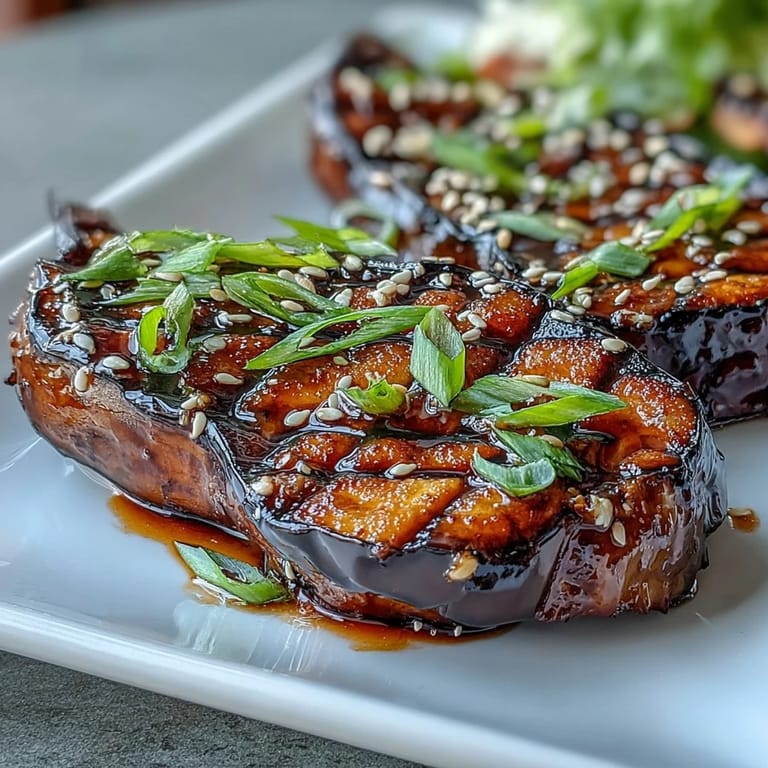
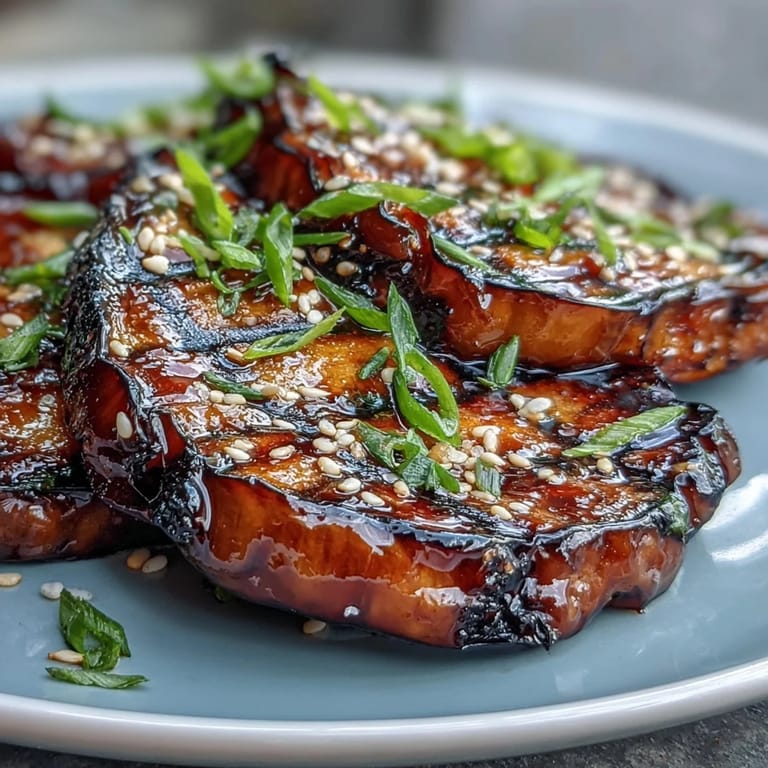
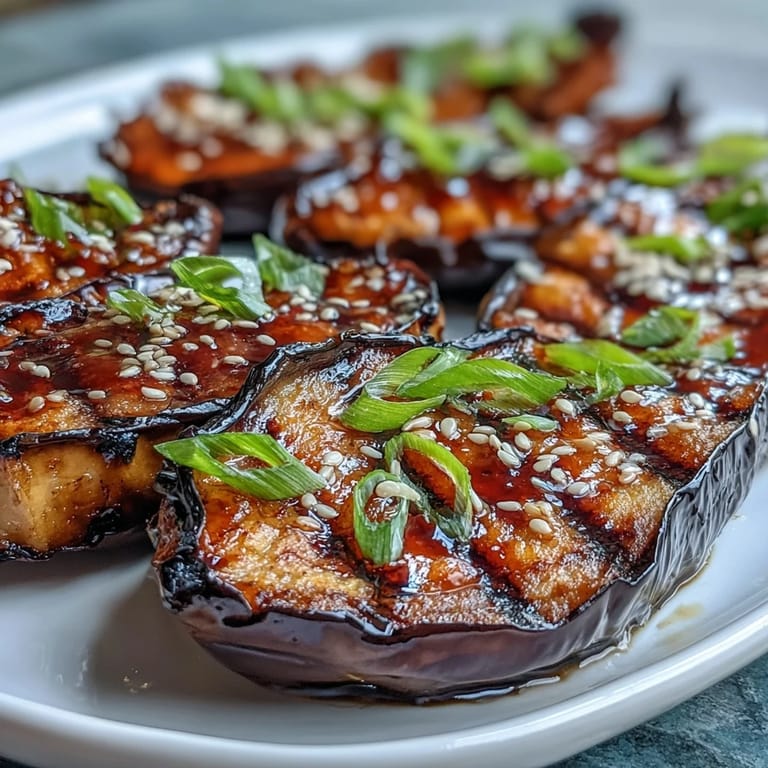
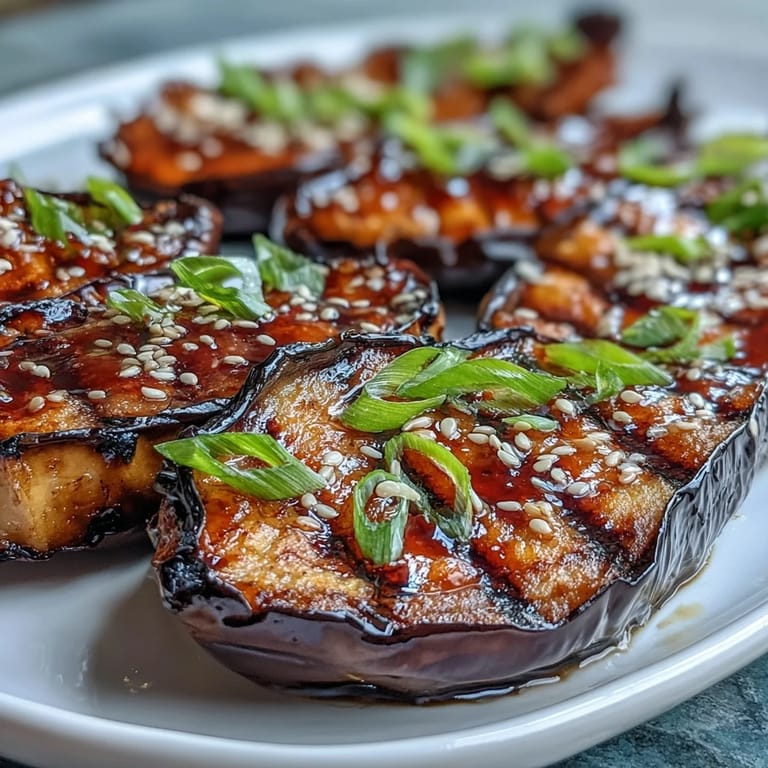
- Smother the hot eggplants with the glaze and switch to the broiler; in just 3 to 5 minutes you'll see blistering bubbles and caramelization.
- Finish and garnish:
- Serve warm, topped with sesame seeds and green onion if you like, and let everyone dig in straight from the tray if that's their style.
 Pin it
  Pin it
 The laughter around the table when the last sliver of eggplant disappeared always reminds me that simple food shared can be as memorable as any celebration. It's these moments when a humble vegetable becomes the centerpiece that feel special.
Making the Glaze Extra Silky
One evening, I stirred and simmered the glaze just a touch longer than usual out of distraction—it ended up satiny and thick, and never dripped off the eggplant. Low and slow is the secret if you want to coax out that shine and cling.
Getting the Perfect Broil
More than once, I've hovered door ajar, spatula in hand, counting seconds under the broiler. For best results, rotate your baking sheet halfway through—the even caramelization is worth the bit of vigilance.
Pairing and Serving Ideas
This eggplant is happy alongside steamed rice, a crisp cucumber salad, or with miso soup for a bigger spread. If you're feeling creative, tuck slices into sandwiches or lay them over noodles too.
- Scatter extra sesame seeds for a nutty finish
- Squeeze a bit of fresh lemon for brightness
- Leftovers? Chop and toss them into ramen tomorrow
 Pin it
  Pin it
 Miso glazed eggplant has a way of turning skepticism into delight, one caramelized bite at a time. Here's hoping it brings a touch of umami joy to your next meal, too.
Recipe FAQs
- → How should I prepare the eggplant for even cooking?
Score the flesh in a crosshatch to help heat penetrate and release moisture. Brush the cut sides with sesame oil and roast cut-side up at a high temperature so the flesh softens without collapsing.
- → Can I salt the eggplant beforehand to reduce bitterness?
Salting can draw out moisture and reduce bitterness in very large or old eggplants, but for tender medium eggplants roasting at 400°F until soft usually gives good texture without extra salting.
- → How do I get a caramelized glaze without burning it?
After spreading the glaze, broil on high for just 3–5 minutes and watch closely. Keep the rack a moderate distance from the broiler so sugars caramelize rather than char.
- → Can the miso glaze be made ahead?
Yes. Make the glaze ahead and refrigerate; gently rewarm before using. It may thicken when cold—loosen with a splash of mirin or sake before spreading.
- → What are good accompaniments and garnishes?
Serve over steamed rice or alongside other Japanese plates. Finish with toasted sesame seeds and sliced green onions for texture and bright flavor.
- → How can I adapt this for gluten-free or vegan needs?
Use tamari instead of soy sauce for gluten-free. Check labels for miso and sake; choose vegan-labeled miso and a gluten-free sake substitute if necessary.