 Pin it
 I stumbled into tagine cooking on a rainy Tuesday when my usual dinner plan fell apart. A friend had left behind a jar of preserved lemons, and I had no idea what to do with them until I found a scribbled recipe card tucked inside a cookbook. The kitchen filled with cinnamon and cumin as the chicken braised, and I realized I'd been missing out on something remarkable. That first bite, sweet apricot against salty olive, made me forget all about the original plan.
I made this for my neighbor who had just moved from Casablanca, half-terrified she would politely tell me I'd gotten it all wrong. Instead, she closed her eyes after the first forkful and said it reminded her of her grandmother's Sunday dinners. We ended up talking for hours over seconds and thirds, the pot scraped clean by the time she left. It became the dish I turn to when I want to feed someone something that feels like care made visible.
Ingredients
- Bone-in, skin-on chicken thighs: The dark meat stays tender through the long simmer, and the skin crisps beautifully during browning, adding richness to the sauce.
- Onion and garlic: These form the aromatic base; chop the onion fine so it melts into the sauce rather than sitting in chunks.
- Fresh ginger: Grating releases more flavor than chopping, and the slight heat balances the sweetness of the apricots.
- Carrot: Adds a subtle earthiness and a pop of color; slice it thick enough that it holds its shape.
- Dried apricots: They plump up as they cook, releasing natural sugars that create the signature sweet-savory balance.
- Preserved lemon: This is the ingredient that makes it taste authentically Moroccan; the rind turns soft and tangy, but if you can't find it, the dish still works.
- Cumin, coriander, cinnamon, paprika, turmeric: Together they build a warm, complex spice blend that smells like a spice market and tastes like comfort.
- Olive oil: Use a good one for browning; it carries the spices and helps build fond on the bottom of the pot.
- Chicken broth: Low-sodium lets you control the salt, especially important since the olives and preserved lemon add plenty of their own.
- Diced tomatoes: Drain them well to avoid a watery sauce; they add body and a slight acidity that brightens everything.
- Green olives: Briny and firm, they cut through the sweetness and add little bursts of salt.
- Slivered almonds: Toasting them releases their oils and adds a nutty crunch that contrasts with the tender chicken.
- Fresh cilantro: A handful at the end brings freshness and a bright green finish.
Tired of Takeout? 🥡
Get 10 meals you can make faster than delivery arrives. Seriously.
One email. No spam. Unsubscribe anytime.
Instructions
- Prep the chicken:
- Pat those thighs completely dry with paper towels, otherwise they will steam instead of brown. Season them all over with salt and pepper, being generous because this is where the seasoning starts.
- Brown the chicken:
- Heat the oil until it shimmers, then lay the thighs skin-side down without crowding the pot. Let them sizzle undisturbed for a few minutes until the skin releases easily and turns deep golden.
- Build the base:
- In the same oil, cook the onion and carrot with a pinch of salt until they soften and start to color at the edges. This takes patience, but the sweetness they develop is worth it.
- Bloom the spices:
- Stir in the garlic, ginger, and all the ground spices, cooking just until the smell fills your kitchen. This step wakes up the spices and keeps them from tasting raw.
- Add tomatoes:
- Toss in the drained tomatoes and let them cook down for a couple of minutes, scraping up any browned bits stuck to the bottom.
- Simmer everything together:
- Nestle the chicken back in, then add the apricots, preserved lemon, and broth. Bring it to a gentle bubble, cover, and turn the heat low.
- Slow cook:
- Let it simmer covered for 45 minutes, stirring now and then. The chicken will become fall-apart tender and the sauce will thicken as the apricots break down.
- Finish with olives:
- Stir in the olives and let it cook uncovered for 10 more minutes. The sauce will reduce and cling to everything in the pot.
- Taste and adjust:
- Check for salt and spice; sometimes I add a squeeze of lemon juice if it needs brightness.
- Serve and garnish:
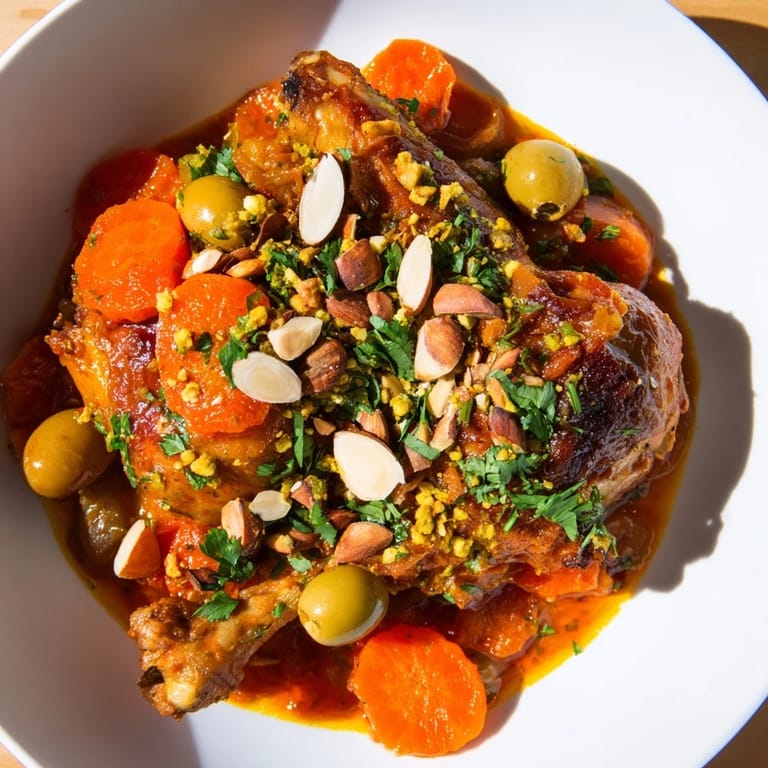
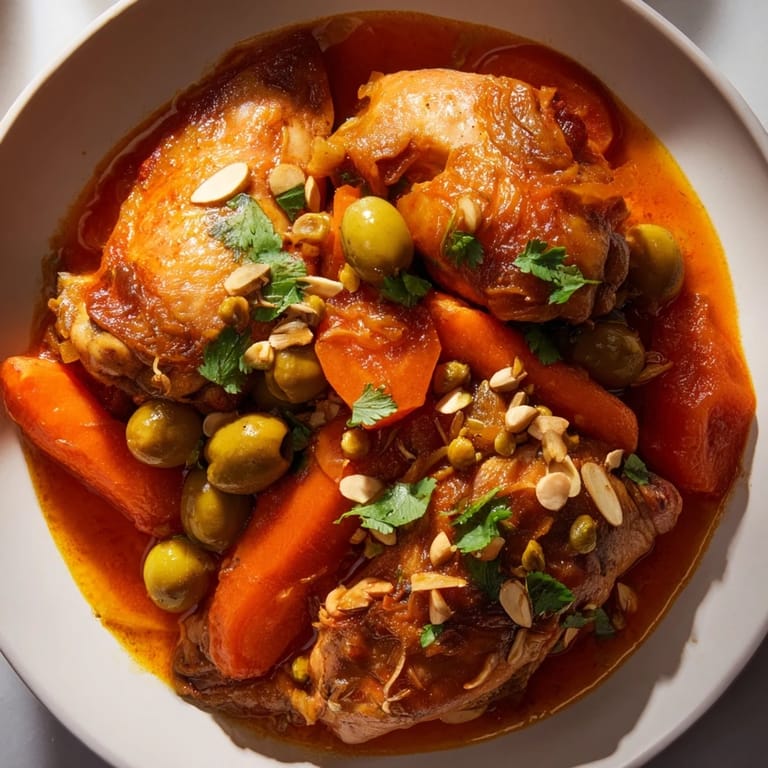
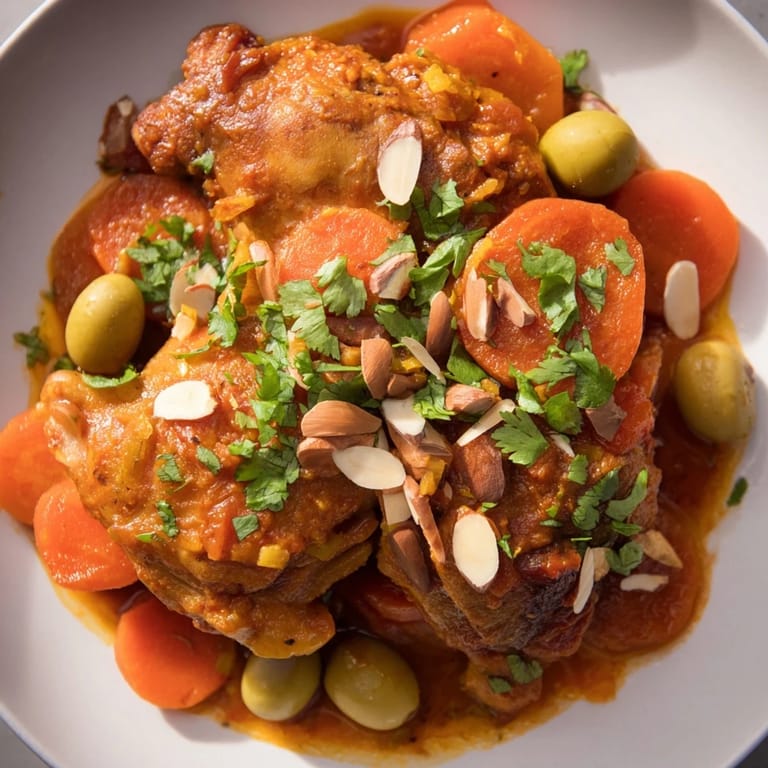
- Spoon the chicken and sauce over couscous or rice, then scatter cilantro and toasted almonds on top for color and crunch.
 Pin it
 There was an evening last winter when the power went out halfway through cooking this, and I finished it on the gas stove by candlelight. The flickering shadows made the kitchen feel like somewhere far away, and when we finally sat down to eat, the warmth of the dish felt like a small miracle. It is funny how a recipe can become a memory you did not know you were making.
Serving Suggestions
I always make extra couscous because the sauce is too good to waste; fluff it with a fork and let it soak up every bit of the sweet, spiced liquid. Warm flatbread on the side is perfect for mopping up what the couscous misses. A simple salad of cucumbers and tomatoes with lemon juice cuts through the richness and balances the plate.
Variations and Substitutions
If you cannot find preserved lemon, use strips of fresh lemon zest and a tablespoon of lemon juice; it will not be quite the same, but it will still be good. For a vegetarian version, swap the chicken for chickpeas and cubed sweet potato, reducing the simmer time to about 30 minutes. I have also made this with lamb shoulder instead of chicken, and it turned out rich and falling apart, though it needed an extra 20 minutes of cooking.
Storage and Reheating
This keeps beautifully in the fridge for up to four days, and I have frozen it successfully for up to three months. Reheat gently on the stove with a splash of broth to loosen the sauce, stirring occasionally so nothing sticks. The almonds and cilantro should be added fresh after reheating, or they lose their texture and color.
- Let it cool completely before transferring to airtight containers to prevent condensation.
- Freeze in portions so you can thaw just what you need for a quick dinner.
- Garnish only what you plan to eat right away; leftovers stay fresher without the toppings.
 Pin it
 This is the kind of dish that makes your home smell like somewhere you want to be. I hope it fills your kitchen with warmth and your table with good conversation.
Recipe FAQs
- → What type of chicken is best for this dish?
Bone-in, skin-on chicken thighs are preferred for their tenderness and ability to stay juicy during slow cooking.
- → Can dried apricots be substituted?
Yes, other dried fruits like dates or figs can be used to maintain the sweet notes in the dish.
- → How do preserved lemons influence the flavor?
Preserved lemons add a unique tangy and slightly salty depth that brightens the rich spices and fruit components.
- → What sides pair well with this tagine?
Steamed couscous, rice, or warm flatbread complement the stew by soaking up its flavorful sauce.
- → Can this dish be made vegetarian?
Substituting chicken with chickpeas and root vegetables offers a hearty vegetarian version while retaining the classic flavors.