 Pin it
 The first time I truly understood tahdig, I was standing in a cramped Tehran kitchen on a humid summer morning, watching my neighbor's mother work with a kind of focused grace that made the whole process seem simple. She barely looked at the rice, just listened to it, waiting for that subtle crackling sound that meant the golden crust was forming underneath. That sound, that moment of knowing when to stop—it changed how I thought about cooking rice forever.
I made this for a dinner party once where everything else had gone slightly wrong—the main dish was late, the wine hadn't chilled—but when I turned that pot upside down and the tahdig slid onto the platter with a satisfying thump, still crackling softly, everyone leaned in like it was the center of the whole evening. Sometimes the simplest dish becomes the memory people talk about.
Ingredients
- Basmati rice (2 cups): The long grains stay separate and fluffy, which matters when you're layering them with a crispy base. Rinse it generously until the water runs completely clear, or the starch will make everything gummy.
- Salt (1 tablespoon for soaking): This seasons the rice evenly and helps the grains firm up so they don't fall apart during cooking.
- Saffron threads (1/4 teaspoon): These give you that golden color and subtle floral note that's unmistakably Persian. Don't skip grinding them first, it releases so much more flavor.
- Hot water (2 tablespoons for saffron): Steep the saffron here to unlock its color and aroma before you mix it into the yogurt layer.
- Plain Greek yogurt (4 tablespoons): This is your tahdig secret—it becomes creamy, then crispy, and creates that golden-brown crust from the bottom up.
- Vegetable oil (2 tablespoons plus extra): Use enough to coat the pot generously so nothing sticks and the tahdig can actually crisp up properly.
- Unsalted butter, melted (2 tablespoons): The butter adds richness and helps achieve that golden color on the crust.
- Ground turmeric (1/2 teaspoon, optional): A whisper of turmeric brings warmth and another layer of that golden hue.
- Ground black pepper (1/2 teaspoon): Just enough to remind you this isn't bland, but not so much that it dominates.
Tired of Takeout? 🥡
Get 10 meals you can make faster than delivery arrives. Seriously.
One email. No spam. Unsubscribe anytime.
Instructions
- Rinse and soak the rice:
- Rinse under cold water, stirring gently with your fingers until the water runs clear—this takes longer than you think but it matters. Soak in salted water for at least 30 minutes, then drain completely in a colander.
- Parboil the rice:
- Boil in salted water for 5 to 6 minutes until the grains are just tender but still slightly firm to the bite. Drain immediately and set aside, letting a little steam escape so the grains don't stick together.
- Prepare the saffron:
- Grind the threads gently between your fingers into a fine powder, then steep in hot water for 10 minutes until the liquid becomes deep golden and fragrant.
- Make the tahdig base:
- In a bowl, whisk together yogurt, 1 tablespoon of the saffron water, turmeric, and about 1 cup of the parboiled rice until smooth. This mixture is what forms your crispy, caramelized crust.
- Heat the pot:
- In a heavy-bottomed 10-inch pot with a tight lid, heat the oil and melted butter over medium heat until it's hot and shimmering slightly. You'll feel the heat when you hold your hand above it.
- Layer the tahdig:
- Spread the yogurt-rice mixture evenly across the bottom of the pot, creating a thin, even layer. This is your foundation for the crust.
- Add the remaining rice:
- Gently spoon the rest of the rice on top, mounding it slightly toward the center. Drizzle the remaining saffron water over everything, then use the handle of a wooden spoon to poke several holes down through the rice for steam to escape.
- Steam the rice:
- Wrap the lid tightly in a clean kitchen towel and cover the pot securely. This traps steam and helps the tahdig form. Cook over medium heat for 10 minutes, then lower the heat to low and cook for 35 to 40 minutes, listening for a gentle crackling sound toward the end.
- Rest and invert:
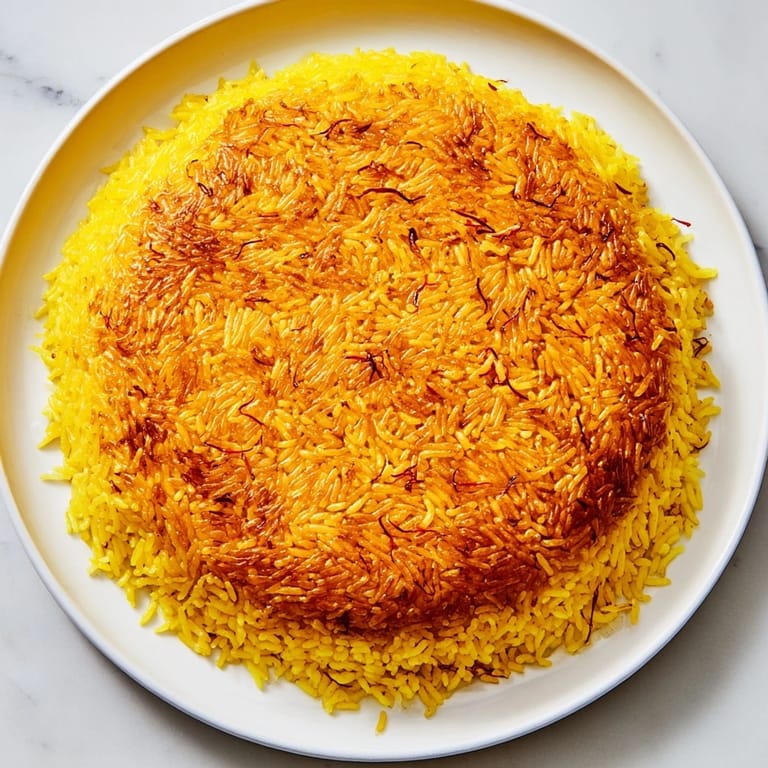
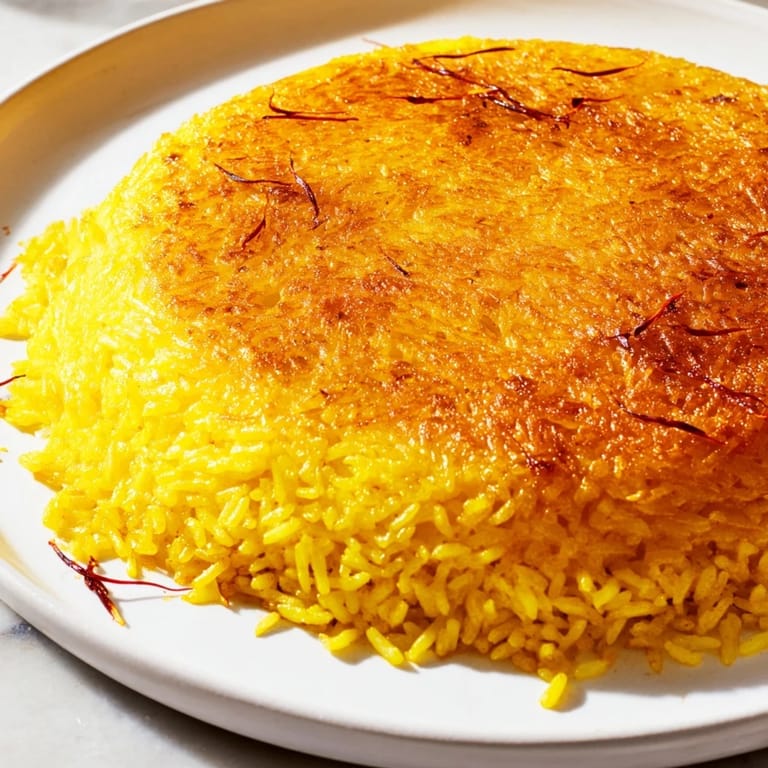
- Remove from heat and let everything settle for 5 minutes. This helps the tahdig loosen from the bottom. Carefully invert the pot onto a serving platter, revealing the golden, crispy layer on top.
 Pin it
 There's a moment when the rice stops steaming and starts crackling quietly, almost like it's whispering to you, and that's when you know you've got it right. My grandmother used to say that tahdig teaches patience, because you can't rush it or fake it—the rice will tell you when it's ready.
The Story Behind Tahdig
Tahdig isn't fancy in the way fancy food pretends to be—it's the opposite. It's a kitchen moment that emerged from everyday cooking, from people who understood that rice doesn't have to be perfect all through, just perfect where it matters. That bottom layer, crispy and caramelized, is actually an accident that became tradition, the kind of happy mistake that makes you wonder why anyone cooks rice any other way.
Timing Your Cook
The hardest part isn't technique, it's trusting the process. Thirty-five to 40 minutes feels long when you're watching a pot, but that time is what develops the flavor and creates that signature crust. The first 10 minutes on medium heat gets everything moving, then low heat for the rest is where the real magic happens—gentle, steady, no rushing.
Variations and Swaps
Once you master the yogurt tahdig, you'll start seeing possibilities everywhere. Thinly sliced potatoes create a completely different texture, more delicate and almost chip-like. Torn pieces of flatbread become crispy and golden, soaking up all that saffron flavor. Even a thin layer of egg can work if you're feeling adventurous, creating something almost creamy underneath before it crisps.
- Add a cinnamon stick or a few cardamom pods to the boiling water for extra floral aroma.
- Garnish with barberries or fresh herbs like dill and parsley if you want brightness and color.
- Let the tahdig cool for just a minute before inverting if you want it to hold together slightly better.
 Pin it
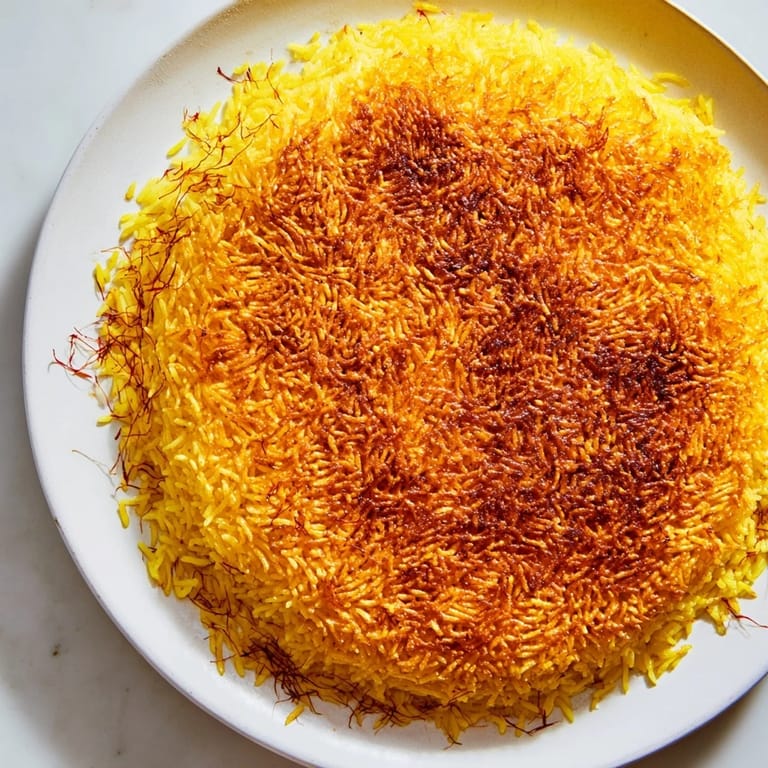
 When tahdig works, it feels less like you've followed a recipe and more like you've unlocked a secret. Serve it while it's still warm and crackling, and watch how it transforms a simple meal into something people remember.
Recipe FAQs
- → What is tahdig in Persian cooking?
Tahdig refers to the golden, crispy layer formed at the bottom of the pot when cooking rice, achieved by layering yogurt and saffron-infused rice and slow-cooking.
- → How do you get a crispy tahdig crust?
A combination of yogurt, saffron, butter, and oil spread at the pot's bottom helps create a flavorful and crispy tahdig crust during slow cooking over low heat.
- → Can I use a different type of rice?
Basmati is preferred for its long grains and aroma, but other long-grain rice may be used though results might vary slightly in texture.
- → What spices enhance the flavor?
Saffron provides a distinct aroma and color, while turmeric and black pepper add subtle warmth and complexity to the dish.
- → How long should the rice cook for perfect texture?
After parboiling, the rice and yogurt mixture cooks over low heat for about 45–50 minutes to develop the crisp tahdig and fully tender grains.
- → Are there variations to the traditional tahdig layer?
Yes, alternative tahdig layers can include thinly sliced potatoes or flatbread for different textures and flavors.