 Pin it
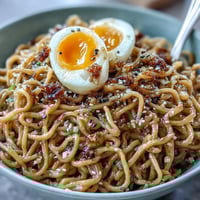
 There's something almost magical about the moment when instant ramen stops being a desperate midnight snack and becomes actual food. I discovered this one ordinary Tuesday when my freezer was stocked with frozen peas and I was tired of the same bland bowl. A handful of garlic, a splash of sesame oil, and suddenly the whole thing tasted like I'd ordered it from a proper ramen shop instead of boiling water in my kitchen. It took maybe fifteen minutes, and somehow that small upgrade changed how I thought about cooking on a budget.
I made this for my roommate one night when they came home complaining about another round of takeout costs, and watching their face light up when they actually tasted real depth in their bowl was worth more than the handful of peas I threw in. They started making it weekly after that, usually with whatever vegetables had started to gather frost in their freezer section.
Ingredients
- Instant ramen noodles, 2 packs: The foundation here, and honestly the quality varies less than people think—what matters is what you do after you add water.
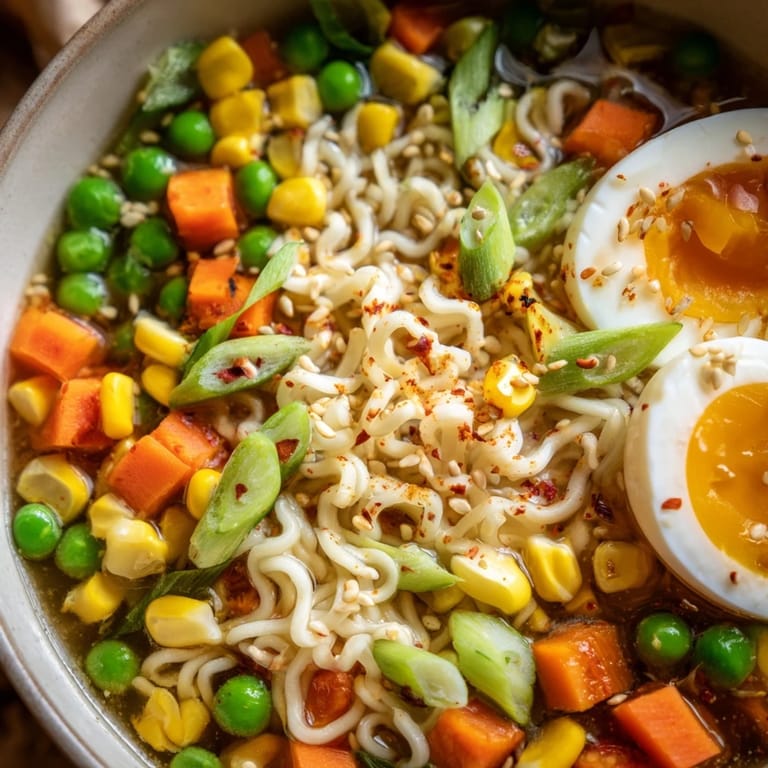
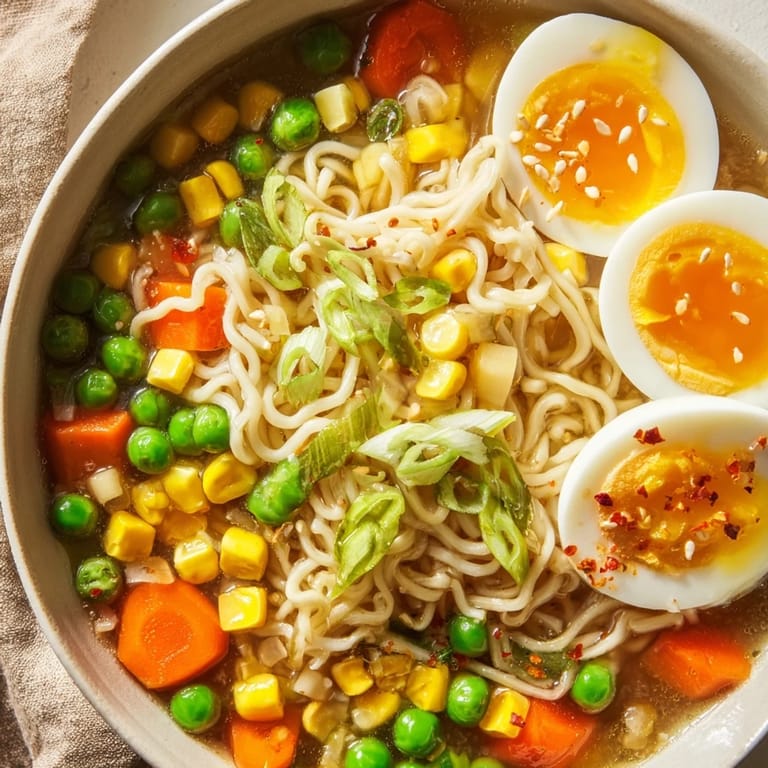
- Frozen peas, 1 cup: These are the secret ingredient that transforms this from sad to satisfying; they stay firm, add natural sweetness, and honestly taste better than fresh peas that have been sitting in your crisper drawer.
- Frozen mixed vegetables, 1 cup (optional): Carrots, corn, and green beans add texture variety and let you feel like you're eating an actual balanced meal.
- Green onions, 2, sliced: The freshness of raw green onion against hot broth is a textural trick that makes everything taste brighter.
- Garlic, 2 cloves, minced: This is the non-negotiable flavor foundation—even just thirty seconds of toasting garlic in oil changes everything about the broth.
- Low-sodium vegetable broth, 4 cups: Better than water because it actually has flavor, and low-sodium lets you control the salt level yourself.
- Soy sauce, 2 tablespoons: Use tamari if you need gluten-free, but regular soy sauce has a savory depth that's hard to replicate.
- Sesame oil, 1 teaspoon: Just a small amount adds a nutty richness that makes people ask what you did differently.
- Soft-boiled eggs, 2 (optional): If you add an egg, suddenly this feels like breakfast for dinner instead of ramen.
- Toasted sesame seeds, 1 tablespoon: A garnish that adds crunch and looks way more intentional than it actually is.
- Chili flakes or sriracha to taste: For the people (including me) who think everything should have a little heat.
Tired of Takeout? 🥡
Get 10 meals you can make faster than delivery arrives. Seriously.
One email. No spam. Unsubscribe anytime.
Instructions
- Start with heat and fragrance:
- Pour your sesame oil into a medium saucepan over medium heat and add your minced garlic. You'll know you got the timing right when the kitchen suddenly smells like a proper ramen shop—that's thirty seconds in, when the garlic is just barely golden and the smell hits your nose.
- Build your broth:
- Add your vegetable broth and soy sauce, then let it come to a gentle boil. This is where patience helps—a gentle boil keeps everything from tasting aggressively boiled, and you'll see little bubbles dancing at the surface.
- Warm the vegetables:
- Throw in your frozen peas and mixed vegetables while the broth is still simmering and let them cook for two to three minutes until they're heated through. The peas should stay bright green, not dull.
- Cook the noodles:
- Add your ramen noodles directly to the simmering broth and cook for the time on the package—usually two to three minutes. You want them tender but still with a tiny bit of bite, not mushy.
- Final seasoning:
- Stir in half of your green onions, then taste the broth and add more soy sauce if it needs depth. This is your moment to adjust everything to how you actually want it to taste.
- Serve and top:
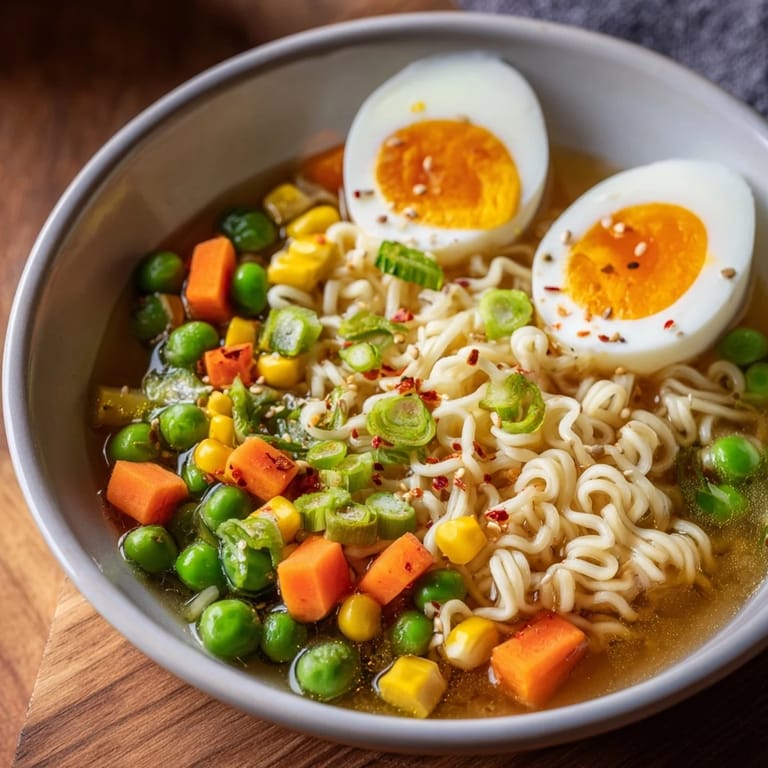
- Divide everything between two bowls and top each one with the remaining green onions, a soft-boiled egg if you're using one, sesame seeds for crunch, and chili flakes or sriracha for heat.
 Pin it
 There's a particular kind of contentment that comes from making something taste restaurant-quality in your own kitchen for the cost of a coffee. That's what this bowl gives you.
Why Frozen Is Actually Better
I used to think frozen vegetables were a compromise until I realized they're actually picked at peak ripeness and frozen immediately, which means they're fresher than the sad carrot that's been rolling around in my crisper for two weeks. In hot broth especially, they maintain their texture and release their flavor more evenly than fresh vegetables, which tend to get mushy. This is one of those kitchen truths that nobody talks about but changes everything once you know it.
The Egg Question
An egg makes this feel fancy and turns it into breakfast, lunch, or dinner without apology. If you're soft-boiling, aim for exactly six and a half minutes in boiling water so the yolk is still golden and runny when you crack it into the hot broth—the heat of the broth will finish cooking the white if needed.
Ways to Make It Your Own
The beauty of ramen is that it's a framework, not a rule book. I've made it with leftover rotisserie chicken, with tofu if I want it vegan, with spinach instead of peas, even with a splash of ginger if I'm feeling like I want something more complex. The structure stays the same but the flavors completely change depending on what you're in the mood for.
- Swap the peas for edamame or fresh spinach if you want a different vegetable personality.
- Add shredded rotisserie chicken or crispy tofu if you want more protein than what the noodles and egg provide.
- Drizzle with a bit more sesame oil at the end if you want richness, or skip the egg and broth base entirely to make a drier noodle bowl instead.
 Pin it
 This is the kind of cooking that doesn't feel like cooking at all—it's just knowing a few small tricks that make something ordinary taste like you actually cared. That's the whole point.
Recipe FAQs
- → Can I use fresh vegetables instead of frozen?
Yes, fresh vegetables like peas and mixed veggies work well but may require slightly longer cooking to soften.
- → Is there a way to make this dish vegan?
Simply omit the eggs and ensure noodles and broth align with vegan ingredients for a plant-based version.
- → How can I add protein to this meal?
Incorporate tofu, shredded chicken, or soft-boiled eggs to boost protein content according to your preference.
- → What broth options can I use?
Low-sodium vegetable broth or water are great choices; adjust seasoning for a balanced flavor.
- → Is it possible to prepare gluten-free?
Use gluten-free noodles and tamari instead of soy sauce to keep the dish gluten-free.