 Pin it
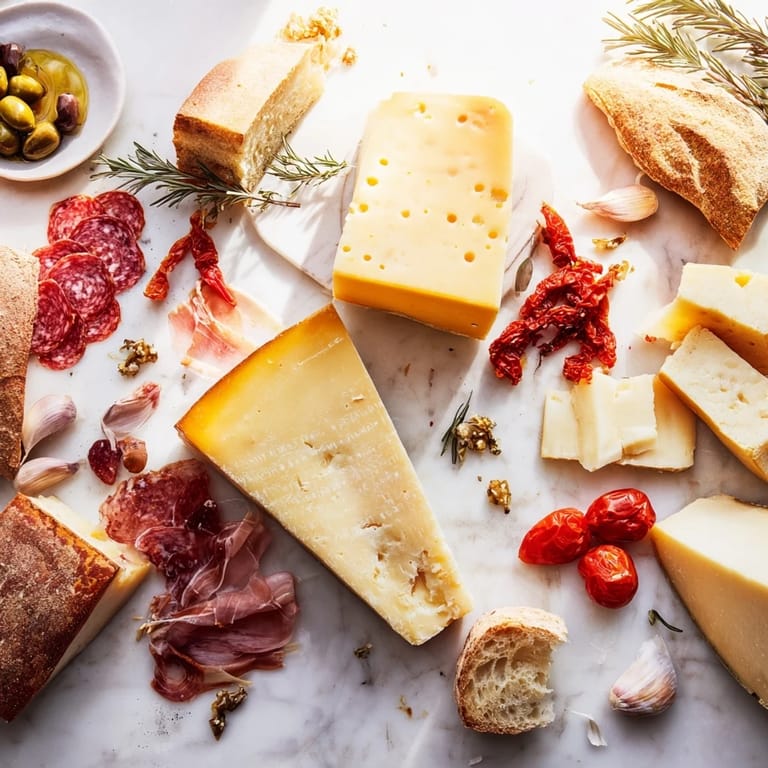
 I still remember the first time I stood in a small Tuscan village, watching an elderly woman arrange a board exactly like this one for her family's lunch. There was no fuss, no precision, just generous chunks of cheese she'd bought from the market that morning, prosciutto draped with casual elegance, and bread torn from a loaf still warm from the bakery. She caught me staring and simply smiled, pouring wine and gesturing for me to sit. That moment taught me that some of the most memorable meals aren't complicated recipes, they're invitations to gather around what's good and real. Now whenever I build this board, I'm recreating that feeling for my own table.
The first time I made this for a dinner party, I was nervous about something so simple. But watching my guests forget their phones and just talk, reaching across each other for another piece of bread and that creamy Taleggio, I understood. Sometimes the most generous thing you can offer isn't complexity, it's permission to eat slowly and enjoy company.
Ingredients
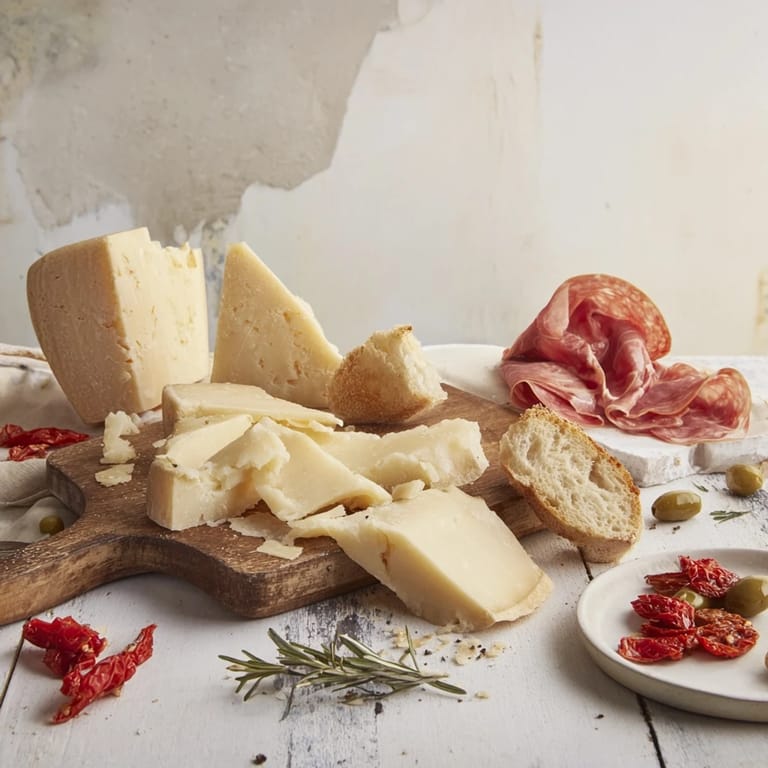
- Parmigiano-Reggiano, 200 g, broken into large chunks: This is the backbone of your board. Breaking it rather than slicing lets people experience its crystalline texture and complex, nutty flavor in the way it was meant to be enjoyed. Look for pieces that are aged at least 24 months.
- Pecorino Toscano, 200 g, cut into wedges: Sharper and more peppery than its Romano cousin, this cheese adds a wonderful contrast. The wedges should look substantial and inviting.
- Taleggio, 150 g, torn into rustic pieces: This is the creamy, approachable cheese that often wins over people who think they don't like cheese. Its soft rind is edible and adds richness. Keep it slightly cool but not cold, or it becomes too firm to appreciate.
- Prosciutto di Parma, 150 g, loosely piled: The real thing matters here. Sliced too thin and it disappears; piled loosely, each piece remains delicate and distinct. Buy it freshly sliced from a good counter if possible.
- Finocchiana salami, 120 g, thickly sliced: The fennel seeds hidden throughout add a subtle anise note that makes people pause and wonder what they're tasting. Thick slices show respect for the craft of its making.
- Coppa, 120 g, arranged in rustic folds: The marbling of fat in this meat is what makes it special. Let it warm slightly to room temperature so the fat becomes expressive and rich on your tongue.
- Rustic Italian loaf, 1 large (such as ciabatta), torn into rough pieces: The structure of the bread matters. Ciabatta's open crumb and crispy crust make it ideal. Tear it by hand just before serving so the pieces feel alive and recent, not tired.
- Castelvetrano olives, 1 cup: Buttery and mild, these are the olives that convert olive skeptics. Their golden color also adds visual warmth to your board.
- Sun-dried tomatoes in olive oil, 1 cup, drained: These provide a concentrated burst of sweet-tart flavor and a jewel-like color. Drain them well so they don't make your board wet.
- Marinated artichoke hearts, 1 cup, quartered: Tender and bright with vinegar, these add a textural contrast and a freshness that balances the richness of the cheese and meats.
- Fresh grapes or figs, 1 small bunch, halved: Sweet fruit against salty cheese is a revelation. The grapes should be at room temperature to taste their best. Figs add an earthier elegance if you can find good ones.
- Extra-virgin olive oil, 1/4 cup, for drizzling: This is your final flourish. A fruity, peppery oil makes all the difference. Don't use neutral oil; you want the oil itself to taste like something.
- Fresh rosemary sprigs: These add aroma as much as flavor. Brush them with your hand as you reach for something on the board and you'll understand why they're there.
- Coarse sea salt and cracked black pepper: Sea salt dissolved slowly on your tongue is different from table salt. The cracked pepper should be rough enough to see the pieces.
Tired of Takeout? 🥡
Get 10 meals you can make faster than delivery arrives. Seriously.
One email. No spam. Unsubscribe anytime.
Instructions
- Start with a beautiful board as your canvas:
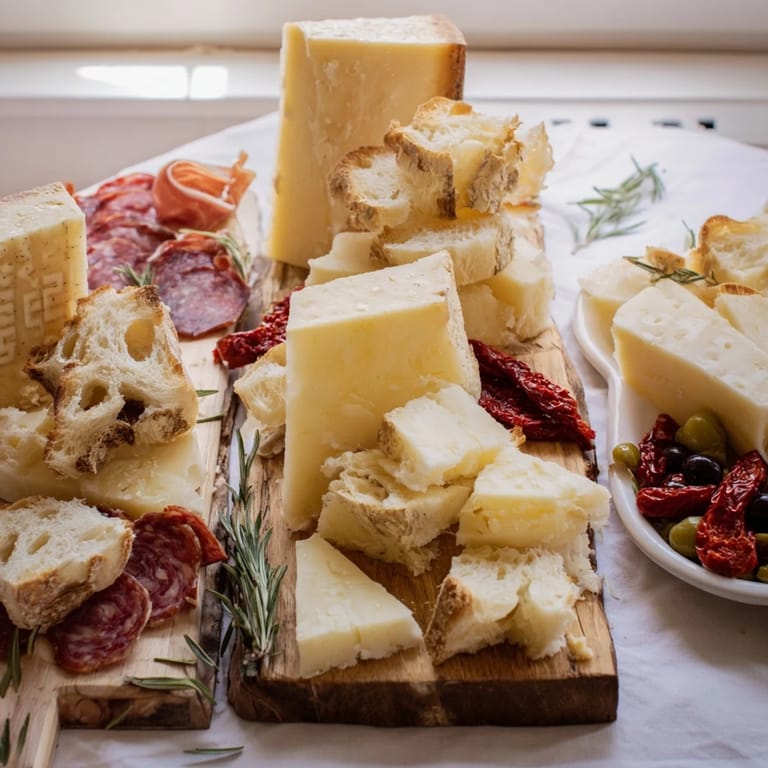
- Choose a large wooden board or platter, something that feels warm and lived-in rather than pristine. This is your foundation, and it matters. If you're nervous, arrange the heavier items first, the cheeses, placing them in clusters rather than rows. Think of it like positioning people at a table, not in a line.
- Build mountains and valleys with the cheese:
- Break the Parmigiano-Reggiano into irregular chunks, some large, some smaller. Arrange the Pecorino in wedges that lean slightly against each other. Tear the Taleggio into pieces that look generous and soft. Leave space between these clusters because you'll fill those spaces, and the empty room is part of what makes it feel abundant.
- Drape the cured meats with intention:
- This is where your board becomes beautiful. Loosely pile the prosciutto so each slice catches the light slightly differently. Fold the coppa into gentle, overlapping folds as if you're arranging fabric. Lay the salami slices in generous overlaps, creating a visual rhythm. Don't be timid. The board should feel generous, never sparse.
- Scatter the supporting players:
- Tear your bread into rough, uneven pieces and distribute them across empty spaces. Add handfuls of olives, scattered sun-dried tomatoes, artichoke quarters, and fruit. This is about abundance and visual interest. Think of these as the colors that make the whole picture sing.
- Add your finishing touches:
- Drizzle a little olive oil over the bread and some of the cheese. Scatter fresh rosemary sprigs across the board. Finish with a light hand of coarse sea salt, especially over the cured meats where it will dissolve into something delicious, and cracked pepper scattered everywhere.
- Serve at the right moment:
- Bring everything to room temperature if you've kept it cold, and serve immediately. The magic of this board is that it's alive, meant to be eaten while the bread is still slightly warm and the cheese is at its most expressive.
 Pin it
 I once made this board for my grandmother's 80th birthday, and she spent nearly two hours at that table, not eating quickly but slowly, choosing a piece of Taleggio, some prosciutto, a bit of bread, talking between each bite. Her eyes were bright in a way I hadn't seen in months. The next day she told my mother it was the best meal she'd had in years. Nothing was complicated. Everything was good. That's when I understood that the real recipe was caring enough to choose the best versions of simple things.
The Art of Assembly
Building an Italian board is less like following instructions and more like learning a language. Once you understand the grammar, you can improvise. The grammar here is simple: contrast and balance. Soft cheese next to crispy bread. Salty meat next to sweet fruit. Colors scattered so your eye travels. Nothing should feel planned or precious, everything should feel inevitable and right.
What Makes This Board Italian
These ingredients come from specific regions with specific traditions. Parmigiano-Reggiano from the Emilia-Romagna region, Pecorino Toscano from Tuscany, Taleggio from Lombardy. When you bring them together on one board, you're not just making a snack, you're creating a edible map of Italy. Each bite tells you something about a place, a tradition, a moment in time when someone figured out exactly how to make something perfect and then protected that knowledge by law so it would never be diluted or compromised.
The Wine Pairing That Completes Everything
I learned that a board like this needs a wine that respects it rather than dominates it. A robust Chianti or Sangiovese won't compete with the delicate prosciutto or the soft Taleggio. Instead, the tannins in the wine cut through the richness of the cheese and meats, cleansing your palate for the next bite. The first sip and then a bite of bread with salami and you'll understand why Italians have been doing this for centuries. They weren't being casual; they were being genius.
- A good Chianti Classico has enough structure to stand up to strong cheeses like Pecorino without overwhelming the delicate prosciutto.
- If you prefer white wine, a crisp Pinot Grigio from the north works beautifully, especially if you have more fruit on your board than cured meat.
- Never underestimate sparkling wine with a board like this; the bubbles are like tiny palate-cleaners that keep you wanting more.
 Pin it
 This is the kind of recipe that makes you feel generous and capable all at once. It asks so little of you and gives so much back, in taste and in the way it brings people together. Make it and watch what happens.
Recipe FAQs
- → What cheeses are best for this platter?
Parmigiano-Reggiano, Pecorino Toscano, and Taleggio provide a mix of textures and flavors, but Gorgonzola or Asiago can be used for variety.
- → How should the bread be prepared?
Tear rustic Italian loaf like ciabatta into rough pieces to add texture and help soak up the olive oil and flavors.
- → Can I substitute the cured meats?
Yes, meats like Prosciutto di Parma, Finocchiona salami, and Coppa can be swapped with similar cured Italian varieties based on preference.
- → What accompaniments pair well on the board?
Castelvetrano olives, sun-dried tomatoes, marinated artichoke hearts, and fresh grapes or figs bring balance and a fresh touch.
- → How to season the board for best flavor?
Drizzle extra-virgin olive oil, garnish with fresh rosemary, and lightly season with coarse sea salt and cracked black pepper before serving.