 Pin it
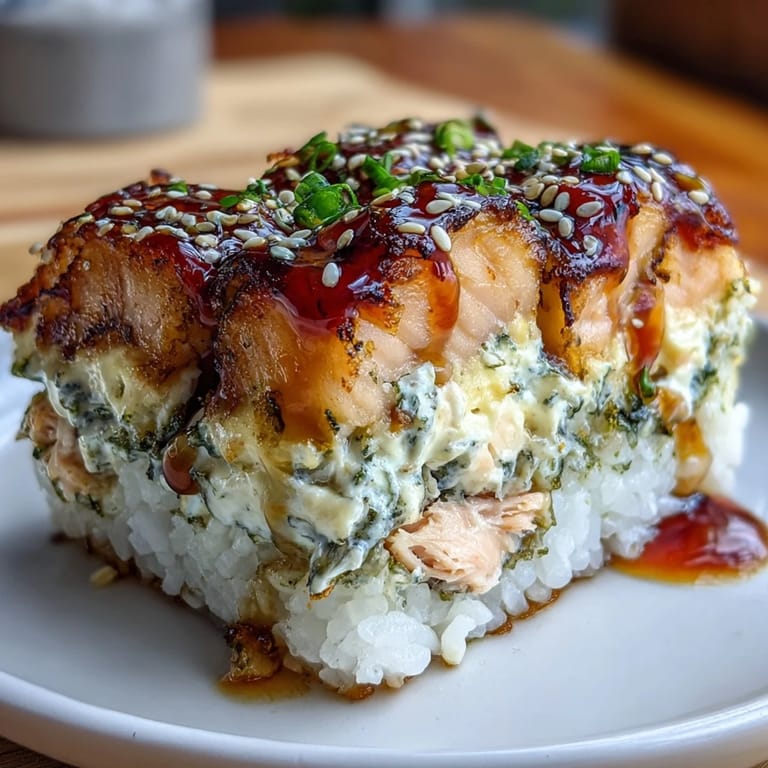
 My sister texted me a photo of a sushi bake at her friend's dinner party, and I immediately knew I had to recreate it at home. There's something wonderfully unpretentious about taking everything you love about a salmon roll and turning it into a casserole that feeds a crowd without the fussy rolling technique. The first time I made it, my kitchen smelled like toasted sesame and sriracha mayo for hours, and honestly, that's when I knew this recipe was a keeper. It's Japanese-American comfort food at its most approachable, and it never fails to impress people who walk through your door hungry.
I made this for my book club last month, and one of my friends—the one who usually orders takeout—asked if I'd started a catering business. Watching everyone scoop their portions onto seaweed snacks and genuinely light up was the kind of kitchen moment that reminds you why you cook for people in the first place. Even my picky cousin came back for seconds, which in our family is practically a standing ovation.
Ingredients
- Sushi rice: Two cups uncooked rice gives you that perfect starchy foundation; I learned to rinse mine briefly under cold water before cooking so it's fluffy, not gummy.
- Rice vinegar: Two tablespoons mixed with sugar and salt creates the signature tangy-sweet seasoning that makes sushi rice distinctly itself.
- White sugar: Just one tablespoon balances the vinegar and shouldn't be skipped, even if you're tempted.
- Salt: Half a teaspoon in the vinegar mixture; taste as you go because every brand of rice vinegar varies slightly in intensity.
- Salmon fillet: Eight ounces yields about two cups when cooked and shredded; I prefer wild-caught when I can find it, and cooking it yourself ensures it's tender and not overcooked.
- Imitation crab sticks: Ten ounces might sound like a shortcut, but they bring a sweetness and texture that real crab sometimes overwhelms; feel free to swap for the real thing if that's your style.
- Cream cheese: Four ounces softened is the glue that holds everything together, so don't use it straight from the fridge or it won't blend smoothly.
- Sriracha mayo: Mix three-quarters cup mayonnaise with one to two tablespoons sriracha to taste; this spicy-creamy component is non-negotiable.
- Furikake seasoning: This Japanese seasoning blend of seaweed, sesame, and fish flakes adds umami depth and visual pop.
- Sesame seeds: A handful sprinkled on top adds toasted nuttiness and catches light beautifully.
- Green onion: Chopped fresh just before serving keeps its brightness from fading.
- Seaweed snack sheets: These little wraps let everyone customize their bite, turning dinner into a hands-on experience.
Tired of Takeout? 🥡
Get 10 meals you can make faster than delivery arrives. Seriously.
One email. No spam. Unsubscribe anytime.
Instructions
- Cook your sushi rice base:
- Follow package directions for your rice cooker or stovetop method, which typically takes about fifteen minutes. Once it's done, let it rest for five minutes before moving on.
- Season the rice while it's warm:
- Microwave your rice vinegar, sugar, and salt mixture for thirty seconds until everything dissolves, then fold it gently into the warm rice using a wooden spoon or rice paddle so you don't crush the grains. The warmth helps the rice absorb the flavoring beautifully.
- Prepare your baking dish:
- Preheat your oven to 400°F and lightly grease a nine-by-nine or nine-by-thirteen inch baking dish. I use a little cooking spray and wipe it with a paper towel so nothing sticks.
- Cook the salmon until it flakes:
- Season your salmon fillet with salt and pepper, then either air fry at 400°F for ten to twelve minutes or bake at 375°F for fifteen to seventeen minutes. You'll know it's done when it flakes easily with a fork and has lost its translucent center.
- Build your creamy salmon-crab mixture:
- Shred the imitation crab into a large bowl, then add your cooled shredded salmon, softened cream cheese, and sriracha mayo. Mix everything together until smooth and completely combined, which usually takes about a minute of stirring.
- Layer the rice as your canvas:
- Spread your seasoned sushi rice evenly into the prepared baking dish and press it down gently with the back of a spoon so it holds together. Sprinkle generously with furikake at this point so it toasts slightly.
- Spread the salmon mixture on top:
- Evenly distribute your salmon-crab mixture over the rice layer, then smooth the surface and press down gently so everything bonds together as it bakes.
- Bake until golden and heated through:
- Pop it in the oven for ten to fifteen minutes, watching until the top takes on a light golden color. The filling should be warm throughout, and you might notice a slight sizzle when you pull it out.
- Finish with toppings while it's hot:
- Drizzle with extra sriracha mayo in a light zigzag pattern, then sprinkle more furikake, sesame seeds, and fresh chopped green onions over the top. The heat brings out the aroma of everything, and it's almost too beautiful to eat.
- Serve it family style:
- Let it cool for just a minute or two, then have everyone scoop a generous portion and wrap it with a piece of seaweed snack for eating.
 Pin it
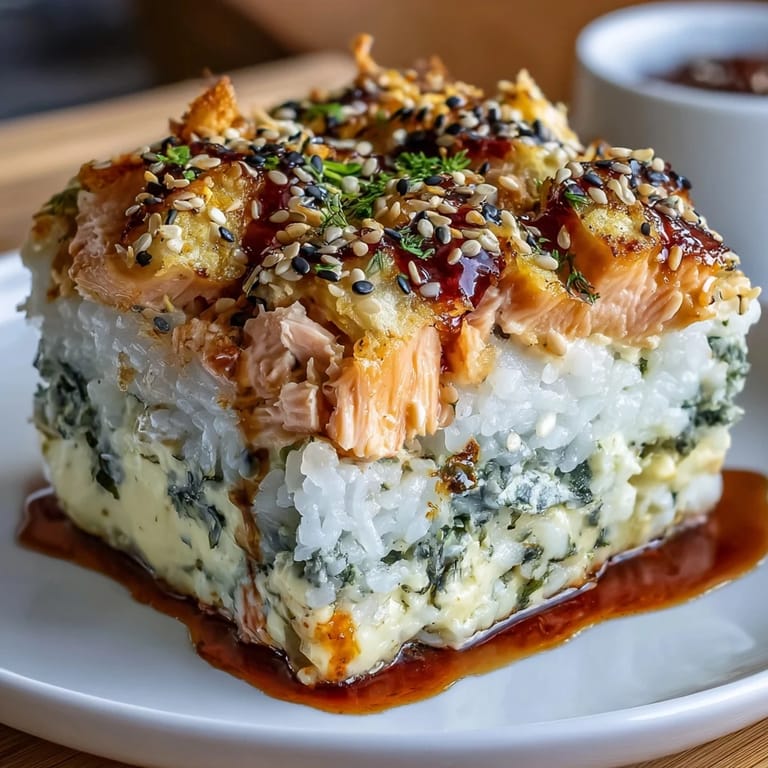
 There's a moment right when you pull this from the oven when the whole kitchen fills with this incredible aroma of toasted furikake and warm sesame, and that's when you realize you've made something special. My brother said it tasted like his favorite restaurant's sushi roll, except better because it was made with actual love and not a time clock.
Why Sushi Bake Beats Traditional Rolls
Rolling sushi requires practice and patience, but a baked version lets you focus on flavor combinations instead of struggling with bamboo mats and sticky fingers. I've spent years perfecting my rolling technique, and honestly, this method is more forgiving and somehow feels more celebratory because you're not sweating over technique. Plus, everyone gets an equal portion without the awkwardness of uneven rolls.
Temperature and Timing Matters
Getting the salmon to the perfect doneness changes everything about how the final dish feels in your mouth. If it's too dry, no amount of sriracha mayo can save it, so I keep my oven thermometer nearby and check it early rather than late. Starting the salmon at a slightly higher temperature and then adjusting down ensures it cooks through without turning into rubber.
Make It Your Own
This recipe is a starting point, not a rulebook, and some of my favorite variations came from improvising based on what I had in my fridge that day. Last week I added thinly sliced avocado right before baking, and it melted beautifully into the warm rice beneath. The beauty of this format means you can experiment with toppings, heat levels, and even swap proteins without the whole thing falling apart.
- Real crab brings a briny sweetness that imitation versions can't quite match, so upgrade if your budget allows.
- For spice lovers, layering sriracha mayo, chili flakes, and even a touch of wasabi creates a heat level that builds with each bite.
- Pairs wonderfully with crisp white wine like Sauvignon Blanc or a cold Japanese beer that cuts through the richness.
 Pin it
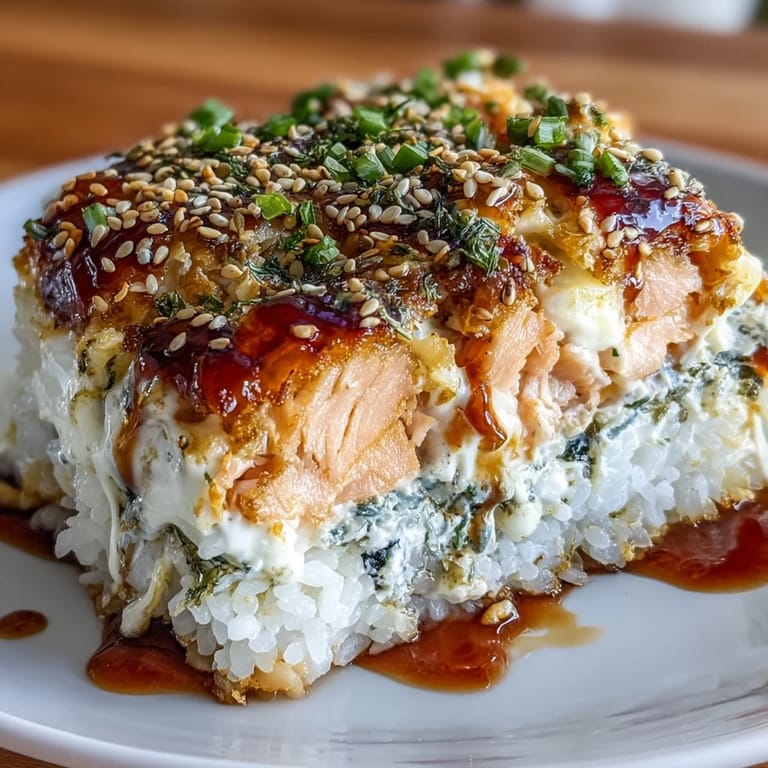
 This sushi bake has become my go-to dinner when I want to impress without the performance, and it's never let me down. It's the kind of recipe that makes you feel like a better cook every time you make it.
Recipe FAQs
- → Can I use fresh crab instead of imitation crab?
Yes, substituting fresh crab offers a richer, more authentic seafood flavor, enhancing the overall dish.
- → How can I make the dish spicier?
Adding extra sriracha or chili flakes to the mayo mixture boosts heat without overpowering the delicate flavors.
- → What is the best way to cook the salmon?
Salmon can be baked at 375°F for 15-17 minutes or air fried at 400°F for 10-12 minutes until cooked through and flaky.
- → Are there suitable alternatives for the cream cheese?
You can use soften tofu or a dairy-free cream cheese to accommodate dietary restrictions while maintaining creaminess.
- → How should leftovers be stored and reheated?
Store leftovers in an airtight container in the refrigerator for up to two days and gently reheat to preserve texture and flavor.