 Pin it
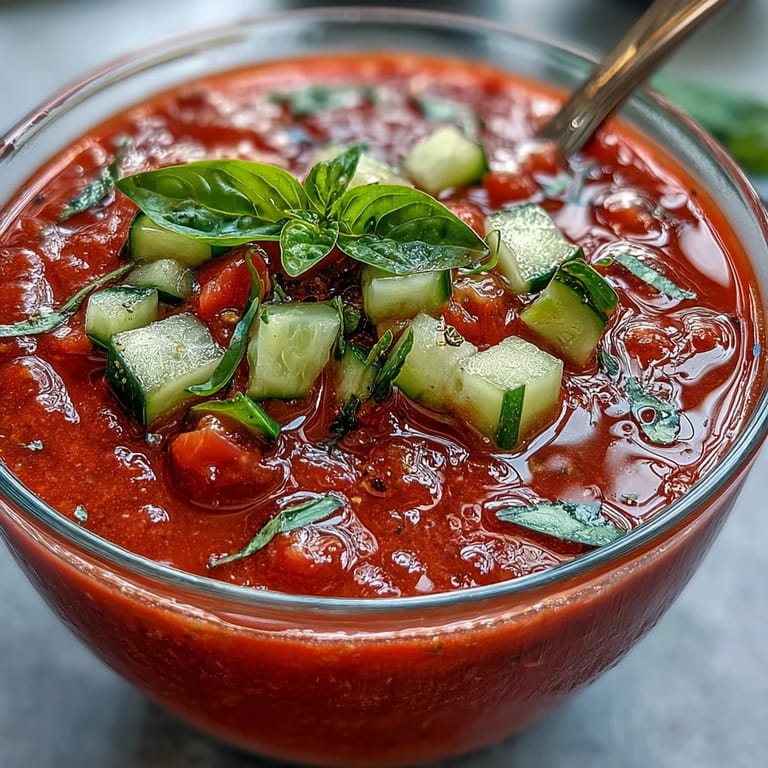
 My neighbor Maria handed me a bowl of gazpacho on the hottest day of July, and I understood immediately why this Spanish soup has survived centuries without needing a stove. The cold spoon felt like relief against my palm, and that first sip—bright, clean, alive with cucumber and tomato—made me realize I'd been eating soup all wrong. By August, I was blending batches whenever the thermometer crept above 85 degrees, experimenting with the proportions until I found the version that made even my reluctant eaters ask for seconds.
I served this to my book club on an unexpectedly warm May evening, and what started as a casual soup course turned into everyone lingering at the table asking for the recipe. Someone mentioned it felt more like a gift than dinner, which stuck with me—there's something generous about offering people something this light and nourishing when it's hot enough to wilt. That night reminded me that food doesn't need to be complicated or heavy to feel special.
Ingredients
- Ripe tomatoes: Use the best ones you can find because they're the soul of this soup; a mealy winter tomato will disappoint, but a warm, fragrant August tomato transforms everything.
- Cucumber: The peeled kind gives you a silkier texture and lets the other flavors shine without competing with the skin.
- Red bell pepper: This adds subtle sweetness and color that yellow or orange peppers can't quite match.
- Red onion: It provides sharpness without overpowering, and the red color looks beautiful in the finished soup.
- Garlic: Just one clove, because raw garlic can get aggressive; you want it as a whisper, not a shout.
- Extra-virgin olive oil: Don't skip the good stuff here—you taste it directly, and cheap oil makes the whole thing taste flat.
- Red wine vinegar: This is your brightness and backbone; it keeps the soup from tasting one-note.
- Sea salt and black pepper: Freshly ground pepper makes a noticeable difference in a dish this simple.
- Cold water: Room temperature water will warm everything up, so chill it first if you can.
Tired of Takeout? 🥡
Get 10 meals you can make faster than delivery arrives. Seriously.
One email. No spam. Unsubscribe anytime.
Instructions
- Gather and prep your vegetables:
- Core your tomatoes and rough chop everything—don't stress about size since it's all getting blended anyway. The prep work is honestly the longest part of this whole recipe.
- Start blending:
- Combine tomatoes, cucumber, bell pepper, onion, and garlic in your blender or food processor and let it run until you've got a smooth, pourable consistency. You might hear it go from chunky to silky, and that's your cue to stop.
- Add the liquid and seasonings:
- Pour in the olive oil, red wine vinegar, salt, pepper, and cold water, then blend again briefly until everything is well combined and feels like one unified thing. This is when the color deepens and it starts looking like actual soup.
- Taste and adjust:
- This is crucial—dip a clean spoon in and taste it honest. Does it need more salt? More acid? Trust yourself here; nobody knows your palate better than you do.
- Chill thoroughly:
- Pour everything into a large bowl or pitcher, cover it, and let it sit in the refrigerator for at least 2 hours until it's genuinely cold. Gazpacho served lukewarm is sad gazpacho.
- Stir and serve:
- Give it a good stir before serving since things can separate a bit, then ladle into bowls and finish with your choice of garnishes. A float of fresh basil or a careful drizzle of olive oil makes it feel intentional.
 Pin it
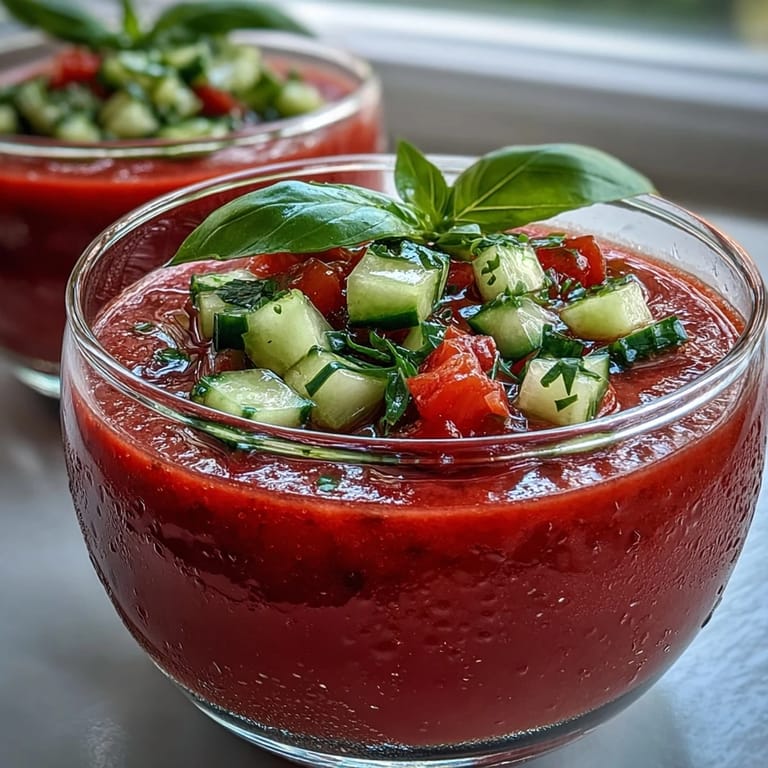
 My daughter came home from soccer practice absolutely defeated by the heat, flopped on a kitchen chair, and I handed her a bowl of this before she could complain. She drank it like it was the answer to something, and I watched her shoulders relax and her energy return—that's when I realized gazpacho isn't just a nice thing to eat, it's almost medicine on days when summer feels too much.
The Smoothness Question
Some people love gazpacho with a little texture to it, a whisper of chunkiness that reminds you of the actual vegetables. Others want it perfectly silky and uniform, like velvet in a bowl. I've made it both ways, and honestly, it depends on my mood and who I'm serving. If you're the texture person, just blend less and you're done. If you want that restaurant smoothness, grab a fine sieve and let the soup pass through it slowly—it takes ten minutes and feels like you're doing something fancy, which matters when you're serving something this simple.
When You Want to Change It Up
The base recipe is perfect as it is, but I've learned that gazpacho is actually pretty forgiving if you want to play around. A pinch of smoked paprika adds depth without turning it into something unrecognizable, and if you like heat, a dash of Tabasco or fresh jalapeño changes the entire mood without overwhelming it. I once added a squeeze of lime juice instead of all the vinegar and got something more tropical tasting; my friends were divided on whether they loved it or preferred the original, but everyone admitted it was interesting.
Serving and Pairing Ideas
This soup is beautiful served on its own as a light lunch or first course, but it also works wonderfully alongside grilled fish or chicken if you want something more substantial. Toast some crusty bread and let people dip it if they want, though honestly, I usually eat it with just a spoon and feel completely satisfied. The leftovers keep for three days, which means you can make a big batch on Sunday and have lunch ready whenever the heat makes cooking sound impossible.
- Serve in chilled bowls if you can get them cold enough—it makes the whole experience feel intentional and special.
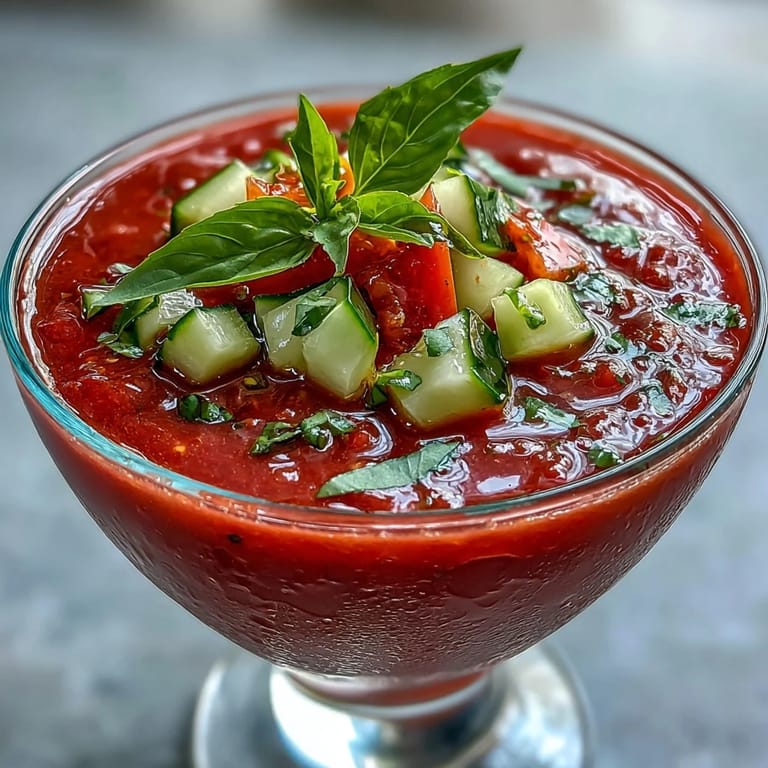
- The garnishes are optional but worth doing; fresh basil or parsley and a careful drizzle of really good olive oil transform it from simple to elegant.
- If you're making this ahead, store the garnishes separately and add them right before serving so they stay fresh and bright.
 Pin it
 Gazpacho taught me that summer cooking doesn't have to feel like cooking at all—sometimes the best meals come straight from the blender to the table. I keep making it because it feels like the most honest way to eat when it's hot, and because people always seem grateful for something this cool and alive.
Recipe FAQs
- → What vegetables are used in this cold soup?
Tomatoes, cucumber, red bell pepper, red onion, and garlic create the fresh vegetable base.
- → How is the smooth texture achieved?
Blending the vegetables thoroughly and optionally straining through a fine sieve ensures a silky consistency.
- → What enhances the flavors in this dish?
Extra-virgin olive oil and red wine vinegar add richness and brightness, balanced by seasoning with salt and pepper.
- → How long should the mixture chill?
Chilling for at least two hours allows the flavors to meld and the soup to become nicely cold.
- → What garnishes complement this dish well?
Diced cucumber, tomato, fresh basil or parsley, and a drizzle of olive oil add freshness and texture.
- → Can this be made spicier?
Yes, adding smoked paprika or a splash of Tabasco introduces a subtle kick.