 Pin it
 My first cawl arrived on a slate-gray afternoon in a small village outside Caernarfon, ladled into a chipped ceramic bowl by a woman whose name I never caught. She'd made it that morning, she said, the same way her mother had, the same way her mother's mother probably had—just lamb, roots, and time. I watched the steam rise off it and understood immediately why this dish has fed Welsh families through centuries of hard winters.
I made this for a dinner party on a November evening when the wind was rattling the windows and everyone arrived looking genuinely cold. By the time I lifted the pot lid to serve, three people had already wandered into the kitchen just to stand in the steam and smell what was happening. That's when I knew cawl wasn't really about ingredients—it was about creating a moment where people felt like they'd come home.
Ingredients
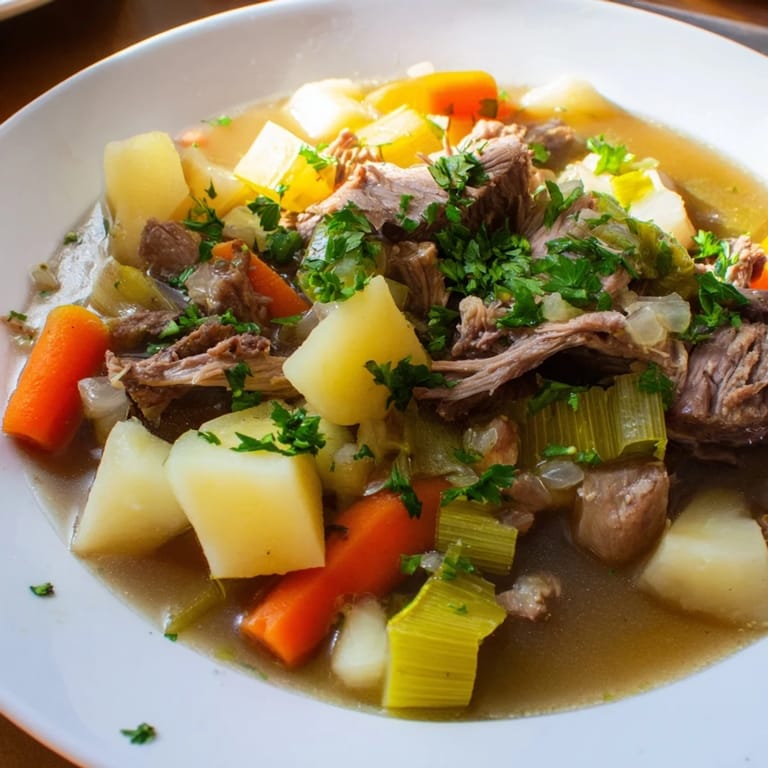
- Lamb shoulder (1 kg, cut into large chunks): Bone-in pieces release gelatin that turns your broth silky and gives the stew its backbone of flavor—don't trim them away.
- Carrots and parsnips (2 of each, sliced): These caramelize slightly at the edges where they touch the pot, adding sweetness that balances the savory lamb.
- Potatoes and swede (2 medium potatoes, 1 small swede, diced): They thicken the broth naturally and become almost melting-soft after two hours of simmering.
- Leeks (2, cleaned and sliced): Add them in two batches so some soften completely and others keep a slight texture and fresh onion brightness.
- Onion (1 medium, diced): This dissolves almost completely into the broth, becoming flavor rather than texture.
- Stock (1.5 liters chicken or lamb): Lamb stock deepens everything, but chicken works if that's what you have—use low-sodium so you control the salt.
- Bay leaves (2) and fresh parsley (1 small bunch): The bay leaves steep quietly in the background; the parsley goes in at the very end for a fresh green note that cuts through the richness.
- Salt and freshly ground black pepper: Taste as you go—the vegetables release water, so you might need less salt than you'd expect.
Tired of Takeout? 🥡
Get 10 meals you can make faster than delivery arrives. Seriously.
One email. No spam. Unsubscribe anytime.
Instructions
- Sear and blanch your lamb:
- Put the lamb chunks in your pot and cover them with stock, then bring it to a boil. You'll see foam and scum rise to the surface—that's impurities, and skimming them off gives you a cleaner, clearer broth. It takes about five minutes of skimming, and it matters.
- Let it simmer gently:
- Drop the heat way down, add the bay leaves, put the lid on, and leave it for a full hour. The lamb will gradually become tender and the broth will turn a soft amber. Resist the urge to rush this with high heat.
- Build your vegetable layers:
- Add the carrots, parsnips, potatoes, swede, onion, and most of the leeks (keeping back a handful). Season generously now. The vegetables will release moisture and create their own steaming environment.
- Finish the cooking:
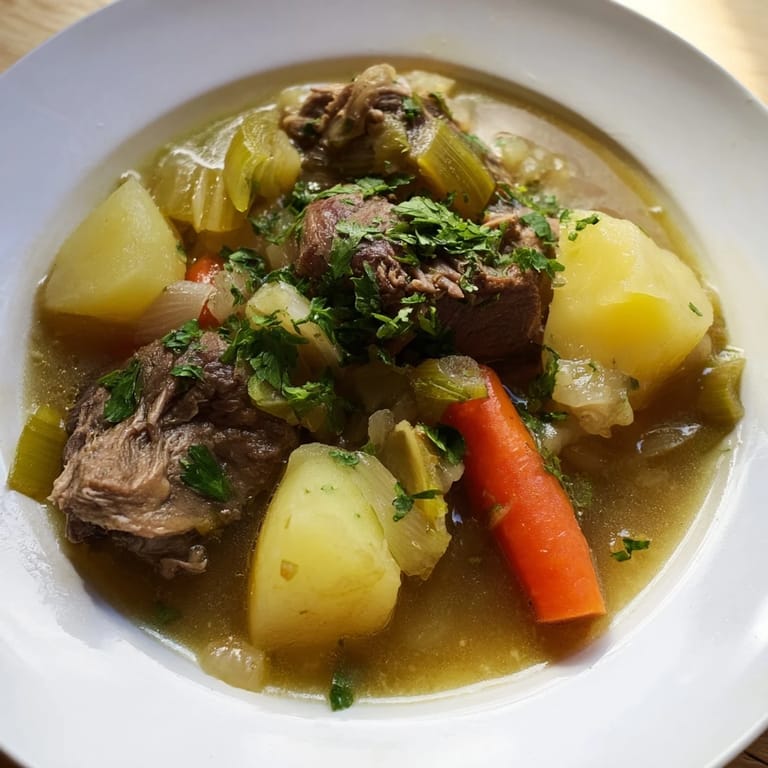
- Simmer covered for 45 minutes more, until you can break the lamb apart with just a spoon and the root vegetables are completely tender. This is when the stew actually becomes cawl—when everything has given itself to everything else.
- Brighten it at the end:
- Stir in the reserved leeks and the chopped parsley, simmer for ten more minutes, then taste and adjust salt and pepper. Remove the bay leaves. That fresh parsley makes all the difference in the final bite.
 Pin it
 The night I served this to my grandfather, he took one spoonful and closed his eyes. Later he told me it tasted like every Welsh Sunday dinner he'd ever eaten, and that was the highest compliment I've ever received for cooking something. Food does that sometimes—it reaches backward and forward all at once.
The Welsh Cawl Tradition
Cawl isn't just a stew; it's possibly the most efficient way a family ever fed itself. Traditionally, it was made in one massive pot over a fire, and the same broth was used throughout the week, with fresh vegetables added as they came available. People understood that slow cooking and patience were luxuries in themselves—the opposite of rushing. Making it this way connects you to that same economy of care.
Stock Matters More Than You Think
The quality of your stock shapes the entire dish. Homemade stock made from roasted bones is genuinely better, but a good store-bought lamb stock will serve you well. Chicken stock works in a pinch, but it gives you a lighter, less savory result that tastes nice but doesn't taste quite like cawl. If you have time, roast your lamb bones first, then make stock from those—your future self will thank you.
Serving and Storing
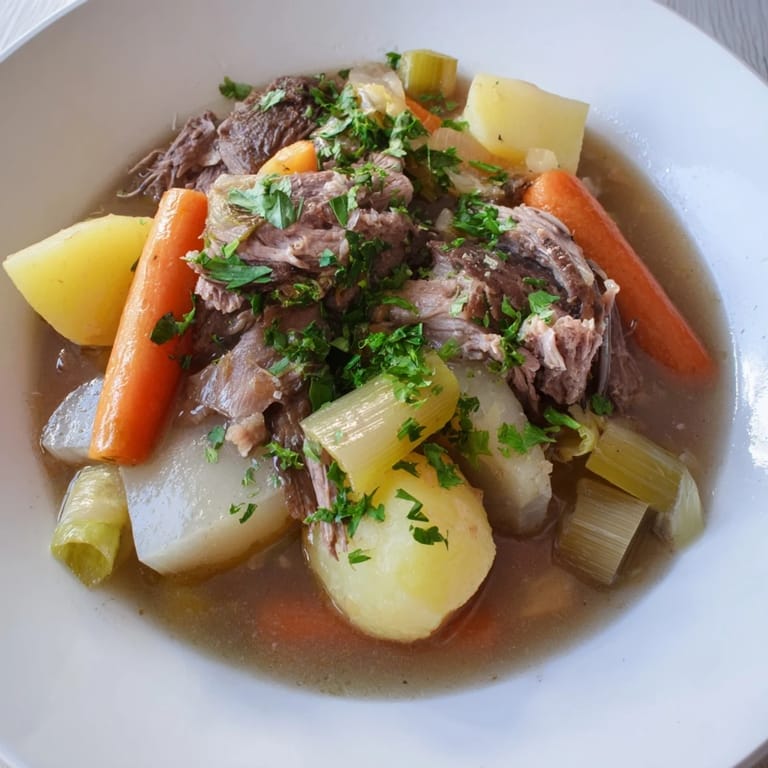
Cawl is one of the few dishes that becomes better when you make it a day ahead—the flavors deepen overnight and the vegetables soften further. Reheat it gently on the stovetop with a splash of water if needed. Serve it in wide bowls so people get both meat and vegetables and plenty of broth, with crusty bread for dipping and, if you can find it, a wedge of Caerphilly cheese on the side. Leftovers keep for four days refrigerated and freeze beautifully for up to three months.
- Make it ahead and let the flavors develop—your weeknight self will be grateful.
- If the broth seems thin after cooking, you can gently simmer it uncovered for ten minutes to reduce and concentrate it.
- A pinch of fresh thyme stirred in at the very end adds a subtle herbal note that feels both modern and traditional.
 Pin it
 There's something about ladling a bowl of cawl that feels like an act of care, like you're saying something kind without words. That's the real recipe.