 Pin it
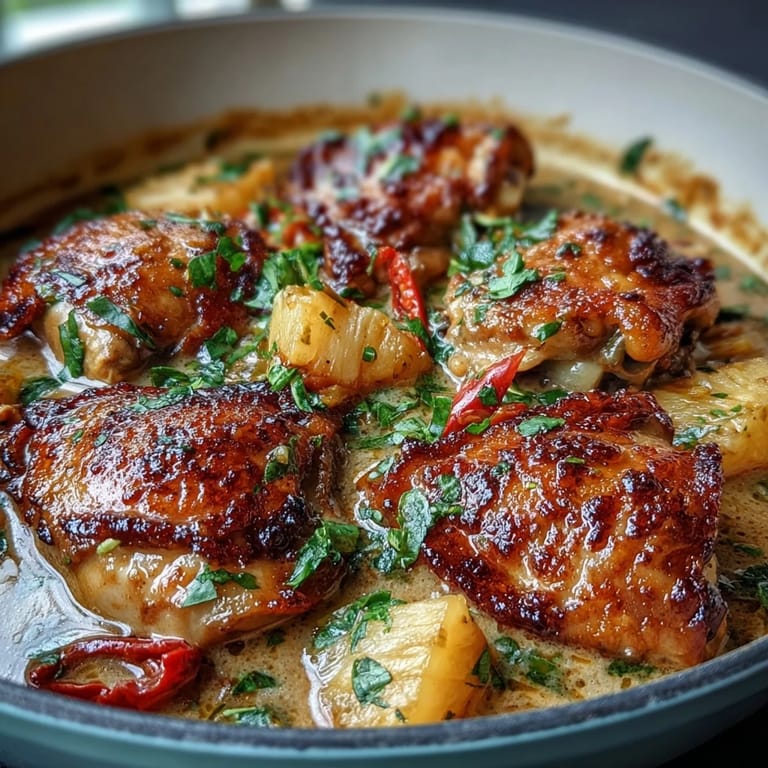
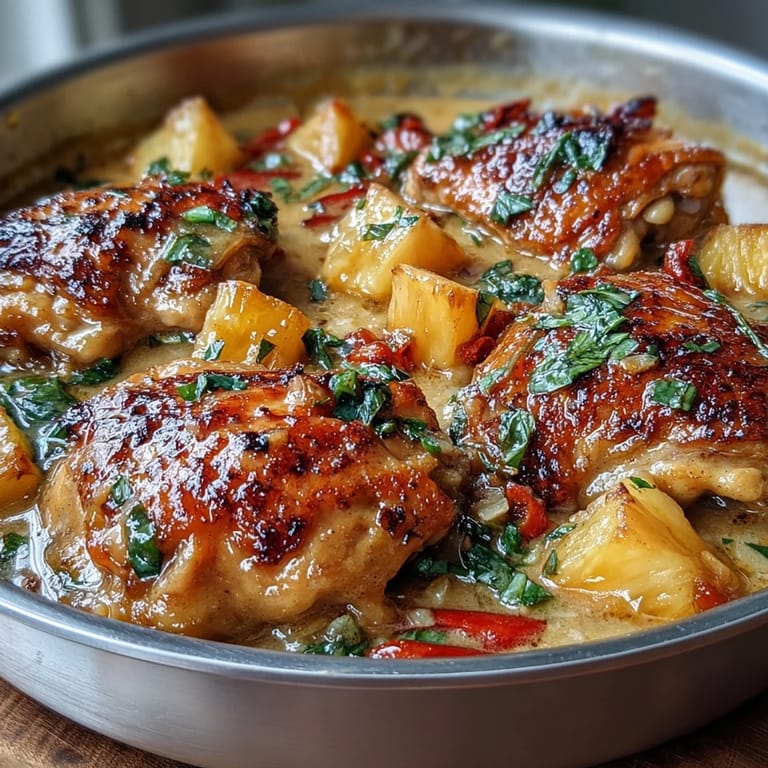
 There's something about the smell of curry paste hitting hot oil that makes you realize dinner is going to be good. I discovered this one-pot chicken pineapple curry on a Tuesday when I had leftover pineapple and a craving for something that felt both comforting and a little exotic. The beauty of it is that everything happens in one pot, so by the time you sit down to eat, cleanup feels like a minor miracle rather than a chore.
I made this for my neighbor last month when she mentioned being overwhelmed with work deadlines. Watching her face light up when she tasted it, then immediately asking for the recipe, reminded me that food is one of the most honest ways to tell someone you care. She's made it three times since, which felt like winning.
Ingredients
- Boneless, skinless chicken thighs (600 g): They stay moist and flavorful during the simmer, unlike breasts which can dry out if you're not watching constantly.
- Yellow onion (1 medium): The foundation layer that becomes almost sweet as it softens, creating the base for everything else to build on.
- Garlic and ginger (2 cloves plus 1 tbsp grated): These two are the reason your kitchen smells like a restaurant within seconds of adding them.
- Red bell pepper and carrot (1 each): They add color and slight crunch that keeps the dish from feeling too heavy, plus they cook perfectly in the 20-minute simmer.
- Fresh pineapple chunks (1 cup): Fresh is lovely if you have time, but canned in juice works just as well and honestly saves you the cutting.
- Vegetable oil (2 tbsp): Just enough to bloom the curry paste and prevent sticking without making the dish feel slick.
- Coconut milk (1 can, 400 ml): Full-fat is crucial here—it's what makes the sauce creamy and rich despite being dairy-free.
- Chicken broth (1 cup): It keeps the curry from becoming too thick while letting the spices distribute evenly throughout.
- Thai red curry paste (2 tbsp): The flavor engine of this dish—buy it from the Asian section, not the international aisle, and give it a stir before measuring.
- Fish sauce and soy sauce (1 tbsp each): These add umami depth that makes people say "what is that flavor" without being able to identify it exactly.
- Brown sugar (1 tsp): A small amount just to round out the flavors and let the sweetness of the pineapple shine without it being cloying.
- Salt, pepper, fresh cilantro, jasmine rice, and lime wedges: The finishing touches that transform a good curry into something memorable.
Tired of Takeout? 🥡
Get 10 meals you can make faster than delivery arrives. Seriously.
One email. No spam. Unsubscribe anytime.
Instructions
- Start with your aromatics:
- Heat the oil in your pot over medium heat and let the onion soften for 3 to 4 minutes—you want it turning translucent, not brown. This is your patience moment; rushing this step means missing out on the sweet undertone it adds.
- Build the flavor base:
- Add the garlic and ginger and let them sizzle for exactly one minute until the smell makes you pause and inhale deeply. Stir in the curry paste and cook it for another minute, which mellows its raw edge and lets it become part of the oil rather than a separate ingredient.
- Introduce the chicken:
- Add your chicken pieces and let them brown on all sides for 4 to 5 minutes—you don't need a golden crust, just enough color to seal in the flavor. If pieces stick, that's actually the fond building up on the bottom of the pot, which will add richness to your sauce later.
- Add the vegetables and fruit:
- Toss in the bell pepper, carrot, and pineapple chunks and stir everything together so each piece gets coated in the curry oil. The pineapple will start releasing juice, which is exactly what you want happening.
- Pour in the liquids:
- Add the coconut milk and chicken broth, then stir in the fish sauce, soy sauce, and brown sugar. Take a moment to smell this and feel the satisfaction of knowing your dinner is almost ready.
- Let it simmer gently:
- Bring the pot to a gentle simmer, put the lid on, and cook for 20 minutes, stirring occasionally so nothing sticks to the bottom. The chicken will be tender and the vegetables will have softened enough to be cooked through but not falling apart.
- Thicken to your preference:
- Remove the lid and simmer uncovered for 5 to 10 minutes depending on how thick you like your sauce—longer if you want it more concentrated, shorter if you prefer it brothier. The sauce will continue to thicken slightly as it cools, so don't overdo it at the stove.
- Taste and adjust:
- This is the moment where you taste it and realize what it needs—usually just a pinch more salt or maybe a crack of black pepper. Trust your palate here; you're the expert on what you like.
- Serve with intention:
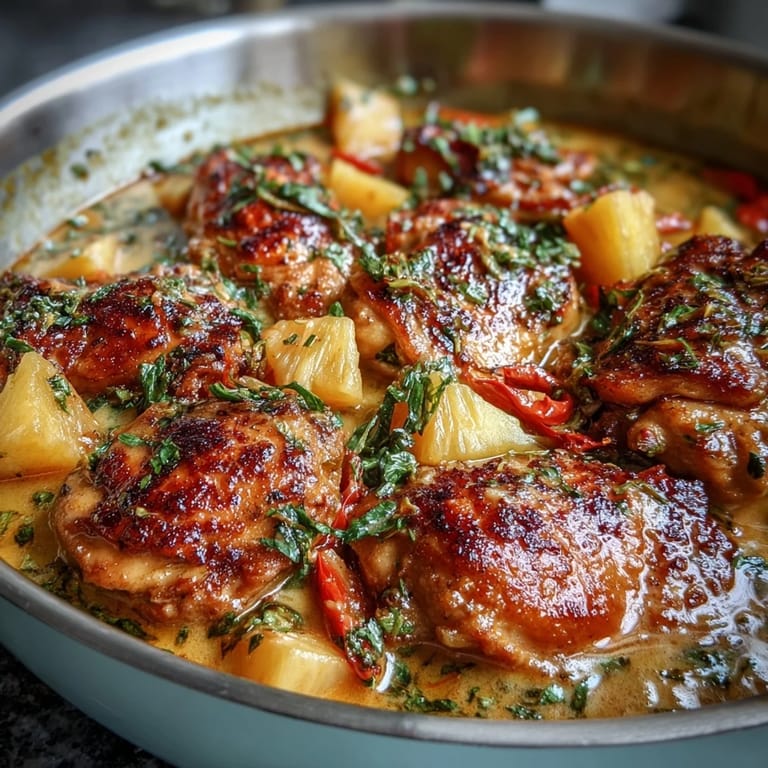
- Ladle the curry over jasmine rice, scatter fresh cilantro on top, and squeeze a lime wedge over each bowl. That lime juice is what brings everything into focus.
 Pin it
 My partner usually scrolls his phone while I cook, but with this curry, he actually sits at the counter and watches, drawn by the smell of ginger and garlic that fills the entire house. It's become our signal to each other that tonight is going to be a good night.
The Sweet and Savory Balance
The magic of this curry lives in how the pineapple's sweetness plays against the curry paste's heat and the fish sauce's umami depth. It's a dance rather than a clash, and that balance is what keeps you coming back for another bite instead of reaching for water. Once you understand how these three elements work together, you'll start experimenting with other flavor combinations naturally.
Why One-Pot Meals Actually Matter
There's a practical reason one-pot cooking has become popular, but there's also an emotional one—standing over a single pot that's building a complete meal feels meditative and manageable in a way that four different pans never does. You're not bouncing around the kitchen; you're present with what you're making. Plus, the flavors have time to marry and deepen rather than being separated on different burners doing their own thing.
Making It Your Own
This recipe is forgiving enough to adapt based on what's in your fridge or what mood you're in. I've made it with shrimp instead of chicken on nights when I was feeling fancy, and it works beautifully because the cooking time is actually shorter. I've also added a sliced fresh chili when I wanted heat, or a splash of lime juice right before serving when I wanted brightness.
- Swap the chicken for shrimp, firm tofu, or even white fish if that's what you have, just adjust the cooking time accordingly.
- Add a sliced fresh Thai chili or red chili flakes with the curry paste if you want more heat than the curry paste provides on its own.
- Fresh lime juice squeezed in at the very end brightens everything and makes the flavors pop, so don't skip this step even though it seems small.
 Pin it
 This curry has become my go-to when I want to cook something that feels both special and achievable on a regular Tuesday. It reminds me that good food doesn't need to be complicated.
Recipe FAQs
- → What cut of chicken works best?
Boneless, skinless chicken thighs are ideal due to their juiciness and ability to stay tender during simmering.
- → Can I use fresh pineapple instead of canned?
Yes, fresh pineapple chunks add natural sweetness and a bright flavor that complements the curry perfectly.
- → How do I adjust the heat level?
Add sliced fresh chili or chili flakes along with the curry paste to increase spiciness to your liking.
- → What rice pairs well with this dish?
Fragrant jasmine rice is recommended, as its subtle aroma balances the rich sauce and bold flavors.
- → Can this be made gluten-free?
Yes, substitute regular soy sauce with tamari or another gluten-free soy sauce alternative.