 Pin it
 My sister called one evening asking what to cook for her boss who was coming to dinner, and I found myself describing this dish without hesitation. Something about the way lime juice hits hot fish, the way cilantro cuts through everything with this grassy freshness—it felt like the kind of meal that tastes like you spent hours cooking when you really just spent thirty minutes. She made it that night, and the next week she called back to say her boss asked for the recipe. That's when I realized this wasn't just weeknight food; it was the kind of dish that changes how people see you in the kitchen.
Last summer, I made this for my partner and their family, and I'll never forget the moment their mother, who grew up in Bangkok, tasted it and nodded slowly. She didn't say much, but there was this quiet respect in her eyes—like I'd understood something true about the food without needing a lecture. We stood in the kitchen together after dinner, and she showed me how to slice the chillies thinner, how the heat blooms different when you cut them just right. That conversation, more than anything I'd read, taught me what this dish was really about.
Ingredients
- Skinless white fish fillets (cod, snapper, or tilapia): Use whatever looks freshest at your counter—the kind that smells like the ocean, not fishy. Pat them completely dry before cooking or they'll steam instead of sear.
- Salt and freshly ground black pepper: Don't skip the fresh grinding; it tastes completely different and worth the thirty seconds.
- Rice flour or cornstarch: Optional but genuinely transforms the outside into something crispy and delicate, not soggy.
- Vegetable oil: Any neutral oil works, but keep it hot enough that the fish sizzles the moment it touches the pan.
- Fresh lime juice: One lime, squeezed by hand—bottled juice tastes flat by comparison and changes the whole sauce.
- Fish sauce: This ingredient confused me for years until I understood it's not meant to taste fishy; it's the backbone that makes everything else taste like itself, amplified.
- Soy sauce: Grab the gluten-free version if you need it, and use good quality—cheap soy sauce tastes thin.
- Honey or palm sugar: A tiny bit of sweetness balances the salt and heat; palm sugar leans more authentic if you can find it.
- Garlic and fresh ginger: Mince them small so they dissolve into the sauce instead of sitting in chunks.
- Red bird's eye chillies: These little ones pack serious heat, so start with one if you're cautious—you can always add more.
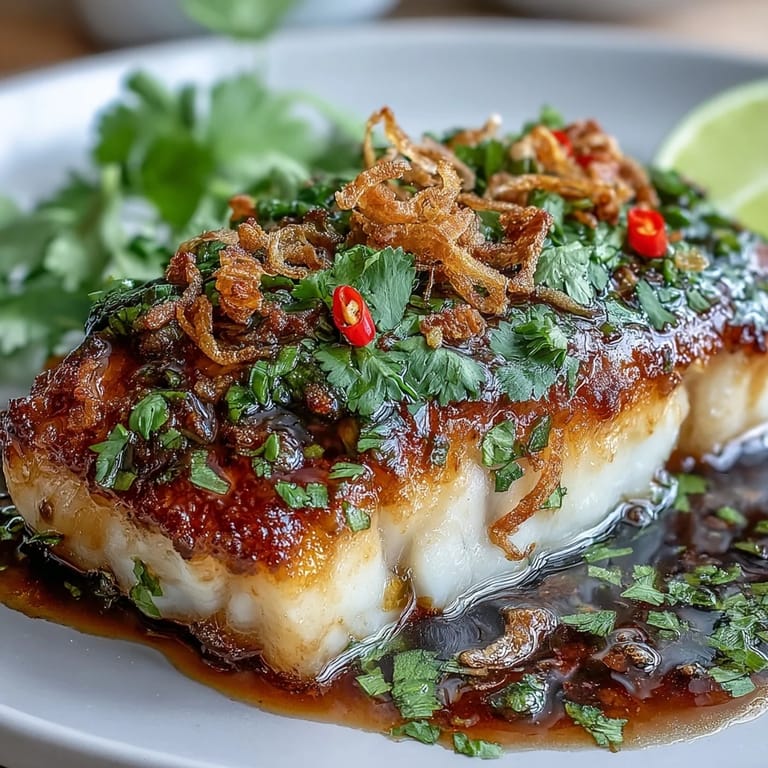
- Fresh cilantro: Chop it just before serving or it bruises and darkens; the leafy sprigs matter more than perfection here.
- Crispy fried shallots: Store-bought ones save time and honestly taste better than homemade unless you're frying them right before serving.
Tired of Takeout? 🥡
Get 10 meals you can make faster than delivery arrives. Seriously.
One email. No spam. Unsubscribe anytime.
Instructions
- Get your fish ready:
- Pat those fillets dry with paper towels like you're gently waking them up, then season both sides with salt and pepper. If you're using the rice flour, dust it on lightly—you want a whisper of coating, not a crust.
- Sear with confidence:
- Heat oil in your skillet until it shimmers and moves around freely. When you place the fish in, you should hear an immediate sizzle; that sound means it's going to turn golden. Cook for three to four minutes without touching it, then flip gently and give it another three to four minutes. The flesh should flake easily when you test it with a fork.
- Make the sauce while the fish rests:
- In a small bowl, whisk together lime juice, fish sauce, soy sauce, honey, minced garlic, sliced chillies, and ginger. The garlic and ginger will soften slightly as you whisk, which is perfect—they'll distribute evenly through the sauce.
- Warm the sauce and bring it together:
- Wipe out your hot skillet and pour in the sauce. Let it bubble and steam for just about a minute so the flavors wake up and dance together. You'll smell the lime and chilli rise up, and that's your signal to move on.
- Finish with a flourish:
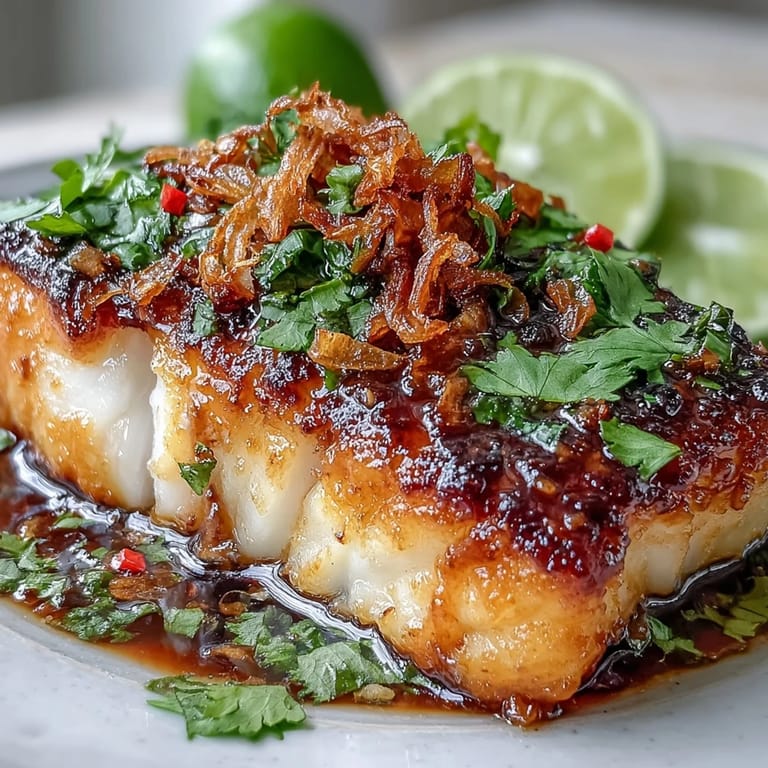
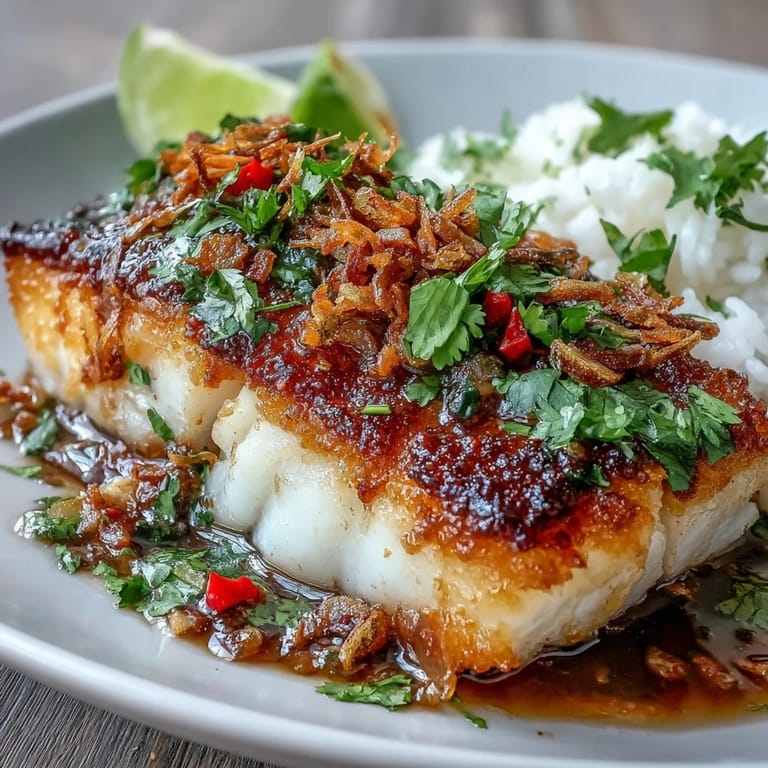
- Spoon that hot sauce over the fish, then scatter cilantro and crispy shallots on top like you're decorating something precious. Serve immediately with lime wedges so people can squeeze more if they want.
 Pin it
 Years ago, I ruined this dish by overthinking it—I kept flipping the fish, tasted the sauce constantly, fiddled with everything. The result was pale, mushy, and forgettable. Now I understand that sometimes cooking is about restraint, about trusting that if you do the simple things right, everything else follows. That lesson changed not just how I cook this dish, but how I approach cooking altogether.
Why Fresh Lime Matters So Much
I used bottled lime juice once when I was in a hurry, and the sauce tasted chemical and thin—like someone had described lime juice to a robot, and the robot made its best guess. Fresh lime has this complexity, a slight bitterness underneath the brightness that makes the whole dish feel alive. Since that mistake, I've kept limes in my bowl on the counter, and I squeeze them by hand because that thirty seconds genuinely matters.
The Right Fish Makes Everything Easier
Cod and snapper are forgiving because their flesh is sturdy enough to flip without falling apart, and they have a mild flavor that lets the sauce shine instead of fighting it. Tilapia works fine too, though it's a bit more delicate—just move gently and don't leave it on the heat too long. The key is buying fish that smells clean and ocean-like, not old or ammonia-tinged, because that determines whether your final dish tastes elegant or just sad.
Building Flavor in the Sauce
The first time I made this sauce, I was shocked at how much depth comes from such simple ingredients—I thought something would be missing. But that's the beauty of it: lime juice is bright, fish sauce is umami and funk, soy sauce brings salt and depth, honey smooths everything out, and the garlic, ginger, and chillies add heat and character. When you put them together and warm them gently, they stop being separate ingredients and become one voice.
- Taste the sauce before it hits the fish and adjust—if it needs more salt, you're adding soy sauce, not plain salt, so it stays balanced.
- Don't make the sauce too far ahead because the chillies will get overly hot and the garlic might turn bitter if they sit too long.
- If you accidentally make it too spicy, a tiny drizzle more honey mellows everything down without changing the flavor profile.
 Pin it
 This dish has become my go-to when I want to feel like I cooked something impressive without stress, and it never lets me down. Every time I make it, I remember that conversation in the kitchen with my partner's mother, and I feel a little more confident that I've understood something true.
Recipe FAQs
- → What type of fish is best for this dish?
Skinless white fish fillets like cod, snapper, or tilapia work best as they cook evenly and have a mild flavor that pairs well with the tangy sauce.
- → How do I get the fish fillets crispy?
Lightly dusting the fish with rice flour or cornstarch before pan-searing in hot oil helps create a delicate, crispy crust.
- → Can I adjust the heat level in the sauce?
Yes, reduce the number of birds eye chillies or remove their seeds to lessen the spiciness without sacrificing flavor.
- → What can I use instead of fish sauce?
A gluten-free soy sauce or tamari can substitute fish sauce, but it will slightly alter the depth of umami.
- → How should I prepare crispy shallots at home?
Thinly slice shallots and fry them in oil until golden brown. Drain on paper towels to remove excess oil before using.
- → What sides complement this dish well?
Jasmine rice, steamed vegetables, or a light slaw enhance the fresh and zesty flavors without overpowering the main dish.