 Pin it
 There's something about the smell of coconut oil hitting a hot pan that instantly transports me to a small kitchen in Bangkok, even though I've never been there. My sister brought home a jar of red curry paste one Tuesday evening, and we spent the better part of an hour tossing vegetables into a bubbling sauce, laughing at how aggressively I was grating the ginger. That night, something clicked—the way the spices released their warmth, how the coconut milk mellowed everything into harmony. Now, whenever I make this curry, I'm right back in that moment of culinary discovery, except I've learned a few tricks along the way.
I made this for my roommate when she was going through a rough patch, and I remember how her whole face changed the moment she tasted it—like the warmth of the spices and coconut was doing something more than just feeding her. She asked for the recipe immediately, and I realized then that comfort food isn't about being fancy; it's about showing up with something genuine and delicious.
Ingredients
- Red bell pepper: The sweetness here balances the heat of the curry paste beautifully—I always grab one that feels heavy for its size, a sign of juiciness.
- Carrot: Slice these on a slight bias if you want them to look fancy; it also helps them cook evenly and absorb the sauce better.
- Zucchini: This is your absorber of flavor—don't skip it, even if you think you don't like zucchini, because curry changes everything.
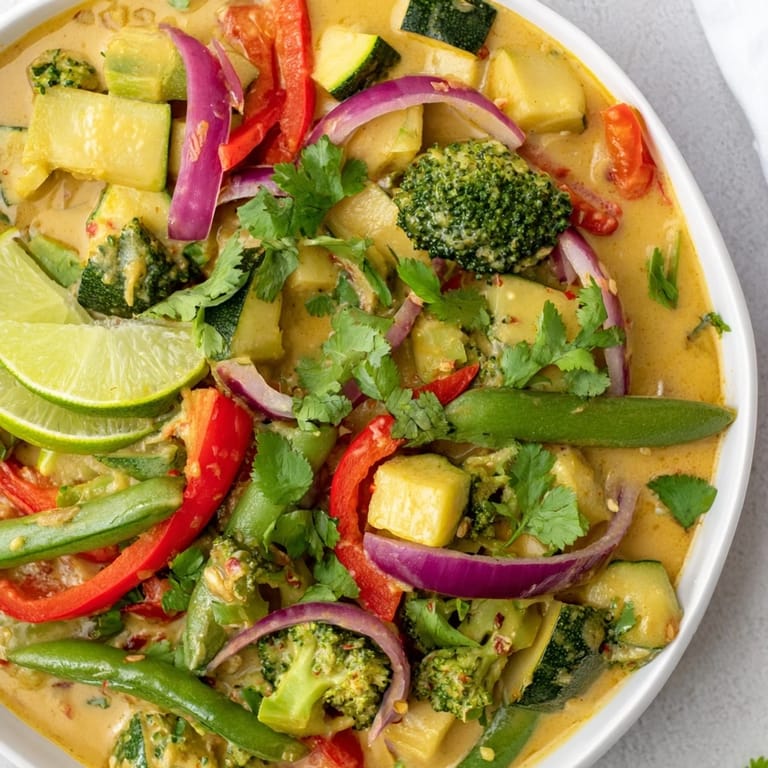
- Broccoli florets: Cut them smaller than you think; they'll soften more than you'd expect and still maintain their shape.
- Snap peas: These go in late specifically so they keep their crunch—they're the textural surprise that makes people ask for seconds.
- Red onion: The base of everything good, and thinly slicing it matters because thick pieces won't soften in time.
- Coconut oil: It browns the aromatics better than other oils and adds a subtle richness that you'll taste but can't quite name.
- Garlic and ginger: Mince the garlic fine and grate the ginger fresh—this isn't the moment to cut corners, and your nose will thank you for the aroma.
- Red curry paste: A tablespoon is the starting point; I've learned to taste as I go because some brands are fiercer than others.
- Turmeric, cumin, and coriander: These three together create a warmth that grounds everything—measure them, don't eyeball, at least until you know your stovetop's personality.
- Coconut milk: Full fat is non-negotiable here; the thin stuff will leave you feeling like something's missing.
- Vegetable broth: This keeps the curry from being too dense—it's the difference between a sauce and a stew.
- Soy sauce or tamari: A tablespoon adds umami depth that makes people wonder what your secret ingredient is.
- Lime juice: Fresh squeeze it right before adding; bottled lime juice tastes tired by comparison.
- Fresh cilantro: If you hate cilantro, use basil or parsley instead—the point is a bright, fresh finish.
Tired of Takeout? 🥡
Get 10 meals you can make faster than delivery arrives. Seriously.
One email. No spam. Unsubscribe anytime.
Instructions
- Start your foundation:
- Heat the coconut oil over medium heat until it shimmers and smells inviting, then add your sliced red onion. You'll know it's ready when the onion becomes translucent and the kitchen starts smelling like something good is about to happen, usually around 2-3 minutes.
- Wake up the aromatics:
- Add your minced garlic and grated ginger, stirring constantly for just a minute—you want the smell to hit you like a warm wave, which means the oils are releasing but nothing's burning.
- Toast your spices:
- This is the magic moment where you add the curry paste and your dry spices, stirring for a full minute so they release their oils and the whole pan becomes fragrant. The color will deepen and the smell will become almost intoxicating.
- Build your vegetables:
- Add the bell pepper, carrot, zucchini, and broccoli, stirring frequently for 3-4 minutes so everything gets coated in that spiced oil and starts to soften slightly at the edges.
- Introduce the liquid:
- Pour in your coconut milk and vegetable broth slowly, stirring as you go, then bring the whole thing to a gentle simmer—you want to see small bubbles breaking the surface, not a rolling boil.
- Finish with the delicate vegetables:
- Add your snap peas and soy sauce, give everything a good stir, then cover and let it simmer for 10-12 minutes until the vegetables are tender but the broccoli and peas still have a little resistance when you bite them.
- Brighten and balance:
- Remove from heat, squeeze in your fresh lime juice, and taste—salt and pepper might be all you need, or you might want another teaspoon of curry paste if it feels too mild.
- Serve with joy:
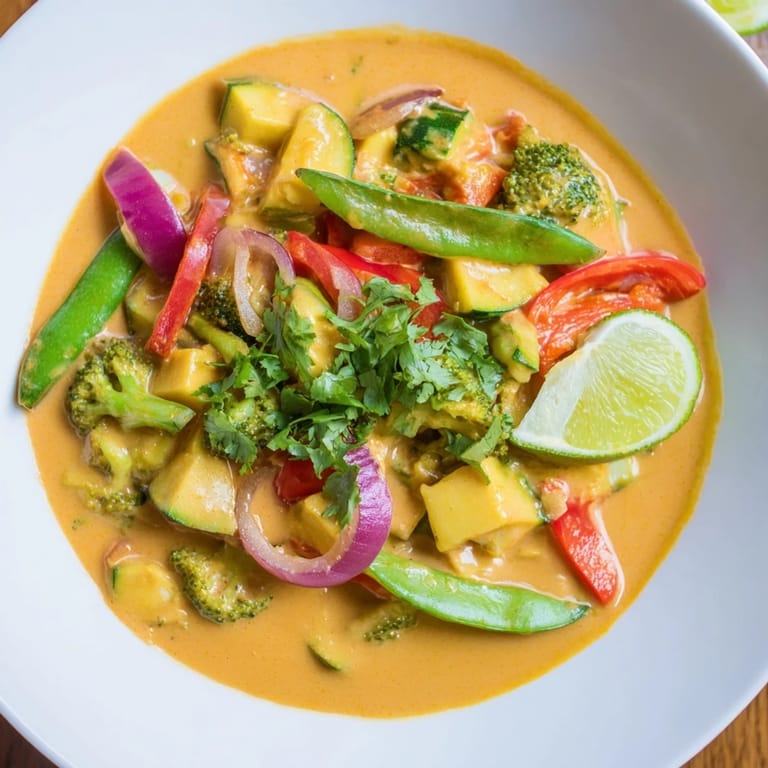
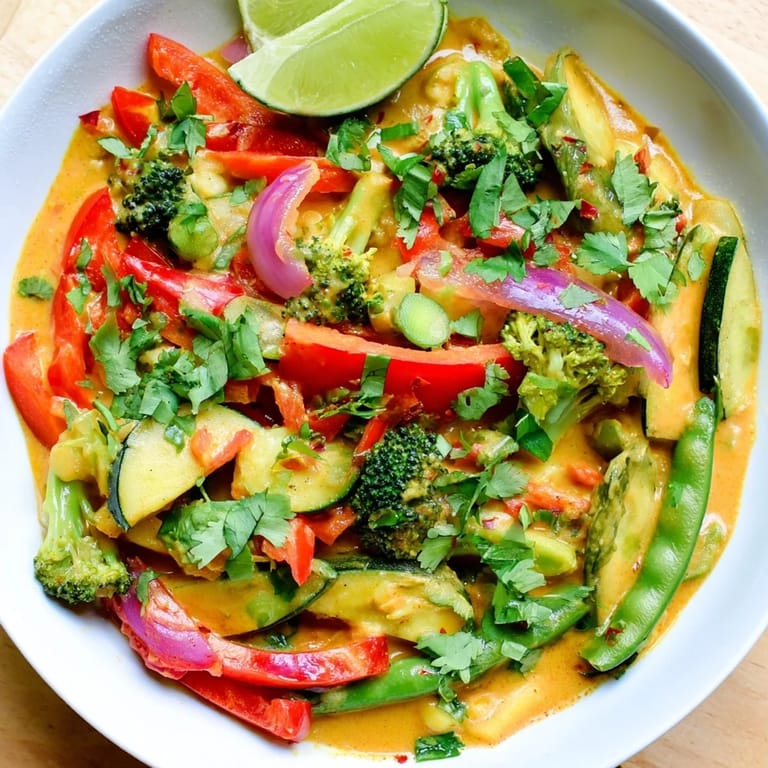
- Ladle it into bowls over steamed rice or quinoa, scatter cilantro on top, add a lime wedge, and watch people's faces light up.
 Pin it
 My favorite part about this curry is how it proves that simple can still be spectacular—you're not wrestling with difficult techniques or hunting down obscure ingredients, but the result tastes like you put real thought and care into it. It's become my go-to meal when I want to feel like I've cooked something meaningful without spending my whole evening in the kitchen.
The Vegetable Canvas
Each vegetable here plays a role that goes beyond just existing in the bowl. The bell pepper adds sweetness and body, the carrot brings earthiness and natural sugars that deepen as they cook, and the broccoli absorbs the sauce while staying sturdy. I've experimented with swapping things around—cauliflower instead of broccoli, green beans instead of snap peas—and the magic still happens because the coconut curry base is flexible enough to embrace whatever fresh vegetables you've got on hand. The trick is choosing vegetables with different textures so each bite feels interesting.
The Spice Logic
The combination of red curry paste, turmeric, cumin, and coriander might seem like a lot, but they're working together rather than fighting each other. The turmeric adds earthy warmth, the cumin brings a subtle nuttiness, and the coriander lifts everything with a hint of brightness. Red curry paste is the vehicle that carries all these flavors into the vegetables, and it's designed to bloom in hot oil before the liquid goes in. I used to add everything at once and wondered why my curry tasted muddy—now I understand that timing is how simple ingredients become something with depth.
Making It Your Own
This recipe is a template more than a rulebook, which is probably why I keep coming back to it. I've added chickpeas on nights when I wanted extra protein, thrown in mushrooms when the farmer's market had beautiful ones, and once even added a handful of spinach at the very end for color and nutrition. You can adjust the curry paste quantity based on your heat tolerance—start with what I've listed and add more next time if you're brave. The beauty of vegetable curry is that it transforms based on your mood, your pantry, and what looks good at the market, which means it never gets boring even if you make it weekly.
- Try adding a splash of coconut milk instead of vegetable broth if you want it richer and more indulgent.
- A teaspoon of fish sauce adds mysterious depth if you're not strictly vegan, though it's already delicious without it.
- Serve over jasmine rice, quinoa, or even with warm naan bread if you want to turn it into something more substantial.
 Pin it
 This curry has become my answer to the question of what to cook when I want something that feels special but doesn't demand perfection. It's taught me that some of the best meals happen in under an hour, in a single pot, with vegetables and spices and the willingness to show up at the table with something warm.