 Pin it
 There's something about October that makes me want to roast everything in sight. I was standing at the farmer's market with a friend, both of us holding butternut squash like we'd struck gold, when she mentioned she'd been eating the same sad salad for weeks. That afternoon, we threw together whatever looked good—golden squash, brussels sprouts that smelled like caramelized dreams, crispy kale—and suddenly we had bowls that felt like autumn itself. It's become my go-to when I need something that tastes indulgent but actually makes me feel better.
I made this for my sister the first chilly evening of the season, and she sat at my kitchen counter asking what I'd changed about myself—apparently something about this bowl screamed "autumn transition." The kitchen smelled warm from the roasting vegetables and cinnamon, and somewhere between the first bite and the last, she texted her partner to ask if I could start cooking. That's when I knew this recipe had staying power.
Ingredients
- Butternut squash, peeled and cubed (2 cups): The natural sweetness is your secret weapon here—roasting concentrates it into something almost candy-like, so don't skip the caramelization step.
- Brussels sprouts, trimmed and halved (2 cups): They'll get crispy edges and creamy centers when roasted hot and undisturbed initially, so resist the urge to stir too early.
- Kale, stems removed and leaves chopped (2 cups): A quick wilt in the skillet keeps it tender without turning it into mush, and it catches all the savory flavors in the bowl.
- Apple, cored and sliced (1 large): The tartness keeps everything from feeling one-note, and roasting it softens that sharpness into something almost jammy.
- Farro (1 cup): This grain has a nutty, chewy texture that holds up beautifully and doesn't fall apart like some grains do—quinoa or brown rice work if you need gluten-free.
- Vegetable broth (2 cups): Use actual broth, not water, if you can—that salty, savory base carries through the whole bowl.
- Olive oil (3 tbsp total): This is your carrier for flavor, so don't skimp, and use good oil you'd actually taste on salad.
- Sea salt (1 tsp), black pepper (1/2 tsp), smoked paprika (1/2 tsp), ground cinnamon (1/2 tsp): The paprika adds a subtle depth that nobody can quite name, and the cinnamon whispers sweetness without shouting about it.
- Pumpkin seeds, toasted (1/4 cup): These add a satisfying crunch and nutty richness that makes the whole thing feel special.
- Dried cranberries (2 tbsp): They burst with tart flavor and look beautiful dotted across the top.
- Feta or vegan cheese, crumbled (2 tbsp): Optional, but the creaminess against the roasted vegetables is worth considering.
Tired of Takeout? 🥡
Get 10 meals you can make faster than delivery arrives. Seriously.
One email. No spam. Unsubscribe anytime.
Instructions
- Heat your oven and prepare:
- Preheat to 425°F and line two baking sheets with parchment paper—this prevents sticking and makes cleanup feel less like a punishment. Get your oven nice and hot so the vegetables will actually caramelize instead of just steaming.
- Season and spread the savory vegetables:
- Toss the squash and Brussels sprouts with 2 tbsp olive oil, salt, pepper, and smoked paprika until everything is glossy and evenly coated. Spread them in a single layer without crowding—they need room to get golden, not steam themselves into submission.
- Give the apples their own spotlight:
- Put apple slices on the second baking sheet, drizzle with 1 tbsp olive oil, and sprinkle with cinnamon. They roast faster than the vegetables, so this separate sheet keeps everything from burning.
- Roast until everything is golden:
- The squash and Brussels sprouts need 25-30 minutes, stirred once halfway through, until the edges are caramelized and the flesh is tender. The apples will be done in about 15 minutes—they should look soft and slightly jammy at the edges.
- Cook your grains with intention:
- While the oven does its work, rinse the farro and bring vegetable broth to a boil in a medium saucepan. Add the farro, lower the heat to barely a simmer, cover, and let it cook for 20-25 minutes until tender with just a slight chew—this is where the bowl gets its substance.
- Wilt the kale quickly:
- Heat a skillet over medium heat, add the kale with just a splash of water, and stir for 2-3 minutes until it softens and loses that raw edge. It'll look like it's taken over the pan at first, then suddenly shrink down into silky ribbons.
- Build your bowls with care:
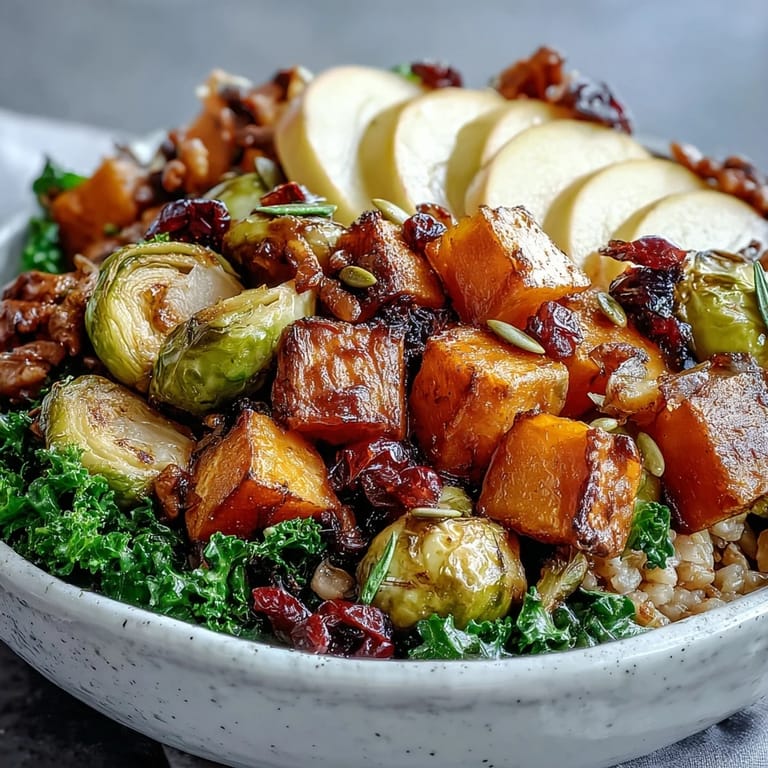
- Divide the cooked farro among four bowls as your base, then arrange the roasted squash, Brussels sprouts, sautéed kale, and caramelized apples on top. Take a second to make it look like something you'd want to eat—the presentation matters more than you think.
- Top and serve warm:
- Scatter pumpkin seeds and dried cranberries across each bowl, add crumbled cheese if you're using it, and bring them to the table while everything is still warm enough that steam rises off it.
 Pin it
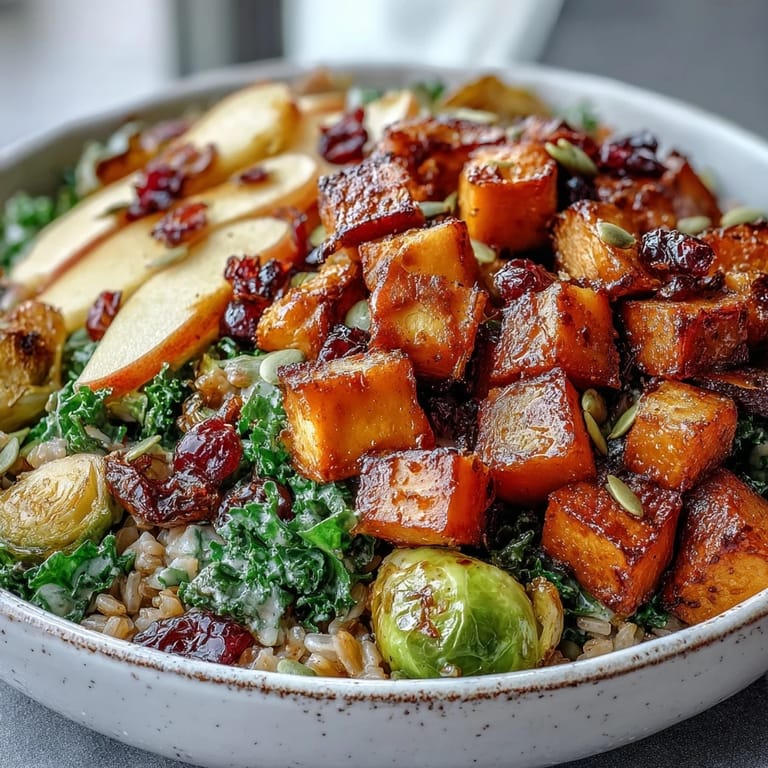
 What strikes me most about this bowl is how it transforms depending on mood and season. In November, it's comfort food that happens to be healthy; in early October, it's a celebration of harvest abundance.
Timing and Make-Ahead Magic
The beauty of this recipe is that you can do most of the work ahead of time. Roast the vegetables and cook the grains the night before, then store them separately in the fridge—they'll keep for about four days. In the morning, just wilt the kale, assemble, and you have a hot lunch without the stress. My coworkers have started asking what I'm eating because it always looks this good and smells this incredible. I've stopped being shy about telling them it takes twenty minutes to pull together if everything's prepped.
Why This Bowl Works Year-Round
Even though I think of this as an autumn dish, I've found myself making it in spring with roasted asparagus and strawberries instead. The formula is what matters—a hearty grain, roasted vegetables that get caramelized edges, something fresh or bright (like kale or apple), and a crunch at the end. Once you understand how the pieces work together, you can swap ingredients based on what's at the market or what you're craving. I've used pears instead of apples, quinoa instead of farro, and even added roasted chickpeas for protein when I'm being extra.
Creating Your Perfect Bowl
This recipe is a starting point, not a rulebook. What matters most is that you're roasting things hot enough to get color, using enough salt to actually taste your food, and not being afraid to taste and adjust as you go. I've learned that the magic happens in those caramelized edges—that deep brown color on the squash and sprouts where the sugars have concentrated and everything tastes richer than it should.
- If the bowl feels too heavy, add a squeeze of lemon juice or a splash of apple cider vinegar right before eating.
- Leftovers reheat beautifully in a 350°F oven for about 10 minutes—much better than the microwave, though I've done both.
- Make extra pumpkin seeds because they disappear quickly and they're worth their weight in gold on this bowl.
 Pin it
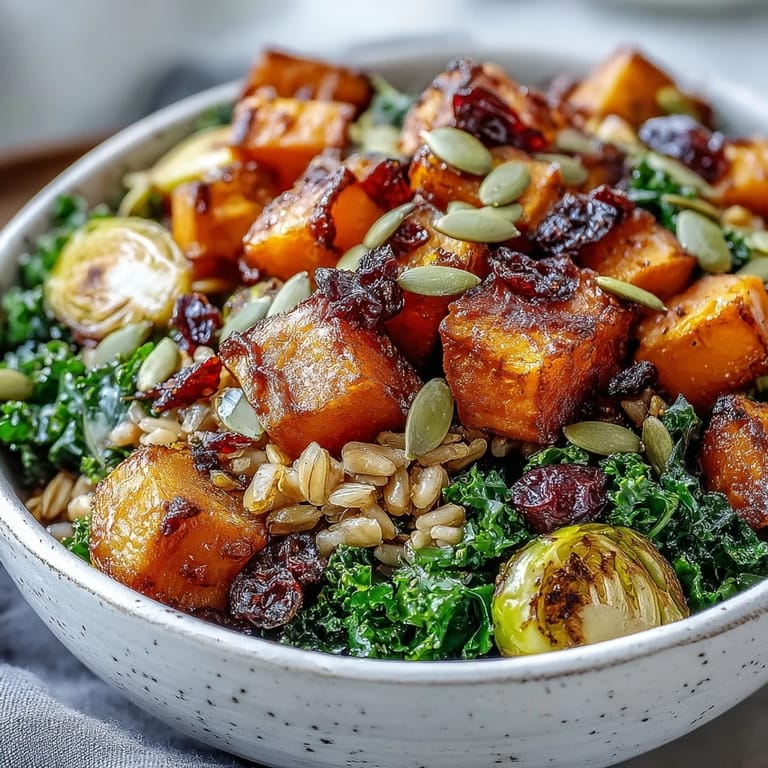
 This bowl has become my answer to almost every question about what to eat. Whether it's a busy weeknight or a weekend meal when I have friends over, this one gets made again and again.
Recipe FAQs
- → Can I make this gluten-free?
Yes, simply substitute farro with quinoa or brown rice. Both options work beautifully with the roasted vegetables and maintain the hearty texture of the dish.
- → How long do leftovers keep?
Stored in airtight containers, leftovers stay fresh for 4-5 days in the refrigerator. The flavors actually develop and improve over time. Reheat gently or enjoy at room temperature.
- → Can I add protein to this bowl?
Absolutely. Roasted chickpeas, baked tofu, or grilled chicken make excellent additions. Simply prepare your protein choice alongside the vegetables and assemble everything together when serving.
- → What other grains work well?
Beyond farro, try quinoa for a lighter option, brown rice for nuttiness, or wheat berries for extra chew. Each grain brings its own character while complementing the roasted autumn vegetables.
- → Can I use different vegetables?
Yes, this bowl is very adaptable. Sweet potatoes, parsnips, or carrots work well in place of squash. Try swapping kale for spinach or Swiss chard based on your preference.