 Pin it
 My neighbor Maria handed me a paper bag of guavas one afternoon, still warm from her tree, and said simply, "Make paste." I had no idea what I was doing, but three hours later, I was spreading jewel-toned paste onto a cracker with a wedge of sharp cheese, and suddenly understood why this stuff has been treasured across Latin America for centuries. That first batch taught me that sometimes the simplest recipes hold the most magic.
I made this paste for my daughter's birthday potluck, tucked into a small jar with a handwritten label, and watched grown-ups actually pause mid-conversation to ask what it was. That's when I realized guava paste isn't just food—it's a conversation starter, a little gift that says you took time to make something real.
Ingredients
- Ripe guavas, 1 kg (2.2 lbs): The fruit should yield slightly to pressure and smell fragrant—this is where all the flavor comes from, so don't settle for underripe ones.
- Granulated sugar, 450 g (2 1/4 cups): This isn't just sweetener; it's what transforms the guava into a thick, glossy paste and helps it keep for months.
- Fresh lemon juice, 2 tbsp: A small amount that brightens the flavor and prevents the paste from tasting one-dimensional.
- Water, 120 ml (1/2 cup): Just enough to help the guavas break down without making the final paste watery.
Tired of Takeout? 🥡
Get 10 meals you can make faster than delivery arrives. Seriously.
One email. No spam. Unsubscribe anytime.
Instructions
- Prepare and soften:
- Wash your guavas and cut them into quarters, then place them in a large saucepan with the water. Bring to a boil, then lower the heat, cover, and let them simmer gently for 15–20 minutes until they're so soft they practically fall apart when you press them with a spoon.
- Strain into silk:
- Once cooled slightly, push the cooked guavas through a food mill or fine mesh strainer, letting the pulp pass through while leaving behind the seeds and tough skins. This step determines whether your paste is rustic or silky—take your time here.
- Balance and cook:
- Measure your guava puree and add an equal amount of sugar, then stir in the lemon juice. Place back on the stove over low heat and stir constantly for 40–50 minutes, watching as the mixture deepens in color and becomes thick enough that a spoon dragged through it leaves a trail.
- Set and cool:
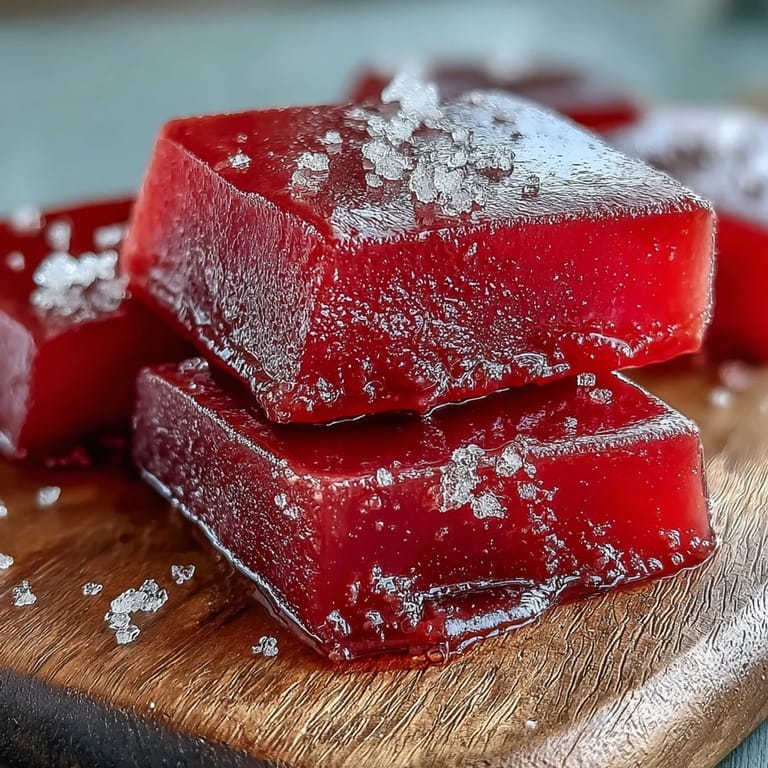
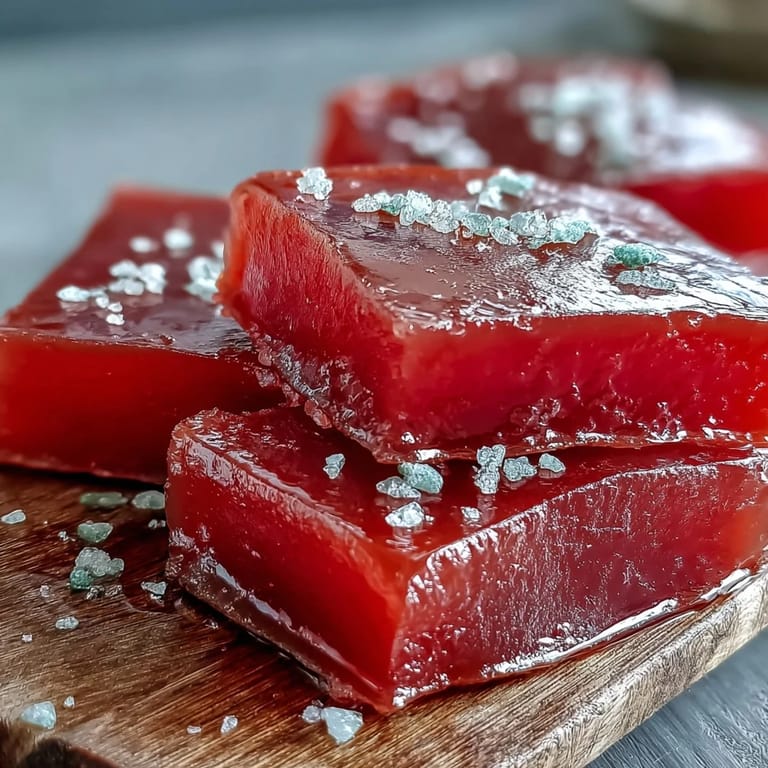
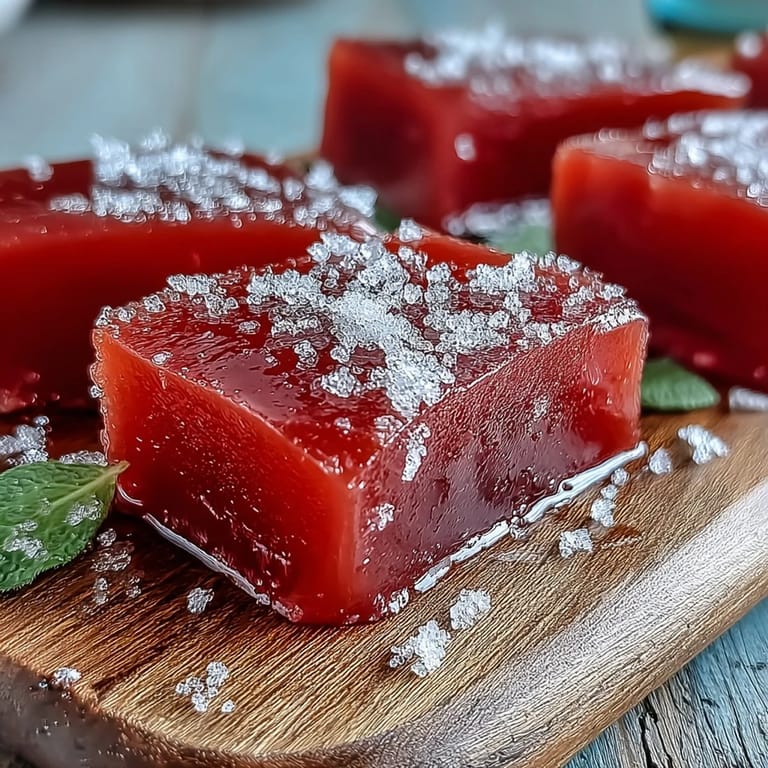
- When the paste is glossy and holds its shape, pour it into a parchment-lined pan and let it sit at room temperature until completely firm, about 2–3 hours. Unmold, slice into squares, and marvel at what you've made.
 Pin it
 I once brought this paste to a potluck where it disappeared before dessert was even served, guests just eating it straight from the spoon. That's when I understood it wasn't about perfection—it was about making something with intention that people actually wanted to eat.
The Secret to Smooth Paste
The difference between a chunky paste and a silky one is patience with the straining. Some people skip this step or rush through it, but those little seeds and tough bits create an unpleasant texture that distracts from the bright guava flavor. If you have a food mill, use it—it's designed exactly for this work and makes the job almost meditative. When you push that last bit of pulp through, you'll see why it matters.
Pairing and Serving
I learned by accident that guava paste becomes something magical when paired with sharp, aged cheese. A slice of Manchego or aged cheddar, a cracker, and a small square of this paste is a flavor combination that feels both simple and sophisticated. It also hides beautifully inside pastries, swirled into ice cream, or sandwiched between butter cookies.
Storage and Keeping
Once sliced and stored in an airtight container in the refrigerator, this paste will keep for up to three months, though it rarely lasts that long in a house where people know it exists. You can also wrap individual pieces in parchment and keep them at room temperature for a few weeks if you're gifting them away.
- Store in airtight containers to prevent it from drying out or absorbing fridge smells.
- If it hardens too much over time, a few seconds in the microwave softens it back to spreadable consistency.
- Make a double batch during guava season because you'll wish you had more when January rolls around.
 Pin it
 Making guava paste is one of those small acts of cooking that feels like you've unlocked a secret. Once you've made it, you'll find yourself making it again and again.
Recipe FAQs
- → What is guava paste used for?
Guava paste shines in both sweet and savory applications. Spread it on toast or crackers, pair it with Manchego or cream cheese, use it as a filling for pastries and empanadas, or cube it for cheese boards. The sweet-tart flavor complements rich cheeses beautifully.
- → How do I know when the paste is done?
The paste is ready when it becomes thick, glossy, and pulls away from the sides of the pan. A spoonful should hold its shape rather than spreading. The mixture will also darken slightly and develop a sheen.
- → Can I use frozen guavas?
Yes, frozen guavas work perfectly. Thaw them completely before starting, and be aware that they may release more water during cooking, requiring slightly longer simmering to reach the proper consistency.
- → Why remove the seeds?
Guava seeds are hard and can create an unpleasant texture in the finished paste. Removing them through straining ensures a smooth, velvety consistency. Some cooks leave seeds for added fiber, but the traditional smooth paste is seed-free.
- → How long does homemade guava paste last?
Properly stored in an airtight container in the refrigerator, guava paste keeps for up to three months. The high sugar content acts as a natural preservative. You can also freeze portions for longer storage.
- → What's the difference between guava paste and guava jam?
Guava paste is much thicker and more concentrated than jam. It cooks longer to evaporate more liquid, resulting in a dense, sliceable texture. Jam is spreadable, while paste can be cut into cubes or firm slices.