 Pin it
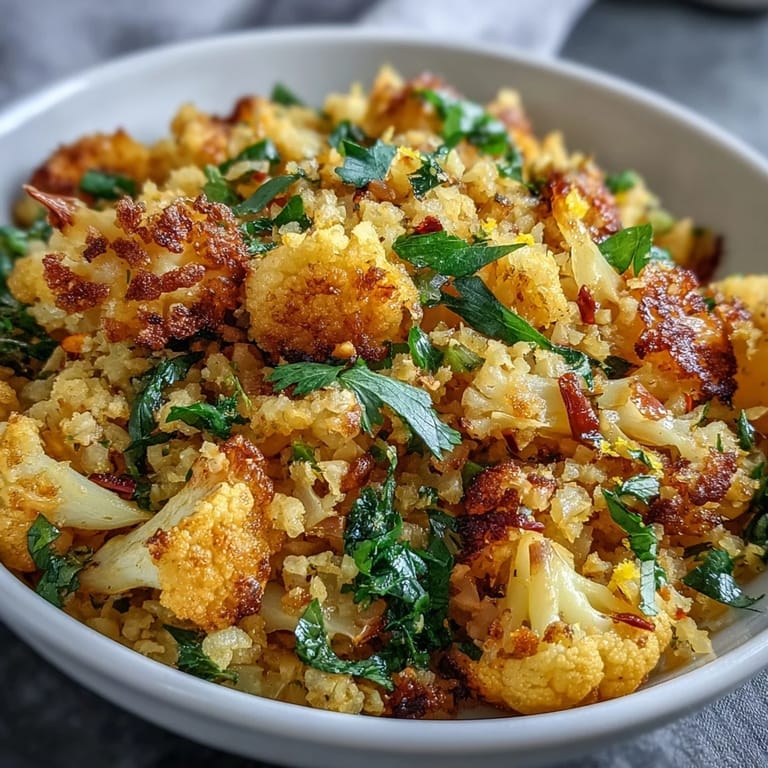
 My kitchen smelled like a spice market the afternoon I first made turmeric cauliflower rice, after a friend mentioned she'd given up regular rice but missed having something warm and comforting to eat. I pulled out a head of cauliflower, wondering if I could actually make something taste good instead of like steamed disappointment, and honestly, I was surprised how the golden turmeric transformed these pale florets into something that felt almost luxurious. The whole thing came together in under twenty minutes, which meant I could feed people without stress. Now it lives in my regular rotation, not because it's trendy, but because it actually tastes like I'm taking care of myself.
Last winter I made this for a dinner party where someone mentioned they were trying to eat less carbs, and I watched everyone at the table—not just the person who asked—go back for seconds of the cauliflower rice instead of actual rice. That's when I realized this wasn't a substitute dish, it was its own thing entirely, and it could stand alongside roasted chicken or a curry without apologizing for itself.
Ingredients
- Cauliflower: One medium head gives you enough rice-like texture to feed four people without feeling skimpy; the food processor makes this quick, though a box grater works if you don't mind a little arm workout.
- Onion and garlic: These two create the flavor foundation that makes everything taste intentional rather than like boiled vegetables.
- Olive or coconut oil: Use whichever you have; the oil carries all those spice flavors into the cauliflower so they don't just sit on top.
- Ground turmeric: This is what gives the dish its warm, golden color and its subtle earthiness; don't skip it thinking you can add more later.
- Cumin and black pepper: Together they add depth that keeps the dish from tasting one-dimensional.
- Sea salt and red chili flakes: Salt brings everything into focus, and chili flakes add a whisper of heat if you like that.
- Fresh cilantro or parsley and lemon: These finish the dish with brightness that makes all the difference between dull and delicious.
Tired of Takeout? 🥡
Get 10 meals you can make faster than delivery arrives. Seriously.
One email. No spam. Unsubscribe anytime.
Instructions
- Pulse the cauliflower into rice:
- Cut your cauliflower into florets and work in batches through the food processor, pulsing until you get pieces that look like grain-sized rice—not powdery, not chunky. If you don't have a processor, a box grater will work, though your hand will let you know it's working.
- Start the aromatics:
- Heat your oil in a large skillet over medium heat until it shimmers slightly, then add the onion and let it cook for a couple minutes until it starts turning translucent. You'll know it's ready when the smell changes from sharp and raw to something softer.
- Add garlic and bloom the spices:
- Once the onion softens, add the garlic and cook just thirty seconds—you want it fragrant, not brown—then immediately add the turmeric, cumin, pepper, and chili flakes. Let these toast together for about a minute so they release their essential oils and lose that raw powder taste.
- Cook the cauliflower rice:
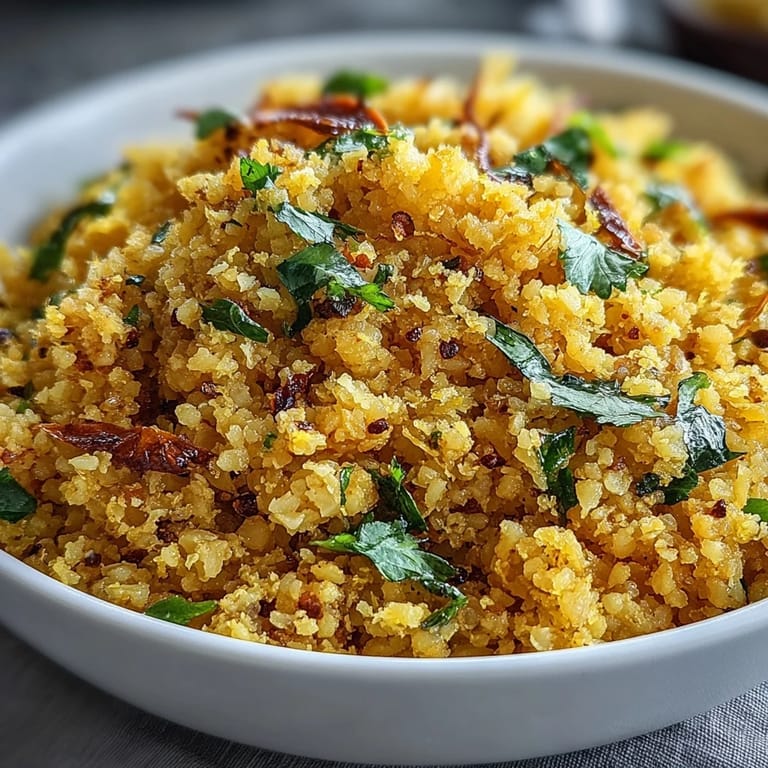
- Add your riced cauliflower and salt, stirring well so every piece gets coated in that golden spiced oil. Cook for five to seven minutes, stirring occasionally, until the cauliflower is tender but still has a little bite to it—this is where you find your preference, because mushy is never the goal here.
- Finish with brightness:
- Remove from heat, squeeze your lemon juice over everything, toss in the fresh cilantro or parsley, taste it, and adjust salt or lemon as needed. Sometimes a dish needs just a touch more of something to sing.
 Pin it
 There's something quietly powerful about learning to make your own versions of things you used to think you couldn't eat. This dish became proof that restriction doesn't have to mean deprivation, just a different path to the same satisfaction.
When to Make This
This is the kind of side that works with almost anything—curry, roasted chicken, grilled fish, or even as a standalone lunch bowl with a fried egg on top. It's bright enough to feel fresh alongside heavier main courses, but it has enough spice and substance to hold its own when you're eating it as the center of the plate. I find myself making it more in warmer months when I crave something that feels nourishing without being heavy, though honestly, turmeric's warming properties mean it's good any time of year.
How to Adapt It
The base recipe is forgiving, and your additions should reflect what you're cooking it alongside or what your mood demands. Add frozen peas or fresh spinach in the last couple minutes if you want extra vegetables, dice up a bell pepper to cook with the onion, or stir in toasted almonds at the end for texture. I've even made it with shredded carrots mixed into the cauliflower rice, and it takes on a slightly sweeter note without losing its identity. The spice ratio is pretty dialed in, but if you're sensitive to turmeric or want something less earthy, you can reduce it by half—you'll still get the color and some of the flavor without overwhelm.
Storage and Leftovers
This keeps beautifully in the refrigerator for three or four days, and honestly, the flavors deepen and marry together as it sits, so leftovers are sometimes better than the first serving. Reheat it gently in a skillet with a splash of water or fresh lemon juice to bring back the brightness, or eat it cold as a salad base if you're feeling different about it the next day. You can also freeze it for up to a month, though the texture will be slightly softer when thawed, which is fine if you're using it as a curry base or mixing it into something else.
- Let it cool completely before storing so condensation doesn't make it soggy.
- Add a fresh squeeze of lemon when you reheat it to wake up the flavors again.
- If it dries out, a tablespoon of water and a minute in the pan brings it back to life.
 Pin it
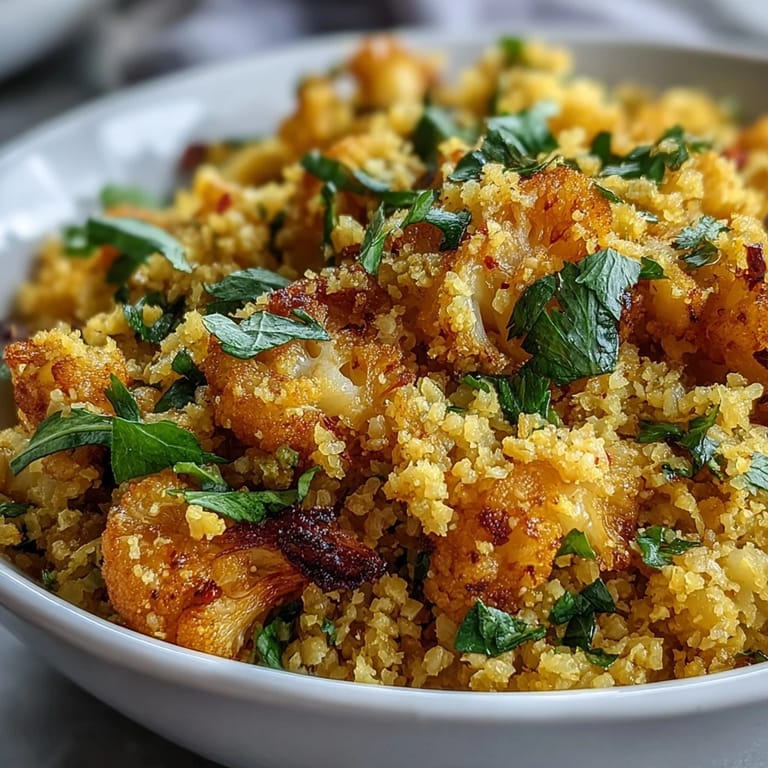
 This recipe taught me that feeding yourself well doesn't require complicated techniques or hard-to-find ingredients—sometimes it just takes intention and a little turmeric. Make it tonight.
Recipe FAQs
- → What does turmeric cauliflower rice taste like?
The cauliflower takes on a subtle, nutty flavor from the spices, with earthy notes from turmeric and cumin. The texture remains light and fluffy, similar to traditional rice but with a slightly more tender bite. Fresh lemon juice adds brightness, while cilantro brings a refreshing herbal finish.
- → Is cauliflower rice actually healthy?
Absolutely. Cauliflower rice provides a low-calorie, low-carbohydrate alternative to traditional rice while offering fiber, vitamins C and K, and powerful antioxidants. The addition of turmeric adds curcumin, known for its anti-inflammatory properties, making this dish both nutritious and satisfying.
- → Can I make turmeric cauliflower rice ahead of time?
Yes, you can prepare the riced cauliflower up to 3 days in advance and store it in the refrigerator. Cook the dish just before serving for the best texture, though leftovers reheat well in a skillet over medium heat for 3-4 minutes.
- → What can I serve with turmeric cauliflower rice?
This versatile side pairs beautifully with Indian curries, grilled chicken or fish, roasted vegetables, or chickpea dishes. It also works as a base for Buddha bowls, topped with your favorite proteins and sauces for a complete meal.
- → Do I need a food processor to make cauliflower rice?
A food processor creates the most consistent rice-like texture quickly, but you can also use a box grater with the medium holes. Pulse the cauliflower in short bursts to avoid overprocessing—it should resemble rice grains, not become mushy.