 Pin it
 I still remember the first time I assembled a proper Mediterranean mezza platter—it was at a friend's beachside apartment, and I watched in admiration as the host casually arranged vibrant dips, creamy cheeses, and brightly colored vegetables like an artist composing a masterpiece on canvas. That evening taught me that some of the most impressive dishes require no cooking, just thoughtful arrangement and the finest ingredients you can find. Now, whenever I want to create a moment that feels both effortless and special, I turn to this platter—it's become my go-to for gatherings, quiet nights in, or that magical hour when friends unexpectedly drop by.
I made this platter for my sister's book club last spring, and I watched as the conversation flowed more freely than usual—something about the relaxed, shareable nature of the spread seemed to soften the room. People lingered longer, tried more things, and somehow the food became a silent backdrop to real connection rather than the main event. That's when I realized this platter wasn't just about feeding people; it was about creating space for togetherness.
Ingredients
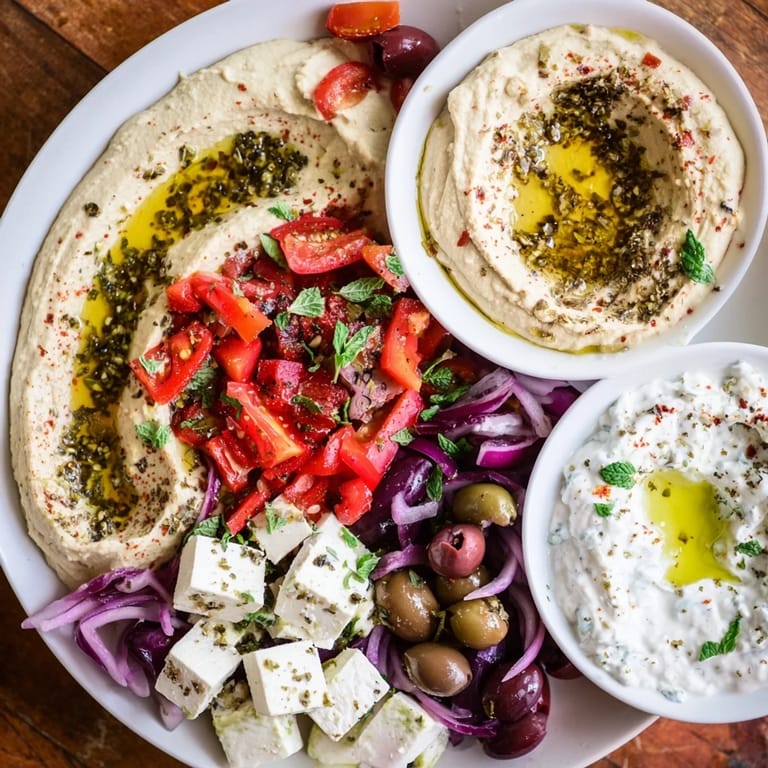
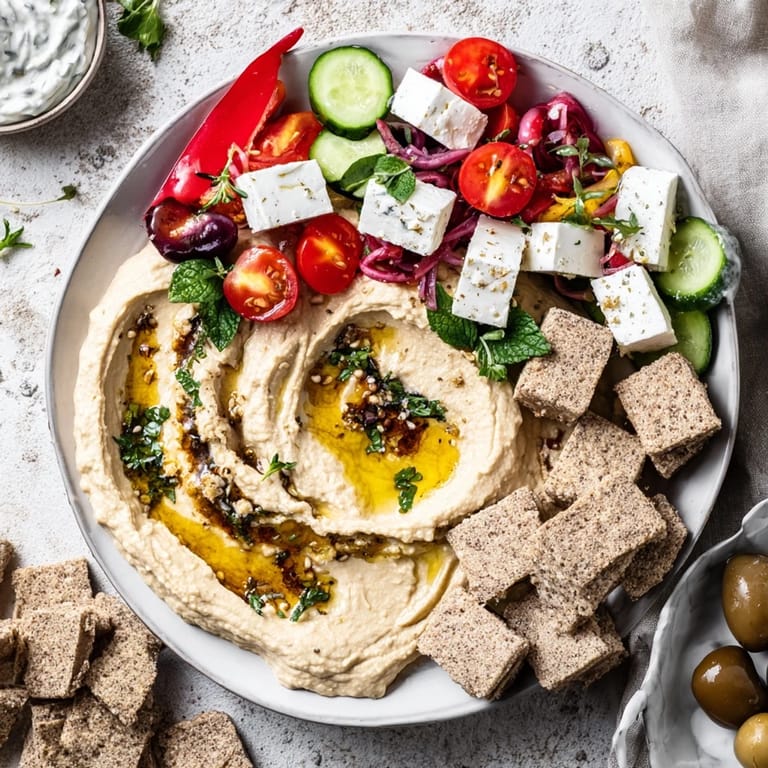
- Classic hummus: This creamy foundation deserves quality—use store-bought from a good deli if you're short on time, or make your own for that restaurant-quality depth. The tahini and lemon juice in hummus create a brightness that anchors the entire platter.
- Baba ganoush: That smoky, silky eggplant dip is what converts skeptics into mezza lovers. Look for versions made with roasted eggplant that you can taste in the first bite.
- Tzatziki: Cool, herby, and refreshing—this yogurt-based dip is your platter's cooling agent. Keep it cold right up until serving for the best texture.
- Feta cheese, cut into rustic cubes: Don't worry about making them perfectly uniform; irregular, hand-cut cubes look more inviting and authentic. Choose a creamy feta over the crumbly kind for better texture.
- Cherry tomatoes, halved: These should be perfectly ripe and bursting with sweetness. If you find lackluster tomatoes, look for heirloom varieties or sun-warmed ones from a farmers' market.
- Cucumber, sliced into rounds: Keep the skin on for visual appeal and nutrition. Slice these just before serving so they don't weep liquid onto your platter.
- Assorted olives: The mix of Kalamata (deep and fruity), green (crisp and bright), and Castelvetrano (buttery and mild) creates interesting flavor contrasts that make people reach back for more.
- Roasted red bell pepper, sliced: If you can roast these yourself, the flavor is incomparable—the charred sweetness is what you're after. Store-bought roasted peppers work beautifully too.
- Red onion, thinly sliced: That sharp bite cuts through the richness of the dips and adds a welcome peppery note. Don't skip this layer of complexity.
- Pita breads, cut into triangles: Warm them gently in a dry pan or oven just before serving—the difference between room-temperature pita and warm pita is surprising and worth the small effort.
- Fresh parsley and mint: These herbs are what transform an arrangement into a fresh, living composition. Tear them with your hands rather than chopping to preserve their delicate oils.
- Extra-virgin olive oil: This is not a supporting player—use your best, most flavorful oil here. It's the finishing flourish that ties everything together and lets you taste the quality of every ingredient.
- Sumac or zaatar: These spice blends add a final whisper of complexity and color. Sumac brings a lemony tang; zaatar brings herbaceous warmth. Use sparingly for intrigue, not to overwhelm.
Tired of Takeout? 🥡
Get 10 meals you can make faster than delivery arrives. Seriously.
One email. No spam. Unsubscribe anytime.
Instructions
- Gather your stage:
- Pull out your largest, most beautiful serving platter—this is your canvas. If you have a rustic wooden board or slate, even better. Arrange it on the surface where you'll be serving so you're not moving it around unnecessarily once it's loaded. Let me tell you, the last thing you want is to jostle your carefully arranged mezza across the kitchen.
- Create your dip foundation:
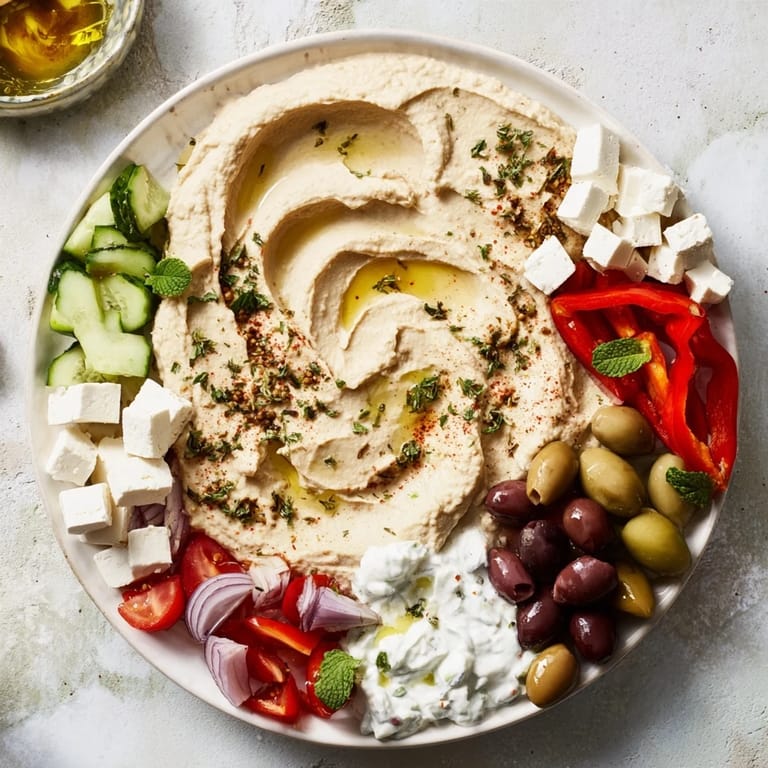
- Using the back of a spoon, create three distinct mounds of hummus, baba ganoush, and tzatziki around the platter, spacing them evenly like you're placing anchors. Make shallow wells in the center of each with the back of your spoon—this is where the olive oil will pool, creating that irresistible glossy finish. You want these to feel intentional and generous, not timid.
- Cluster the cheese:
- In one open area of the platter, pile your feta cubes loosely together. They should tumble slightly over each other, not be arranged in military precision. This is rustic, this is Mediterranean, this is meant to feel picked straight from a market stall.
- Arrange vegetables with intention:
- Place the cherry tomato halves, cucumber rounds, olives, roasted red pepper strips, and red onion slices in organic mounds throughout the platter. Think in clusters rather than lines—let colors echo each other but not repeat directly. The cherry tomatoes might nestle next to the roasted peppers, for instance. You're not filling every gap; you're creating a rhythm of color and texture.
- Position the bread:
- Lean the warm pita triangles against the edge of the platter in a loose fan, or gather them in a small pile. They're meant to be grabbed and used as vehicles for everything else, so make them easily accessible without dominating the space.
- Scatter the optional treasures:
- If using artichoke hearts, dolmas, or toasted pine nuts, add them in small strategic clusters. These should feel like delightful discoveries for your guests, not afterthoughts crammed into empty corners.
- Anoint with olive oil:
- This is the moment that transforms a nice arrangement into something restaurant-worthy. Generously drizzle your best olive oil over the dips, letting it pool slightly, then scatter some over the cheese and vegetables. Don't be shy—the oil carries flavor and brings everything into visual harmony. I usually use about 2 tablespoons, letting it flow where it wants.
- Crown with herbs and finishing touches:
- Sprinkle the torn parsley and mint across the platter, focusing on areas that need visual lift. Dust lightly with sumac or zaatar if using, then season the vegetables with a whisper of sea salt and fresh pepper. Taste a component as you finish—this is your last chance to adjust the seasoning.
- Serve with presence:
- Bring the platter to the table with a quiet confidence. Set it down where everyone can reach, and then step back. The beauty of mezza is that it invites exploration and conversation. Let your guests discover things on their own, making choices, trying combinations. This is food that encourages lingering.
 Pin it
 There was an evening when my dad sat at the table looking at this platter and said something I'll never forget: "You know, the best meals are the ones where no one finishes eating because they're too busy talking." That's exactly what mezza does. It's not about satisfying hunger quickly; it's about stretching a moment, making an ordinary Tuesday feel like a celebration, and proving that sometimes the simplest presentations create the most memorable experiences.
Building Your Own Variations
One of the greatest joys of mezza is how it adapts to what you have on hand and who you're serving. I've learned to think of this platter as a template rather than a prescription. In summer, I lean heavily into fresh vegetables—heirloom tomatoes, crispy snap peas, shaved radishes. In winter, I might add roasted vegetables like eggplant or mushrooms for warmth and substance. For guests who are vegan, I simply omit the tzatziki and feta, and suddenly the platter feels intentional for them rather than modified. I've even added grilled halloumi on occasion—just a few warm cubes scattered across—and watched people's eyes light up at the contrast of temperatures and textures.
The Art of Arrangement
What I've discovered through making this platter dozens of times is that arrangement matters more than people think, but not in a fussy way. It's not about perfection; it's about balance and flow. I think about color distribution—making sure no one area is too monochromatic—and about texture variation, so your eye keeps moving. I also think about accessibility: the dips should be easy to reach, the bread should be within arm's length, and the vegetables shouldn't require any navigating. The most successful platters I've made are the ones that feel generous and inviting rather than precious.
Pairing and Serving Wisdom
This platter is remarkably flexible in terms of what you serve alongside it. A crisp white wine like Sauvignon Blanc or a light rosé feels natural and enhances every flavor without overwhelming them. If you're serving this as a full meal rather than an appetizer, I'd suggest adding grilled proteins—spiced lamb, grilled shrimp, or herbed chicken—on the side, letting guests build their own combinations. And here's something I've learned the hard way: set out small plates. People will gravitate toward them immediately, which makes eating so much more pleasant than balancing a paper napkin and reaching across the platter.
- Make this platter 2-3 hours before serving for the freshest results, or prep components separately and assemble 30 minutes before guests arrive.
- If your dips look a bit firm, let them sit at room temperature for 15 minutes before serving—cold straight from the fridge, they lose some of their subtle flavors.
- Always taste your dips before serving; they may need a pinch of salt, a squeeze of lemon, or a touch more olive oil depending on the brand or batch.
 Pin it
 This platter has become one of my favorite ways to say I care without saying anything at all. Every time I make it, I'm reminded that generosity and thoughtfulness are sometimes best expressed through good food and the time we take to share it.
Recipe FAQs
- → What are essential dips for a Mediterranean mezza?
Classic hummus, baba ganoush, and tzatziki form the foundational dips, offering a range of creamy and tangy flavors that complement fresh vegetables and cheeses.
- → Can this platter accommodate dietary restrictions?
Yes, by substituting or omitting tzatziki and feta with plant-based alternatives, the platter becomes suitable for vegan diets; gluten-free breads can replace pita as needed.
- → How should the platter be arranged for best presentation?
Arrange dips in separate mounds surrounded by clusters of feta, vegetables, and olives. Scatter bread triangles and optional extras evenly, then finish with herbs and olive oil drizzles for a rustic look.
- → What herbs enhance the flavor profile of the platter?
Fresh parsley and mint add brightness and aroma, while optional sumac or zaatar provides subtle earthy and tangy notes that elevate the overall taste.
- → What pairing suggestions complement this Mediterranean spread?
A crisp white wine or light rosé pairs beautifully, balancing the creamy, salty, and tangy flavors found in the dips, cheeses, and vegetables.
- → Are there any allergen concerns to keep in mind?
The platter contains dairy in feta and tzatziki, sesame in hummus and baba ganoush, and gluten in pita bread unless gluten-free options are used. It's advisable to check labels for any nut contamination in olives and dips.