 Pin it
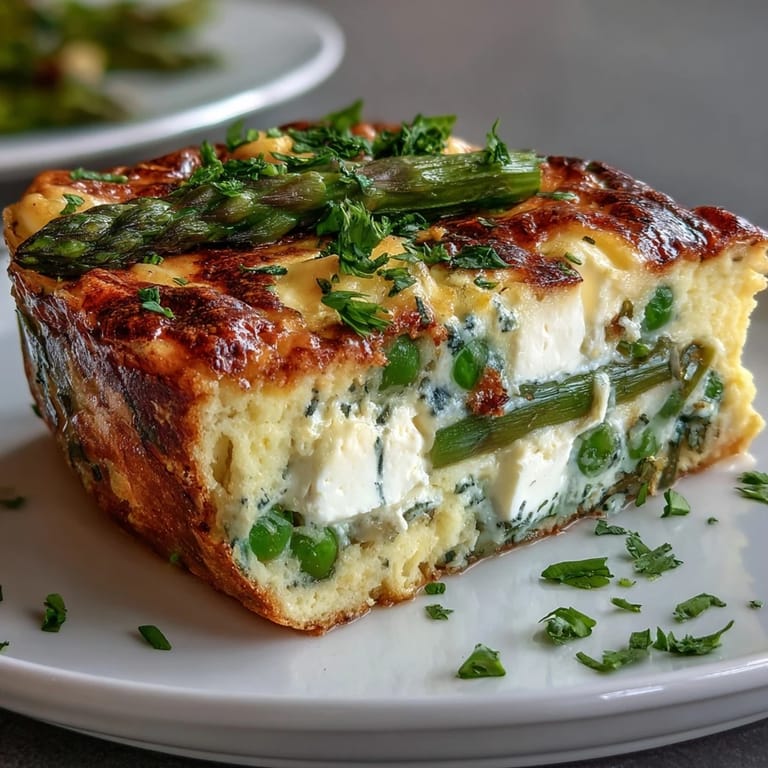
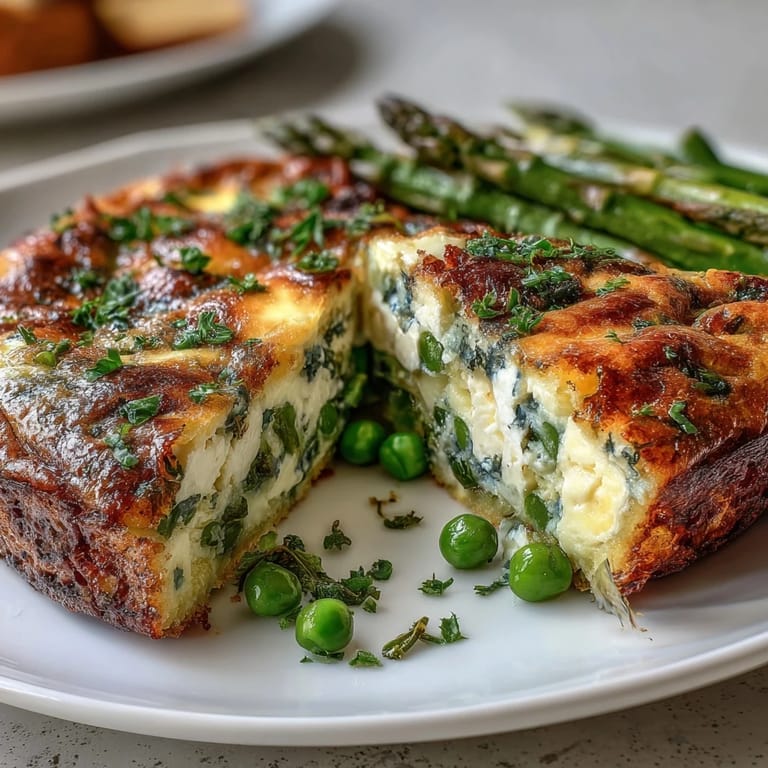
 The scent of fresh dill fills the kitchen just as the sun splashes through the window, convincing me that spring really has arrived. The morning I first tackled this frittata, I was running late, but the promise of vibrant asparagus and tangy goat cheese made me linger at the stove. Steam danced up as the peas hit the butter, and I couldn't resist sneaking a taste, right from the pan. Cooking in spring feels like unlocking a new mood, lighter and brighter, which this dish captures perfectly. It's not showy, but it never fails to lift spirits around my table.
I remember making this for a group of friends one Sunday: the windows were open, laughter spilled over the sounds of sizzling vegetables, and someone kept mistaking dill for parsley. It became the centerpiece of the meal, each slice disappearing faster than I could serve them. Watching my friends try to guess the herbs was half the fun, and it made me realize just how joyful cooking with others can be.
Ingredients
- Asparagus: Choose thin, young stalks—chopped into bite-size pieces, they give a gentle crunch and sweet flavor to the frittata.
- Fresh or frozen peas: Quick to cook and full of spring sweetness, peas add pop; frozen work just as well as fresh in a pinch.
- Baby spinach: Roughly chop and stir in at the last minute so it wilts but keeps that green freshness.
- Spring onions: Thinly sliced for a mild onion kick and extra color.
- Eggs: Eight large ones make the recipe just right; crack them gently to keep shells out.
- Milk or cream: Whole milk, or cream if you're feeling fancy; this gives the custard that soft, fluffy texture.
- Goat cheese: Crumble over the top for tang and creaminess—don't skimp if you love cheese.
- Unsalted butter: Melts evenly and helps vegetables cook without sticking, but don't let it brown too much.
- Fresh chives: Chopped chives lend a gentle oniony aroma that feels springy.
- Dill or parsley: Use whichever is handy—the herbal boost is what makes each bite aromatic and lively.
- Salt and freshly ground black pepper: Season to taste and don't forget to finish with a sprinkle—it's essential for pulling the flavors together.
Tired of Takeout? 🥡
Get 10 meals you can make faster than delivery arrives. Seriously.
One email. No spam. Unsubscribe anytime.
Instructions
- Get the oven ready:
- Preheat the oven to 375°F (190°C) while you prep the vegetables; it gives you a head start.
- Sauté the spring veg:
- Melt the butter in a big oven-safe skillet and add asparagus; let it sizzle for 2 minutes, then toss in the peas and spring onions and cook until the colors turn vivid and everything smells sweet.
- Wilt the spinach:
- Stir in the spinach, letting it shrink into glossy, dark green ribbons—just a minute or so.
- Whisk eggs and herbs:
- In a bowl, vigorously whisk the eggs, milk or cream, chives, dill or parsley, salt, and pepper until frothy and well combined.
- Pour and set:
- Pour the egg mixture over the vegetables, swirling the pan gently; let it cook undisturbed until the edges turn golden and the center stays just a little wobbly.
- Add the goat cheese:
- Scatter crumbled goat cheese over the top and listen for the bubbles—it's the signal that the frittata is ready for the oven.
- Bake to finish:
- Transfer the skillet to the oven and let it bake for 10–12 minutes; watch for a puffed, golden surface that's barely set in the center.
- Cool and serve:
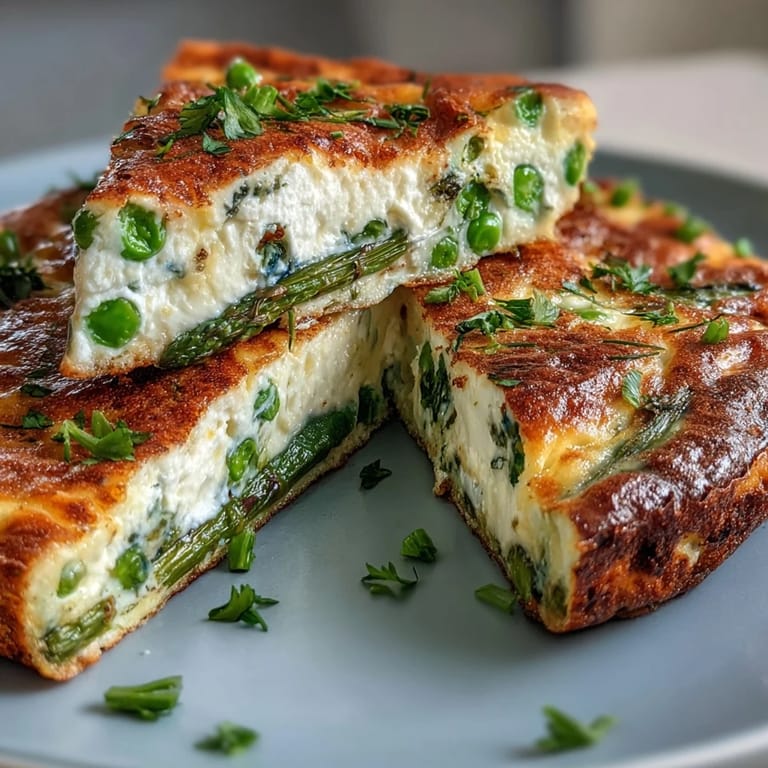
- Let the frittata cool for 5 minutes before slicing; the aroma is irresistible and it's perfect to serve warm or even at room temperature.
 Pin it
 Someone once told me that the best dishes are those that make people linger at the table, and this frittata proved it when my family sat for hours, chatting well after brunch was finished. The lightness kept everyone feeling refreshed, and the leftovers vanished before dinner time.
Brunch Memories: The Joy Is In Sharing
Cooking this frittata makes the kitchen feel vibrant—there's always a moment when the goat cheese melts and the whole room smells herbaceous. I learned to serve it straight from the pan, slicing wedges while everyone reaches for seconds, which keeps brunch spontaneous and fun.
Tweaks To Make It Your Own
The recipe is flexible: I've tossed in zucchini or herbs that happened to be leftover, and even swapped out spinach for kale when that's what was in the fridge. Playing with vegetable combinations means you never make the same frittata twice.
Serving And Storage Tips
Leftovers are delicious cold, tucked into a sandwich or packed for lunch the next day, and I sometimes reheat slices gently in a skillet for a quick snack.
- Don't rush slicing—resting makes it easier to cut clean pieces.
- Wrap extras tightly to keep them moist.
- If you're bringing it to a picnic, go for room temperature serving.
 Pin it
 This spring frittata is a reminder that simple ingredients can make any day feel special. I hope it brings as much brightness to your kitchen as it has to mine.
Recipe FAQs
- → What vegetables can be swapped for asparagus or peas?
Zucchini, fava beans, or even bell peppers can be used to replace asparagus or peas for a seasonal twist.
- → Can I make this dairy-free?
Yes, substitute plant-based milk for cream and use vegan cheese or omit goat cheese entirely.
- → How do I know when it's done baking?
The center should be puffed and just set—no liquid remains. Baking takes about 10–12 minutes.
- → Is it possible to serve it cold?
This dish tastes great warm or at room temperature. It can also be enjoyed cold as leftovers.
- → What tools do I need?
You'll need an oven-safe skillet, mixing bowl, whisk, knife, cutting board, and spatula for easy prep and cooking.
- → What garnish pairs well?
Fresh chives, dill, or parsley add flavor and color. A side salad complements nicely.